Butterflies of Argentina
Argentina has about 1,400 butterfly species across varied landscapes: subtropical Misiones, Andean Yungas cloud forests, Gran Chaco, and cold Patagonia.
Argentina: from the tropics to Patagonia
Argentina stretches over 3,700 km from the subtropical north to the sub-Antarctic tip of the continent — the longest north-to-south range of any country in the Western Hemisphere. This enormous latitudinal span creates an extraordinary range of climates and biomes, each with its own butterfly fauna. The country has roughly 1,400 recorded species of day-flying butterflies, a number that would easily double if moths were included.
Regions and their butterfly faunas
Misiones and the Atlantic Forest remnant
The province of Misiones in Argentina's northeastern corner is a wedge of subtropical forest biologically continuous with the Brazilian Atlantic Forest and Paraguayan forest. Around Iguazú National Park, where the famous waterfalls border Brazil, lies the richest butterfly habitat in Argentina.
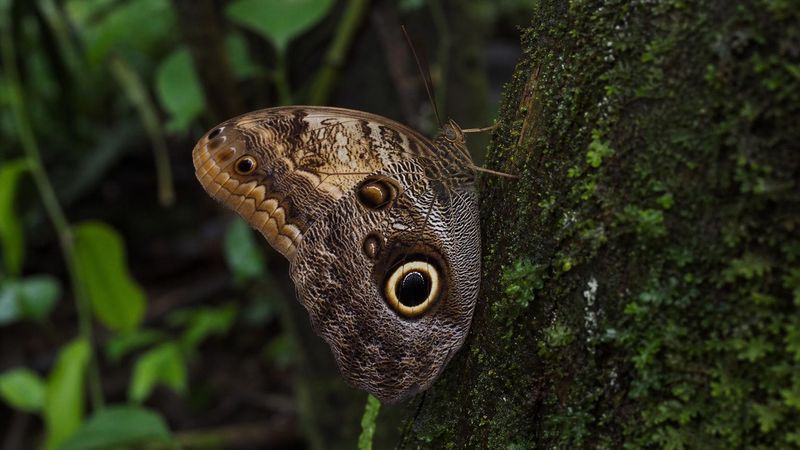
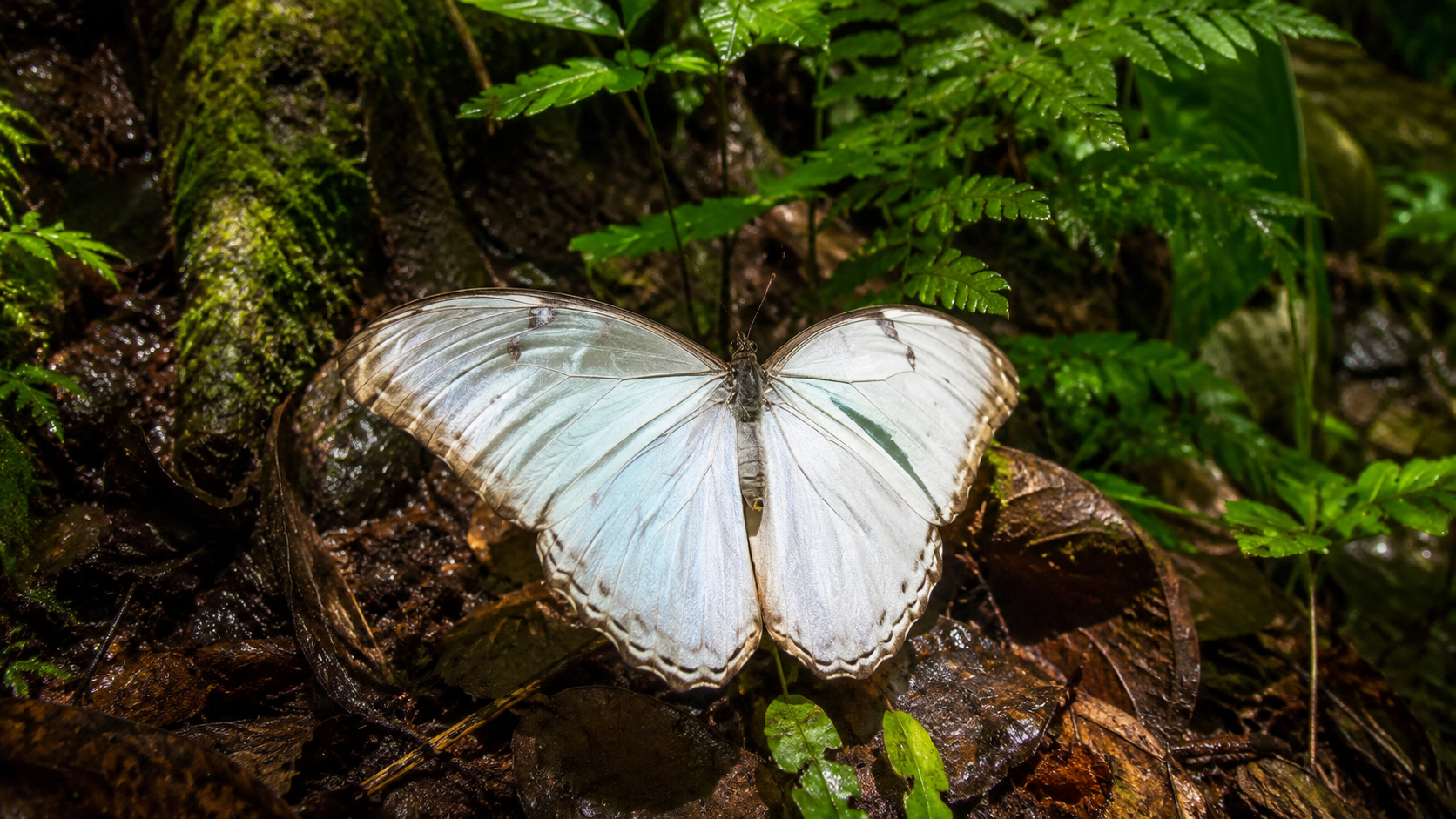
Here observers encounter owl butterflies (Caligo spp.) gliding through the forest understorey, sulphur aggregations (Phoebis spp.) mud-puddling on sandy river banks, and multiple swallowtail species — including the vivid red-and-black Parides spp. The white morpho Morpho epistrophus is the signature species of Misiones gallery forests.
Yungas cloud forests (Northwest Argentina)
The Andean provinces of Jujuy, Salta, and Tucumán hold a chain of montane cloud forests called the Yungas, ranging from about 500 m to 2,000 m elevation. The Yungas are a relict corridor connecting Andean biotas from Bolivia to Tucumán. Butterfly diversity here is modest compared with Misiones but includes many species absent from the lowlands: several Heliconius reach their southern limit here, and high-altitude swallowtails (Battus, Parides) are common.
The road from Jujuy to Calilegua National Park passes through cloud forest with excellent roadside butterfly observation.
Gran Chaco
The Gran Chaco — a vast subtropical dry forest and thornbush extending into Paraguay, Bolivia, and Brazil — occupies most of central and northwestern Argentina. Its butterfly fauna is distinct from both Misiones and the Yungas: dominated by whites (Ascia, Glutophrissa), many sulphurs, and scrubland skippers. The Chaco is under heavy agricultural pressure and accessible sites are limited.
Pampas and Patagonia
The Pampas — Argentina's famous cattle and grain plains — have very few resident butterfly species; only grassland generalists like Vanessa and some blues. Patagonia is colder still, with perhaps 50–80 butterfly species, predominantly mountain coppers, blues, and whites. The Nahuel Huapi National Park near Bariloche is the best-studied Patagonian site.
Iconic species
Morpho epistrophus — the white morpho; a pale, shimmering butterfly with a wingspan of 90–100 mm. It flies in gallery forests near rivers in Misiones and northeastern Argentina, where it can be observed mud-puddling in the early morning.
Prepona laertes — a powerful nymphalid with a vivid blue-and-orange pattern; it inhabits the forest canopy in Misiones, descending to overripe fruit on the ground.
Parides anchises — a large swallowtail with black-and-red wings, associated with Aristolochia host plants in subtropical forest; reaches northern Argentina.
Phoebis philea — an orange sulphur forming spectacular mud-puddling aggregations on sandy Iguazú riverbanks alongside dozens of other species.
Best observation sites
Iguazú National Park (Misiones) — the top destination for any butterfly observer in Argentina. The Puerto Canoas trail along the river and the jungle paths near the falls are especially productive in the morning hours.
Calilegua National Park (Jujuy) — Yungas cloud forest with a well-maintained trail network. The road into the park passes through three vegetation zones in less than 30 km.
El Palmar National Park (Entre Ríos) — open palm savanna with a different open-country fauna; easier logistics, closer to Buenos Aires.
Tigre delta (Buenos Aires province) — surprisingly productive for an accessible day trip from the capital; riverine forest with 60+ recordable species.
Observation season
Butterfly season in Argentina follows the austral calendar. In Misiones and the subtropical north, butterflies fly year-round with peak diversity in the wet summer (November–March). The falls at Iguazú are spectacular in this season, though crowds are also at their peak.
In the Yungas the dry season (May–September) makes roads and trails more accessible; cloud forest species are active whenever temperatures rise above the morning fog. Patagonia has a short butterfly season concentrated in December–February.
Conservation notes
Argentina's most threatened butterfly habitats are the Atlantic Forest remnants of Misiones and the Yungas corridor. Soybean agriculture has converted large areas of the Chaco, and the Yungas continue to shrink due to sugar cane and citrus expansion. Several endemic cloud forest species have extremely restricted ranges and are considered vulnerable.
Interesting facts
- The Iguazú Falls area on the Argentina–Brazil border sees mud-puddling aggregations that can number several hundred individual butterflies of 30+ species simultaneously.
- Morpho epistrophus (the white morpho) is one of the few morpho species in which both sexes look nearly identical — unusual in a genus known for sexual dimorphism.
- Argentina has the southernmost recorded occurrence of any Heliconius species in the world — at the northern edge of Salta province.