Butterflies of Peru
Peru ranks second in the world for butterfly diversity: more than 3,500 species, across the Amazon basin, the Andes, and the Pacific coast.
Peru: biodiversity on a vertical gradient
No other country in the world offers such a diversity of landscapes over such a short distance as Peru. From the humid lowland jungles of Amazonia in the east to the dry Pacific Atacama desert in the west — an elevation change of more than 6,000 m. Each altitudinal zone forms its own entomofauna, explaining the enormous 3,500+ species of day-flying butterflies.
Three entomofaunal zones
Peruvian Amazonia
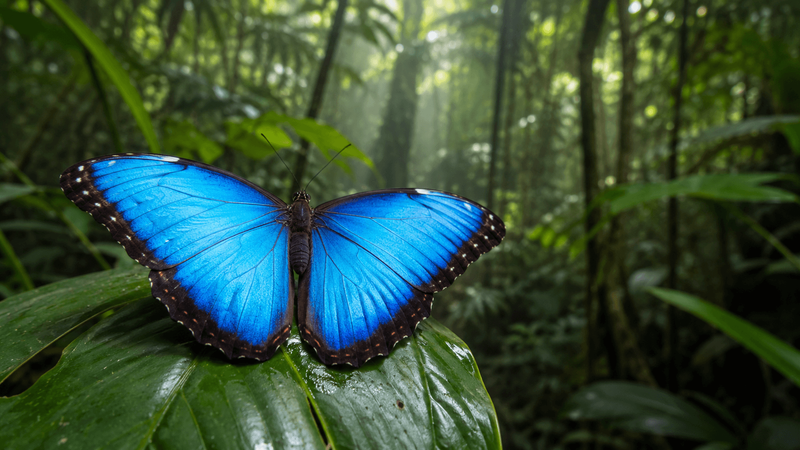
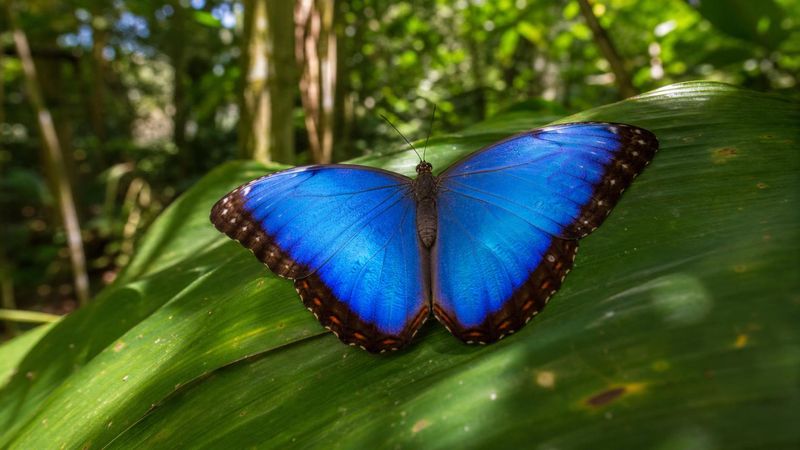
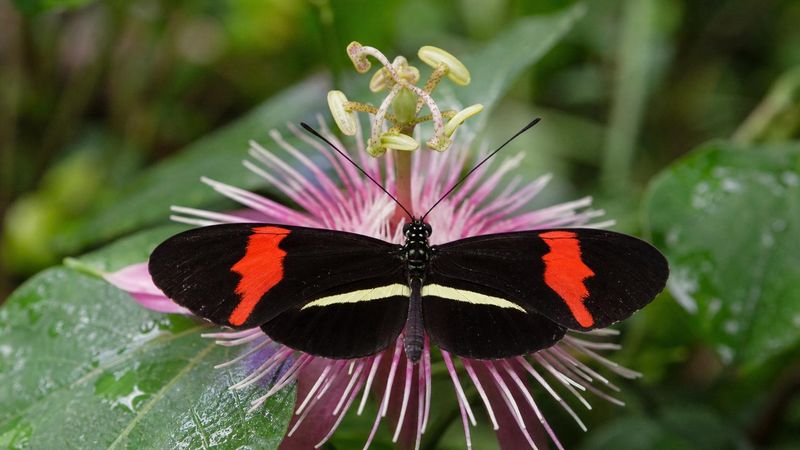
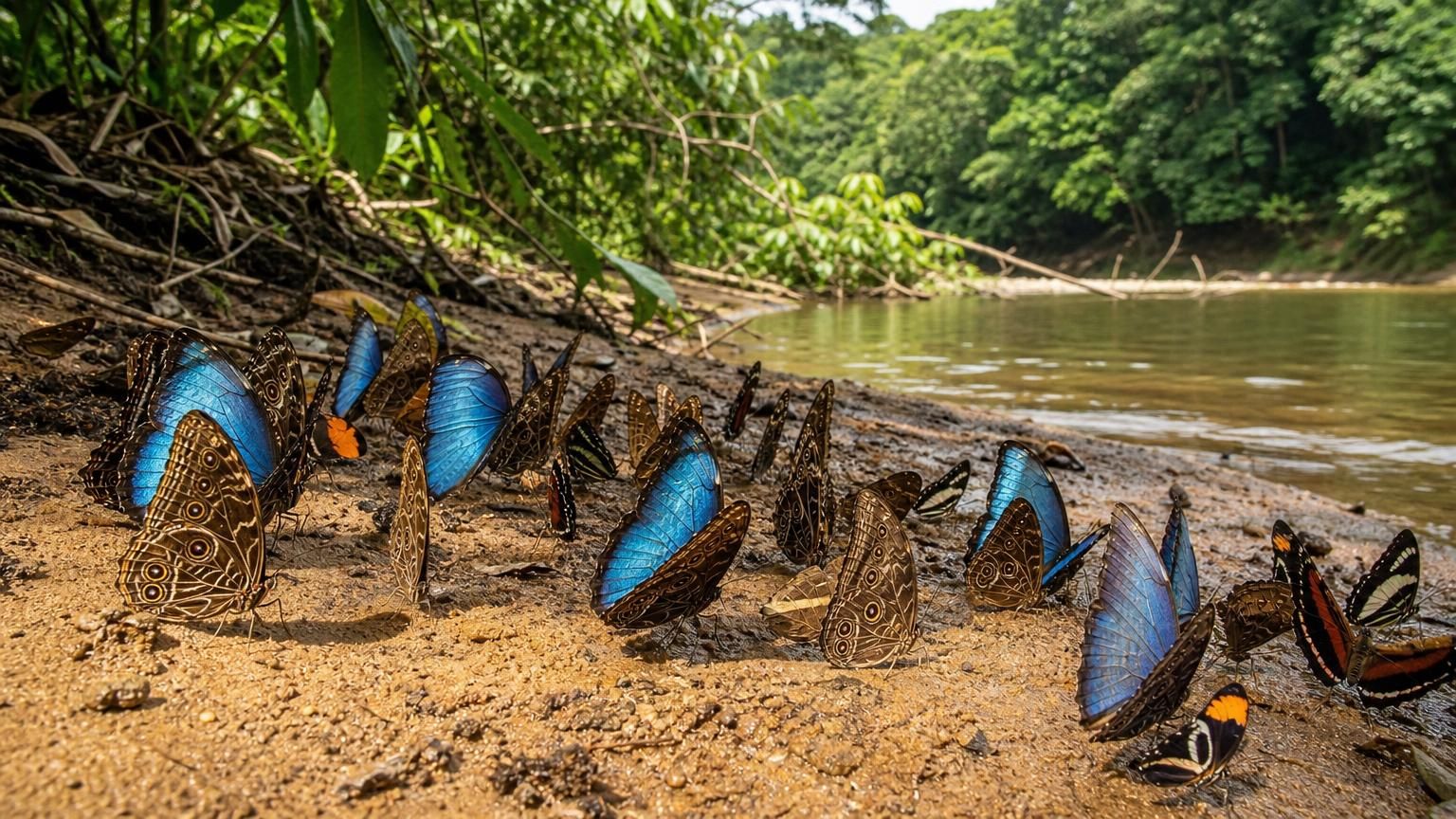
Eastern Amazonia (departments of Loreto, Madre de Dios, Ucayali) is the richest part of the country. All iconic tropical genera concentrate here: morphos (Morpho spp.), Heliconius, Agrias, Archaeoprepona, Calisto, and Theclines. Puddling aggregations on the banks of the Amazon are a world-class spectacle: hundreds of morphos, whites, and swallowtails gather by the water at one time.
The Tambopata Reserve (Madre de Dios department) is the site with the greatest documented butterfly diversity in the world. On 200 ha more than 1,200 species have been recorded.
Montane forests (Yungas)
On the eastern Andean slopes at 500–2,500 m elevation lie cloud forests (Yungas) — a transitional zone with unique fauna. Here live mountain morphos (Morpho sulkowskyi, M. aurora) with pearlescent blue or white wings, highland swallowtails (Papilio spp.), and Agrias. Many Yungas species occur neither in the lowlands nor at higher elevations.
High plateau (Puna)
Above 3,500 m — the Puna, the Andean highland steppe. Fauna is poorer but includes unique endemics: blues of the genus Phulia, highland Danaids and Satyrs adapted to thin air and sharp temperature fluctuations. Butterflies here are darkly coloured — for better absorption of solar heat.
Iconic species
Morpho didius — the largest of Peru's morphos, wingspan up to 150 mm. Inhabits the lowland forests of eastern Peru.
Owl butterfly (Caligo memnon and other Caligo species) — common in the lowlands; readily drinks from rotting fruit.
Agrias claudina — "sapphire of the jungle." Males stay in the canopy at 20–40 m height and almost never descend to the ground. One of the most sought-after objects for collectors.
Birdwings of the genus Troides — several species in Peruvian Amazonia, including Troides aeacus and Ornithoptera priamus.
Best observation sites
Tambopata (Madre de Dios department) — world record in species diversity. Several biological stations receive researchers and eco-tourists. Best time: dry season (June–October).
Manú (National Park) — strictly protected territory. Access is limited, but offers an untouched ecosystem.
San Martín and Chachapoyas — Yungas montane forests with unique transitional fauna.
Cusco and Machu Picchu — highland trails with interesting mountain species; proximity to tourist infrastructure.
Observation season
Peru straddles the equator. In Amazonia the best season is the dry one (May–October): rivers fall, exposing banks, and puddling reaches its maximum. In the rainy season (November–April) the tropical forests are flooded and difficult to traverse, though butterflies are also active.
In the mountains (Cusco, Machu Picchu) the dry season (April–October) is also preferable for observation.
Scientific significance
Peru is one of the world leaders in discovery of new butterfly species. Each year 10–30 new species are described, mainly from highland forests. The Universidad Nacional Mayor de San Marcos in Lima holds the world's largest collection of Peruvian Lepidoptera.
Interesting facts
- The Tambopata Reserve is officially in the Guinness World Records as the site with the greatest documented butterfly diversity within a limited area.
- In the Peruvian Andes at 4,200 m elevation flying butterflies have been recorded — a South American altitude record.
- Some Agrias species from Peru are so rare that their price at insect-collector auctions exceeds $2,000 per specimen.