Butterflies of Colombia
Colombia ranks third in the world for butterfly diversity: about 3,400 species, spanning Amazonia, the Andes, and a Caribbean coast on two oceans.
Colombia: crossroads of the two Americas
Colombia occupies a unique geographic position: the only South American country with access to both oceans — the Pacific and the Atlantic (Caribbean). A biogeographic "bridge" between North and South America runs through its territory, making the fauna mixed. Three Andean ranges (Western, Central, and Eastern) create dozens of isolated altitudinal biomes — the ideal environment for speciation. The result: about 3,400 species of day-flying butterflies.
Biomes and their fauna
Chocó — the world's most humid forest
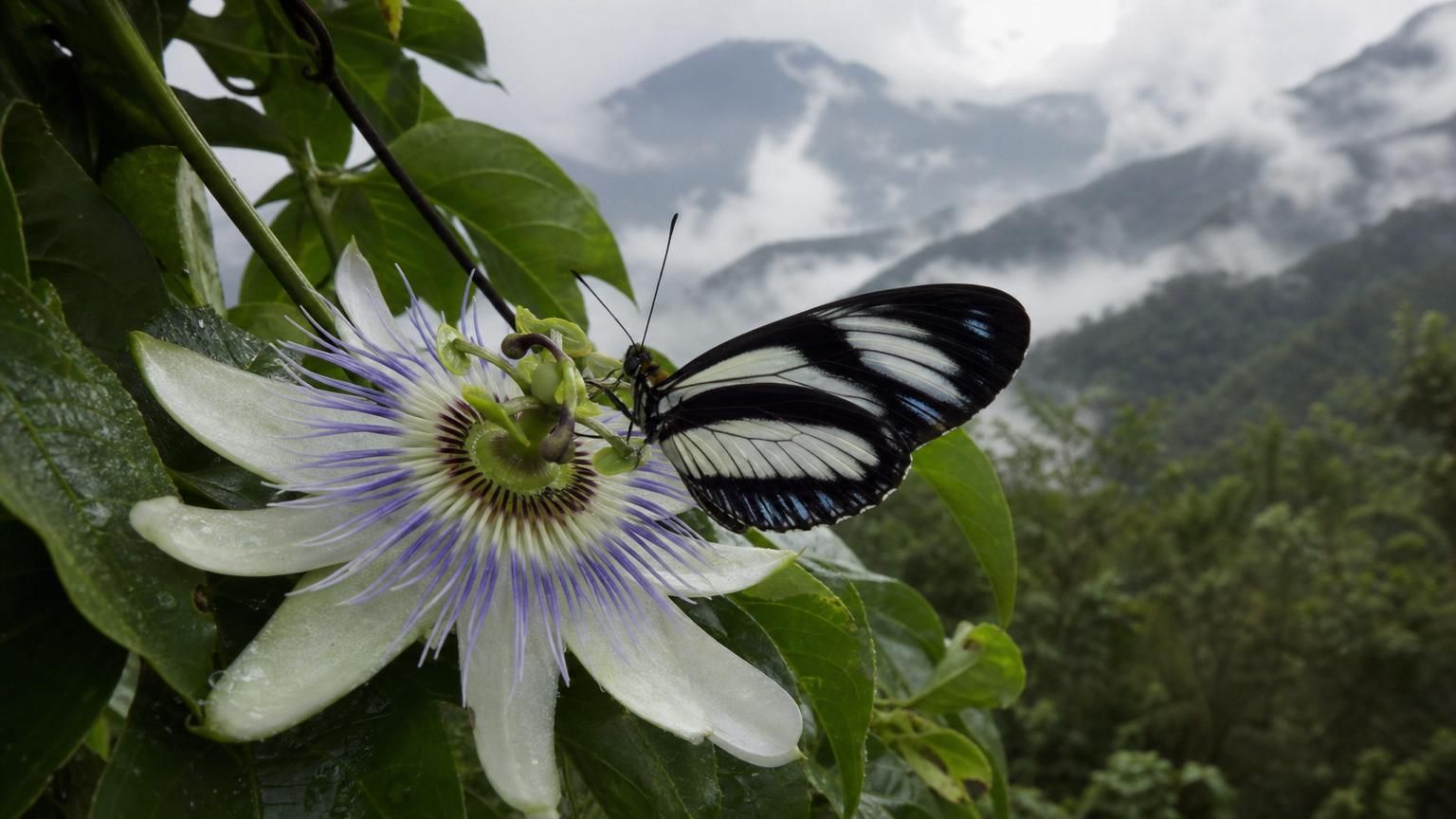
The Pacific slope of the western Andes — the Chocó region — receives up to 5,000–9,000 mm of rainfall per year. Uninterrupted humidity over millions of years has allowed exceptional biodiversity to accumulate. Here live unique Heliconius species, including Heliconius cydno — a black-and-white butterfly with a bluish tint — and dozens of clearwing ithomiines.
Endemism in the region is high: many species are found nowhere outside a narrow strip along the Pacific coast from Colombia to Ecuador.
Andean cloud forests
On the eastern and western Andean slopes (1,500–2,800 m elevation) lie cloud forests — a belt of constant cloudiness and fog. This is the habitat of mountain morphos (Morpho sulkowskyi), high-Andean swallowtails, specific fritillaries, and blues. Several species are described exclusively from Colombian cloud forests.
Magdalena Valley
The valley of the country's largest river is a transitional zone between the western and eastern Andes. The dry tropical climate produces a different species assemblage: whites, many sulphurs, swallowtails with red spots (Battus spp.).
Amazonia
Southern Colombia (department of Amazonas, capital Leticia) is part of the Amazon basin. The biota is the same as in Brazilian and Peruvian Amazonia: morphos, Heliconius, Agrias, owl butterflies.
Iconic species
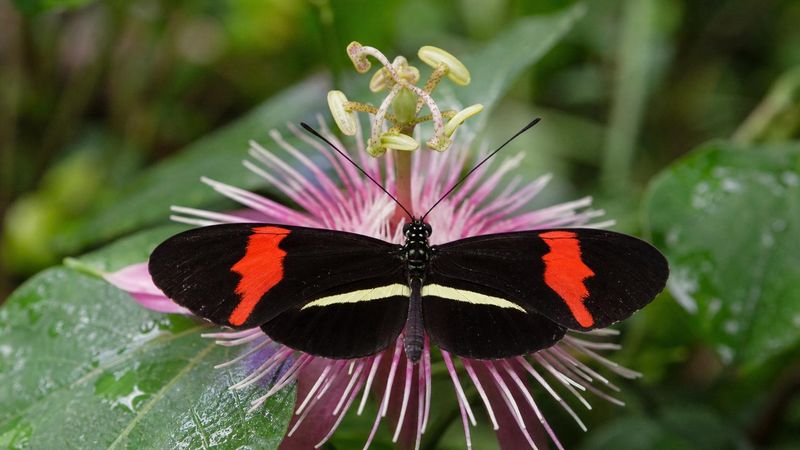
Heliconius cydno is one of the key participants in the mimicry complexes of Colombian forests. Together with Heliconius melpomene and Heliconius erato it forms a triad of Müllerian mimicry studied in the country's Andean valleys.
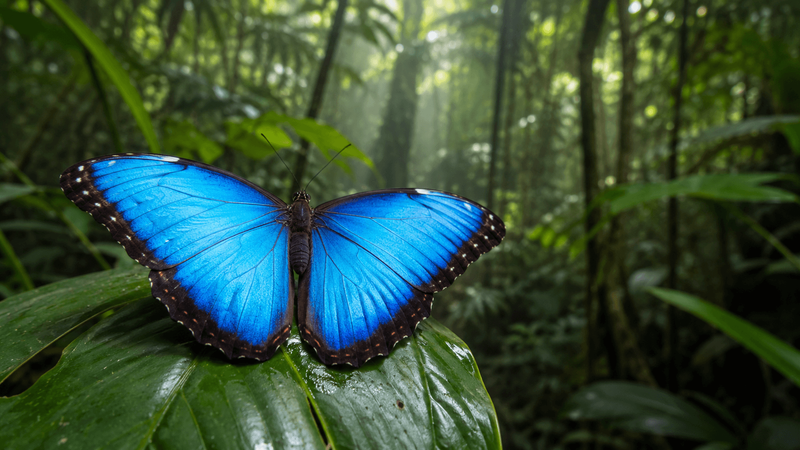
Morpho menelaus and Morpho didius are common in Amazonia. In cloud forests their place is taken by Morpho sulkowskyi with pearlescent white wings.
Prepona laertes — a nymphalid with a red-blue pattern; it stays in the canopy and descends to rotting fruit.
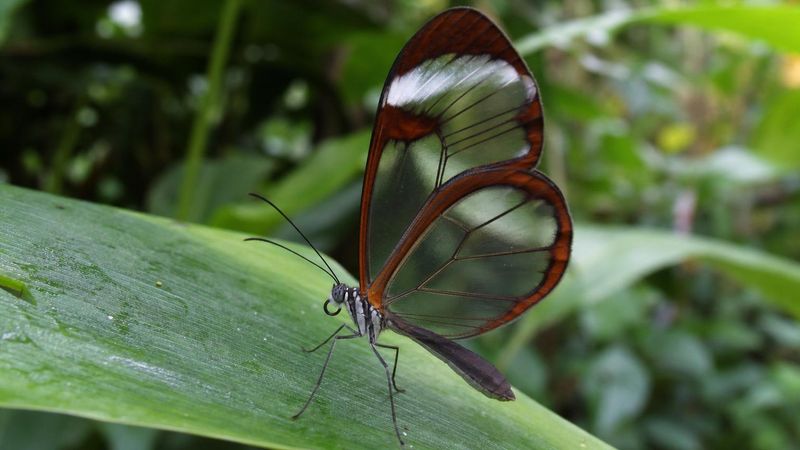
Glasswing butterfly (Greta oto and related species) is common in the cloud forests of the western Andes.
Best observation sites
Medellín and surroundings — cloud forests of the western Andes 1–2 hours' drive away. The La Flores Reserve is known for its diversity of mountain Heliconius.
Leticia (Amazonia) — southern edge of the country, border with Peru and Brazil. Base for excursions into primary Amazon forest.
Sierra Nevada de Santa Marta — isolated mountain massif near the Caribbean coast with high endemism; several species described only from here.
Chocó Biosphere Reserve (Chocó province) — special permits required, but exceptional fauna.
Observation season
Colombia has two dry seasons per year: December–March and July–August. During these periods roads are passable, trails are dry, and puddling aggregations of butterflies at rivers are most impressive.
In the rainy season butterflies also fly, but moving through forest is difficult. In the Andean cloud forests the weather is unpredictable year-round: morning fog often clears by 10 o'clock, giving several hours of observation.
Butterfly science in Colombia
Colombia holds a special place in evolutionary biology: it was here that key field experiments on Heliconius mimicry were conducted. Observation plots in the Andean valleys allowed "hybridization zones" between H. melpomene races to be established — living laboratories of evolution in nature.
The University of Antioquia in Medellín has maintained long-term butterfly monitoring in cloud forests since the 1980s.
Interesting facts
- In 2019 a new species was discovered in Colombia — Catasticta cuencas, described from Andean cloud forests in the north of the country.
- A butterfly farm in Medellín exports pupae of more than 80 species annually to Europe and the USA for themed exhibitions.
- Colombia is the only country in the world with three parallel Andean ranges on its territory, each bearing unique fauna.