Butterflies of New Zealand
New Zealand has only about 20 native butterfly species — one of the smallest faunas — but endemism is high, with several found nowhere else.
New Zealand: a tiny fauna, all its own
New Zealand is famously anomalous in its biodiversity: a landmass the size of Great Britain that split away from Gondwana 80 million years ago and drifted in isolation across the southern Pacific. The consequences for butterflies are stark. With only approximately 20 native species, New Zealand has one of the smallest national butterfly faunas in the temperate world — fewer species than a single productive forest patch in Ecuador or Papua New Guinea.
Yet what New Zealand lacks in quantity it partly compensates for in exclusivity. Almost all its native species are endemic — found nowhere else on Earth. They have evolved in isolation from close relatives in Australia and beyond, diverging into distinct species shaped by New Zealand's particular landscapes, plants, and climate.
Why so few species?
New Zealand's butterfly poverty is a direct consequence of geography. For a butterfly species to establish in New Zealand, it must cross at least 2,000 km of open ocean from Australia — a feat achievable only by chance wind dispersal during storms. In tens of millions of years, only a small number of colonisation events succeeded, and each founding population subsequently evolved in isolation.
The absence of large tropical forests, the dominance of conifers and southern beeches (Nothofagus) in the native flora, and the country's cool temperate climate further limit butterfly diversity. Most butterfly lineages are tropical in origin and cannot establish in a cool, isolated island system.
Native species
Red Admiral (Vanessa gonerilla)
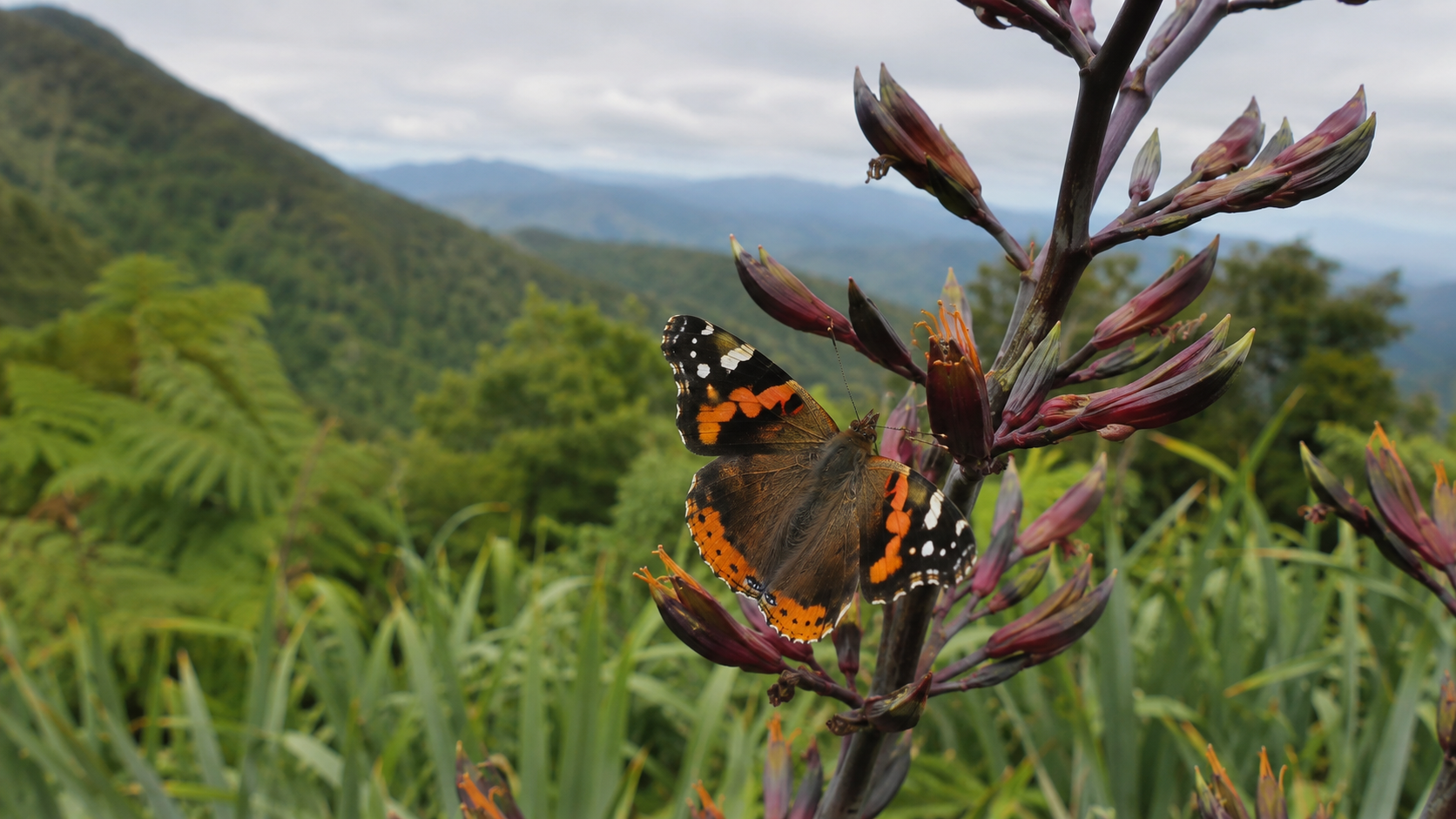
The New Zealand Red Admiral — kākāhū in Māori — is the most visible and beloved butterfly in the country. Its vivid pattern of red-orange bands on black wings makes it unmistakable. It is endemic to New Zealand, distinct from the European Red Admiral (V. atalanta) and the Indian Red Admiral (V. indica) despite superficial similarity.
The species depends entirely on native stinging nettles (Urtica ferox, U. incisa, and U. linearifolia) as larval host plants. Where these nettles grow — in disturbed bush margins, forest clearings, and stream banks — the Red Admiral can be common and approachable. Adults feed on nectar from a wide variety of flowers and are regular visitors to garden buddleia.
Yellow Admiral (Vanessa itea)
The Yellow Admiral shares the Vanessa genus with its red relative and overlaps with it in most habitats. Its colouring is more muted — warm amber-orange replacing the vivid red — and it is generally less conspicuous. Like the Red Admiral, it uses native nettles as larval host plants and is found throughout both main islands.
Copper butterflies (Lycaena spp.)
New Zealand's four or five copper species (taxonomy under ongoing revision) form the most ecologically diverse group in the native fauna. They are all endemic and range from coastal dunes to subalpine grasslands:
Boulder Copper (Lycaena boldenarum) — a small, energetic species of coastal and lowland rocky habitats; males vigorously defend patches of sunlit ground.
Common Copper (Lycaena salustius) — the most widespread; found in grasslands and scrubland throughout the country; larva feeds on native Muehlenbeckia and dock species.
Rauparaha's Copper (Lycaena rauparaha) — confined to the South Island; named for the famous rangatira (chief); a high-country species found above 800 m.
Blues
New Zealand has two native blue butterfly species, both small and easily overlooked:
Common Blue (Zizina labradus) — actually shared with Australia; one of the few non-endemic natives; found in lawns, grasslands, and roadsides; larva feeds on various clovers and trefoils.
Long-tailed Blue (Lampides boeticus) — an occasional migrant from Australia rather than a resident; recorded sporadically in northern New Zealand.
Blue Moon (Hypolimnas bolina)
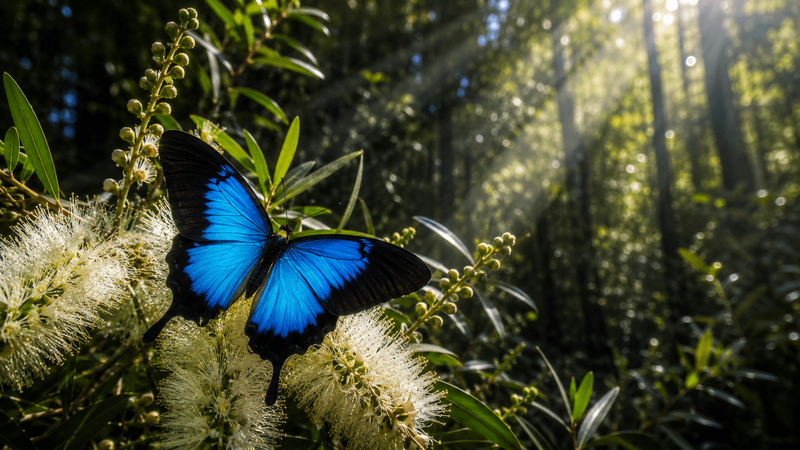
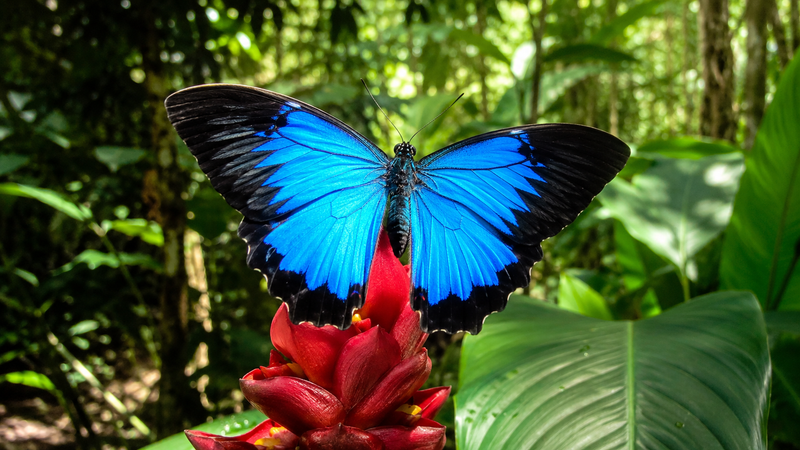
The Blue Moon is a large, striking nymphalid — males have vivid iridescent-blue wing patches — that reaches New Zealand from the Pacific Islands and Australia. It is more a periodic colonist than a permanent resident. In recent decades it has been recorded occasionally in the upper North Island, particularly during warm La Niña years that bring northerly winds from tropical Polynesia.
Introduced species
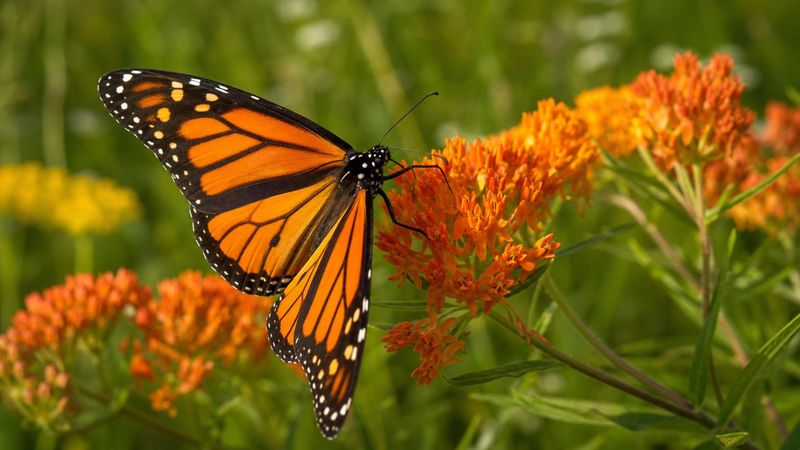
Alongside the naturalised Monarch (Danaus plexippus), several Australian species have occasionally been recorded as vagrants in New Zealand following storms:
- Cabbage White (Pieris rapae) — introduced accidentally in the 1930s; now the commonest butterfly in agricultural New Zealand.
- Painted Lady (Vanessa cardui) — occasional migrant; not established.
The Cabbage White, while technically not native, is now the most frequently seen butterfly in New Zealand gardens and farmland.
Best observation sites
Abel Tasman National Park (South Island, Nelson region) — coastal bush with good Red and Yellow Admiral populations; warm and sheltered microclimate.
Tongariro National Park (North Island) — volcanic plateau and subalpine scrub; copper butterflies and Red Admirals common around Urtica patches near streams.
Banks Peninsula (South Island, near Christchurch) — coastal hills with native bush remnants; accessible coppers and admirals; good for the Common Blue in grassland edges.
Fiordland National Park (South Island) — remote but rich in butterflies where the forest meets the fiord edges; Yellow Admirals particularly common.
Observation season
New Zealand's butterfly season is concentrated in October–April (austral spring and summer). The warmest and most productive months are December–February, when all species are active and adults are at their freshest. Red Admirals are among the last butterflies active in autumn (March–April) and the first to reappear in spring (September) after overwintering as adults in sheltered positions.
Copper butterflies have their peak in November–January; Blue Admirals tend to have two broods per year in the North Island (spring and late summer). In the South Island the season is shorter and restricted mainly to December–February.
Conservation
Despite the small number of native species, New Zealand's butterfly fauna faces real threats. The primary concern is habitat loss: native stinging nettles — the sole larval host of both admirals — are regarded as weeds and are routinely cleared from roadsides, reserves, and gardens. The loss of native bush fragments reduces populations of all endemic species.
The Boulder Copper and Rauparaha's Copper have restricted ranges and are considered at risk from habitat modification and introduced mammalian predators (rats and mice consume pupae).
Conservation efforts include preserving patches of native nettle in nature reserves, public education about the value of "weedy" nettle patches, and targeted habitat management for copper butterfly populations on conservation land.
Interesting facts
- New Zealand has no native swallowtails, no morphos, no skippers with tropical affinities, and no pierid species other than the introduced Cabbage White — whole families absent by accident of geography.
- The Māori name for the Red Admiral — kākāhū — means "garment" or "cloak", referring to the butterfly's wing pattern resembling a traditional woven cloak.
- Wētā (giant insects) have far more species in New Zealand than butterflies — about 70 species of wētā vs. 20 species of butterfly — reflecting the island's ancient, pre-butterfly insect heritage.