Butterflies of Crimea
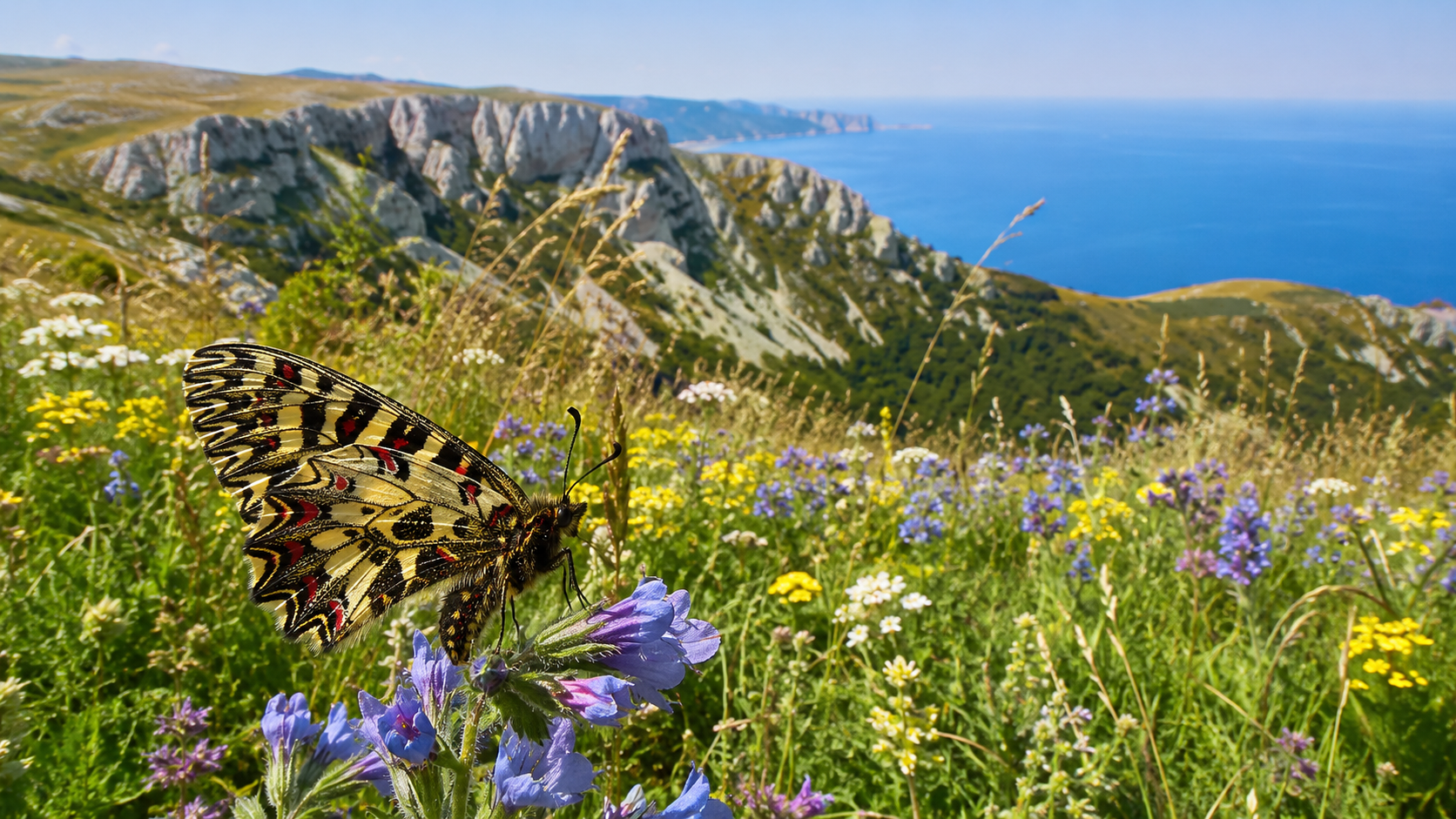
Crimea — sub-Mediterranean nature
The Crimean Peninsula holds a special place among regions of Russia for butterfly fauna. Sub-Mediterranean climate, mountain ranges, steppe plateaus, and rich mixed-grass flora provide species diversity close to southern Europe. About 130–140 species of day-flying Lepidoptera are recorded here.
Biotopes and species
Mountain yaylas
High plateaus — yaylas — are the richest sites in Crimea by butterfly species number. On open mixed-grass meadows in June–August fritillaries, checkerspots, several swallowtails, blues, and nymphalids fly together. Ai-Petri, Chatyr-Dag, and Demerdzhi yaylas are essential visits.
Southern coast of Crimea
Subtropical forests and scrub of the southern shore are a biotope for rare species:
- Cleopatra (Gonepteryx cleopatra) — bright yellow male, flies from April
- Several blues of Mediterranean origin
Steppe Crimea
The steppe part of the peninsula is rich in steppe species: ringlets, satyrs, and steppe blues. Especially valuable are surviving virgin steppe patches.
Rare species
Crimea has a high concentration of rare species:
- Southern festoon (Zerynthia polyxena) — April–May, forest edges with birthwort
- Southern swallowtail (Papilio alexanor) — mountain slopes 400–1200 m, May–June
- Cleopatra — southern shore, April–October
- Chequered blue (Scolitantides orion) — steppes with houseleek
Seasonal calendar
| Period | Characteristic species |
|---|---|
| February–March | Cleopatra, first whites (southern shore) |
| April–May | Southern festoon, southern swallowtail, orange tip |
| June–August | Peak diversity, all species |
| September–October | Painted lady, red admiral, cleopatra until November |
Best sites
Ai-Petri yayla — richest high-mountain diversity.
Karadag Nature Reserve — diversity of steppe and sub-Mediterranean species.
Nikitsky Botanical Garden (Yalta) — rich entomofauna in surrounding woods and gardens.
To learn about rare species see rare butterflies and swallowtails.