Butterflies of Moscow Oblast
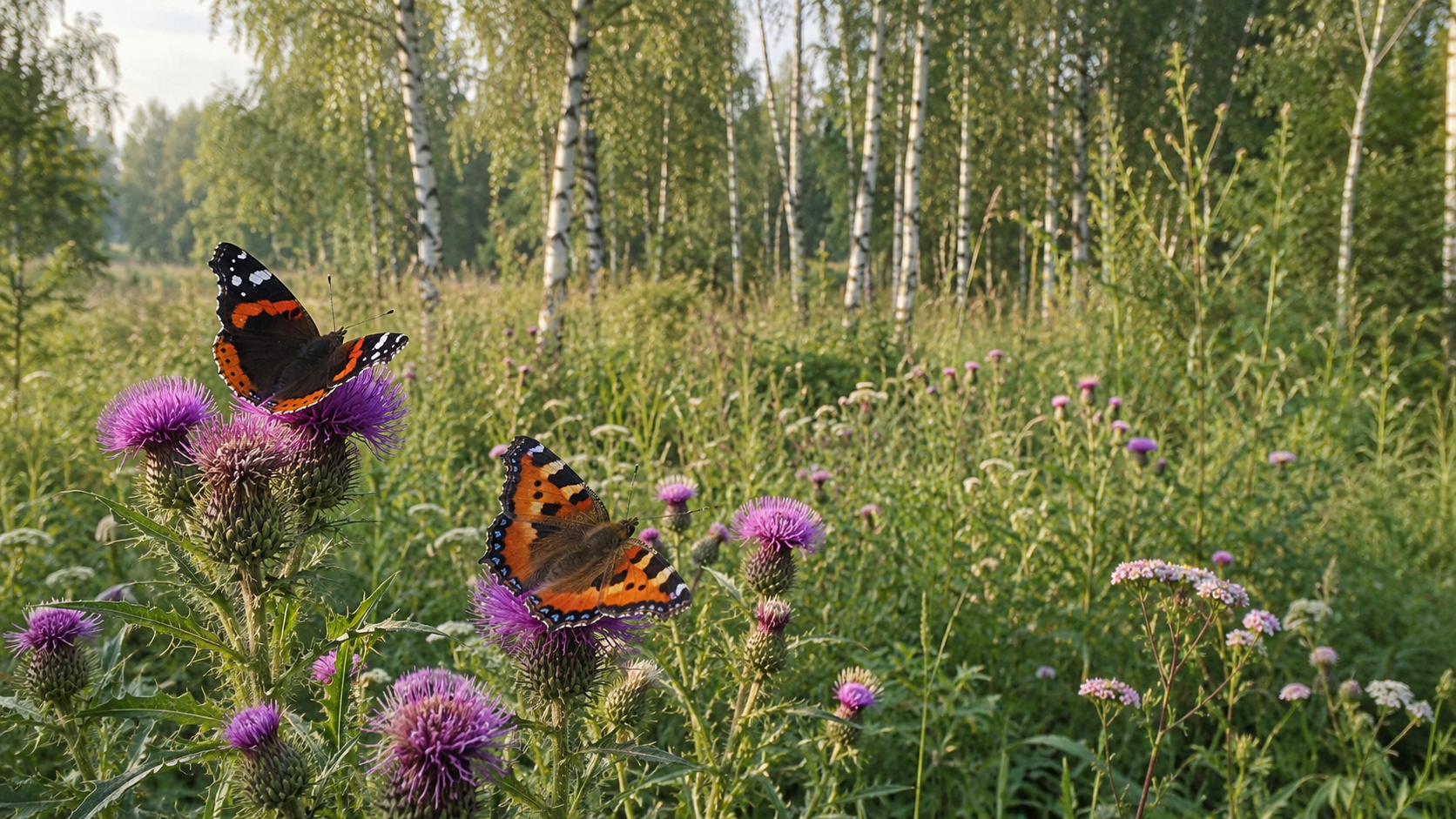
Butterflies of the Moscow region: overview
Moscow Oblast is one of the best-studied regions of Russia for Lepidoptera fauna. Despite high population density and considerable human pressure, rich butterfly diversity persists — about 120–130 day-flying species. This is helped by varied landscapes: mixed forests, floodplain meadows, bogs, and river valleys.
Characteristic species and habitats
Forest species
Mixed and broad-leaved forests of the Moscow region support fritillaries. High brown fritillary (Argynnis paphia), dark green fritillary (Speyeria aglaja), and in older forests purple emperor (Apatura iris) and poplar admiral (Limenitis populi) occur. In dark damp woods fly ringlets.
Meadow species
Surviving old-growth meadows are the most valuable biotopes for butterflies. Numerous blues live here: common blue (Polyommatus icarus), green-underside blue, and in southern districts Daphnis blue. On forest edges fly checkerspots, fritillaries, and satyrs.
Synanthropic species
Near housing and in gardens you can find the commonest species: small tortoiseshell (Aglais urticae), peacock (Aglais io), brimstone (Gonepteryx rhamni), large white (Pieris brassicae), and painted lady (Vanessa cardui). Red admiral (Vanessa atalanta) arrives from the south every summer.
Rare species
Several butterfly species are listed in the Red Data Book of Moscow Oblast:
- Mnemosyne (Parnassius mnemosyne) — old forests with Corydalis in the south of the oblast
- Glanville fritillary (Melitaea diamina) — wet meadows and forest edges
- High brown fritillary (Fabriciana adippe) — dry forest edges and meadows
- Alcon blue (Phengaris arion) — limestone slopes with thyme
Best observation sites
Prioksko-Terrasny Nature Reserve (Serpukhov District) — the richest meadows and forest edges in the oblast. More than 90 day-flying species are recorded here.
Pakhra River valley — mixed-grass meadows with numerous blues and fritillaries.
MSU Zvenigorod Biological Station — old meadows with well-preserved flora, regular entomological surveys.
Oka floodplain meadows — richest in the region by species composition, especially in Serpukhov and Kashira districts.
Seasonal calendar
| Period | Characteristic species |
|---|---|
| March–April | Brimstone, small tortoiseshell, peacock (after overwintering) |
| May | Comma, orange tip, first fritillaries |
| June–July | Peak diversity, most species |
| August | Fritillaries, blues, painted lady |
| September | Red admiral, painted lady, last whites |
Tips for observers
Butterflies are most active on warm sunny days from 10:00 to 16:00. Best conditions are above 20°C with little wind. Look for butterflies on nectar plants: burdock, fireweed, clover, yarrow, and oregano attract the most species.
To identify unfamiliar species use the key by wing colour and key by place of encounter.