Butterflies of Novosibirsk Oblast (Western Siberia)
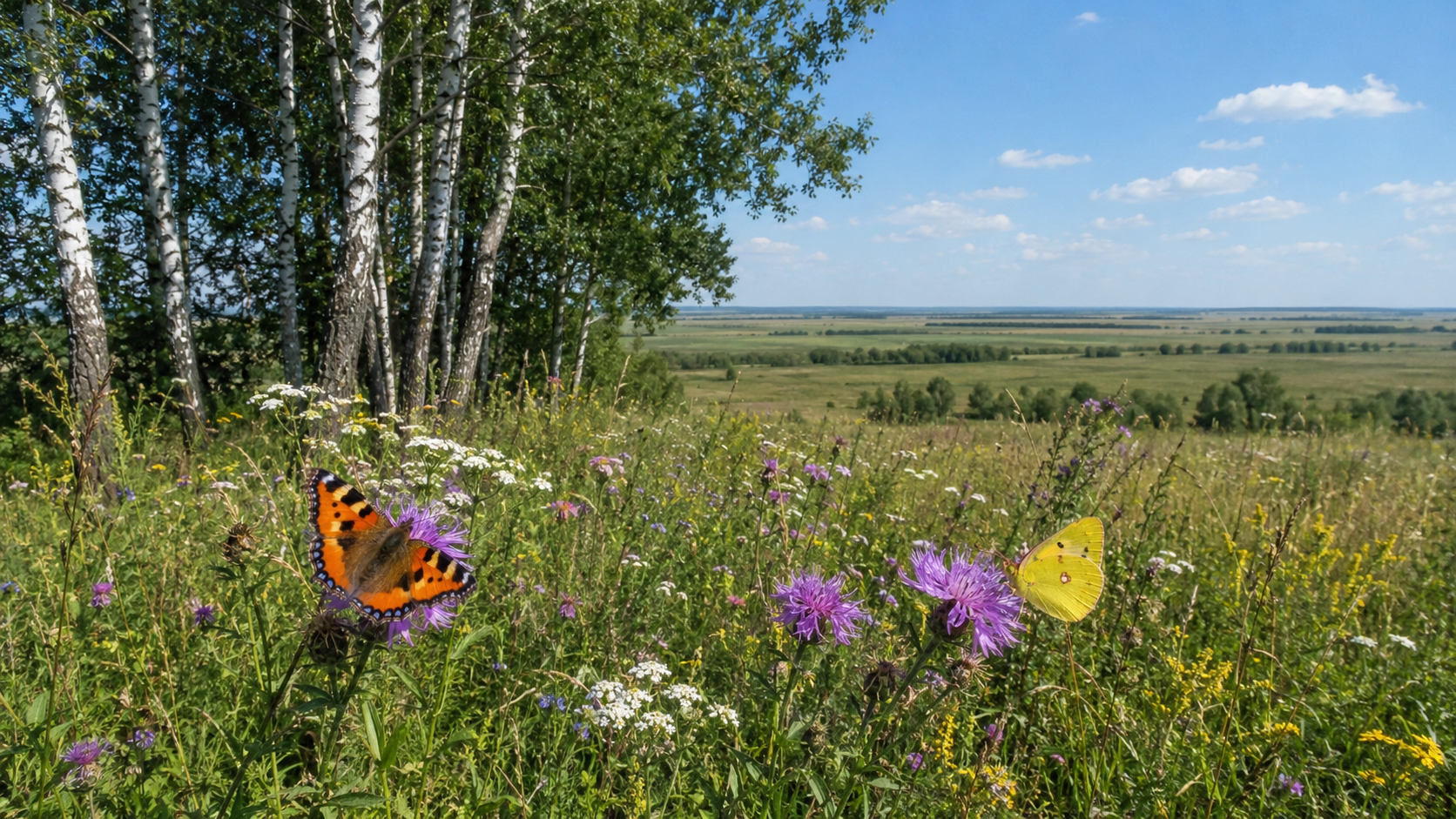
Western Siberia: forest-steppe expanses
Novosibirsk Oblast is one of the largest regions of Western Siberia. Flat relief and continental climate shape the landscape: alternating birch–aspen groves, meadow steppe, and cropland. About 80 day-flying butterfly species — fewer than in mountain or southern regions, but enough for rewarding observation.
Characteristic biotopes
Birch groves
A unique West Siberian landscape: small birch woods amid farmland. Forest edges concentrate the region’s maximum butterfly diversity. Forest nymphalids (small tortoiseshell, peacock, red admiral) and meadow blues fly here.
Mixed-grass meadows
Unploughed meadow patches are the best biotope for blues and fritillaries. Several species of the genus Polyommatus occur on flowering clover and oregano.
Kulunda Steppe
Steppes in the south of the oblast are a biotope for steppe species: sulphurs, satyrs, and steppe blues. Some species are at the northern edge of their range.
Indicator species
- Sulphurs (Colias hyale, C. erate) — common on meadows with clover and sainfoin
- Dark green fritillary (Speyeria aglaja) — July on rich meadows
- Ringlet (Aphantopus hyperantus) — edges of birch groves
- Common blue (Polyommatus icarus) — widespread on meadows
Protected species
Listed in the Red Data Book of Novosibirsk Oblast:
- Chequered blue (Scolitantides orion) — steppe areas with houseleek
- High brown fritillary (Argynnis paphia) — forests with raspberry
Best sites
Around Novosibirsk — meadow areas of Akademgorodok and Zayeltsovsky Bor.
Kulunda Steppe — steppe species in the south of the oblast.
Berdsk Rocks — rocky and meadow biotopes with diverse species.
Seasonal calendar
| Period | Characteristic species |
|---|---|
| May | Brimstone, comma, first sulphurs |
| June–July | Peak diversity, blues, fritillaries |
| August | Satyrs, sulphurs, last species |
See also: butterfly identification key and blues (Lycaenidae).