Butterflies of the United Kingdom
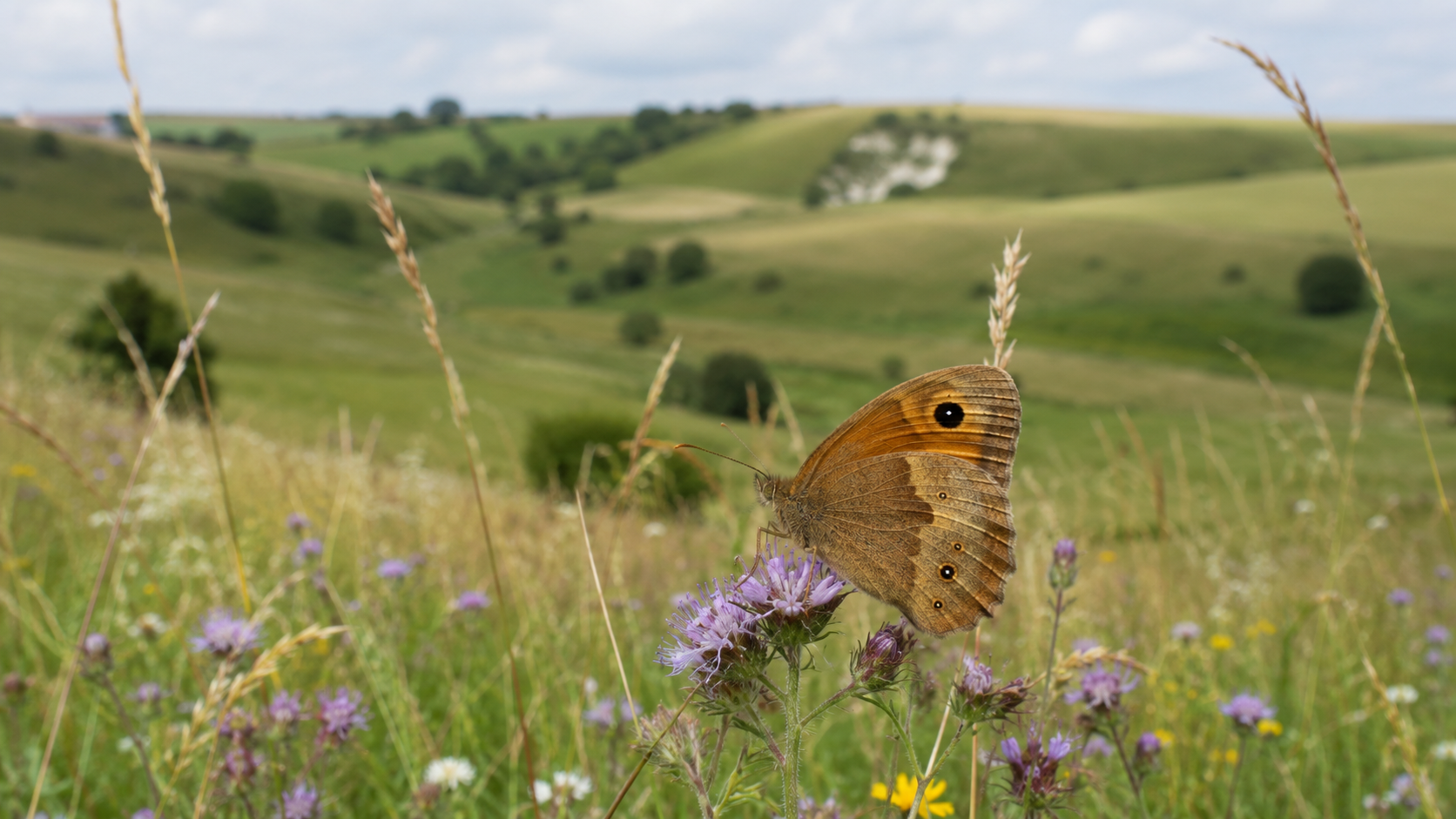
Butterflies of the United Kingdom: overview
The United Kingdom is an island country with a relatively small number of day-flying butterfly species: about 60 species (for comparison, France has more than 250). Island isolation and cool Atlantic climate limit the fauna, but this is offset by a strong butterfly-watching culture and a robust conservation system.
The world's first butterfly monitoring scheme was launched in the United Kingdom in 1976 — the UK Butterfly Monitoring Scheme (UKBMS), which became a model for other countries.
Characteristic biotopes
Chalk downlands
The most valuable biotope for butterflies in the United Kingdom. Short grass turf on chalk slopes is rich in flowers and creates a unique microclimate. Rare and protected species are concentrated here:
- Adonis blue (Polyommatus bellargus) — bright blue, only on southern chalk hills
- Large blue (Phengaris arion) — among the rarest, linked to Myrmica ants
- Marbled white (Melanargia galathea) — black and white, typical inhabitant of downs
Forests and edges
Several species are tied to forest biotopes:
- False daphne fritillary (Euphydryas maturna) — extremely rare
- Lesser purple emperor (Apatura ilia) — inhabitant of oak forest edges
- Poplar admiral (Limenitis populi) — requires old-growth poplar groves
Migrants
Each year several migrant species fly into the United Kingdom from continental Europe:
- Painted lady (Vanessa cardui) — arrives from North Africa and southern Europe; in good years by the millions
- Red admiral (Vanessa atalanta) — partly migratory, partly overwintering
- Cleopatra (Gonepteryx cleopatra) — rare vagrant from the south
Threatened species
Over the last 50 years, about 3 day-flying butterfly species have become extinct in the United Kingdom and numbers of several others have declined sharply. Causes: agricultural intensification, cessation of traditional grazing on chalk downs, forest fragmentation.
The organization Butterfly Conservation actively works to restore habitats.