Butterflies of Spain
Butterflies of Spain: overview
Spain ranks among the countries with the greatest day-flying butterfly diversity in Europe — more than 230 species are recorded. This is explained by geographic position at the junction of Europe and Africa, diverse relief (from sea coast to the high mountains of Sierra Nevada), and mild Mediterranean climate.
Several butterfly species on the Iberian Peninsula are not found in the rest of Europe.
Key regions
Sierra Nevada
The highest mountain system in southern Spain (up to 3,482 m) is a unique zone of endemism. Nevada blue (Polyommatus nivescens) and several other species restricted to this massif occur here. Flight is short — July–August, in a narrow altitudinal belt.
Cantabrian Mountains and Pyrenees
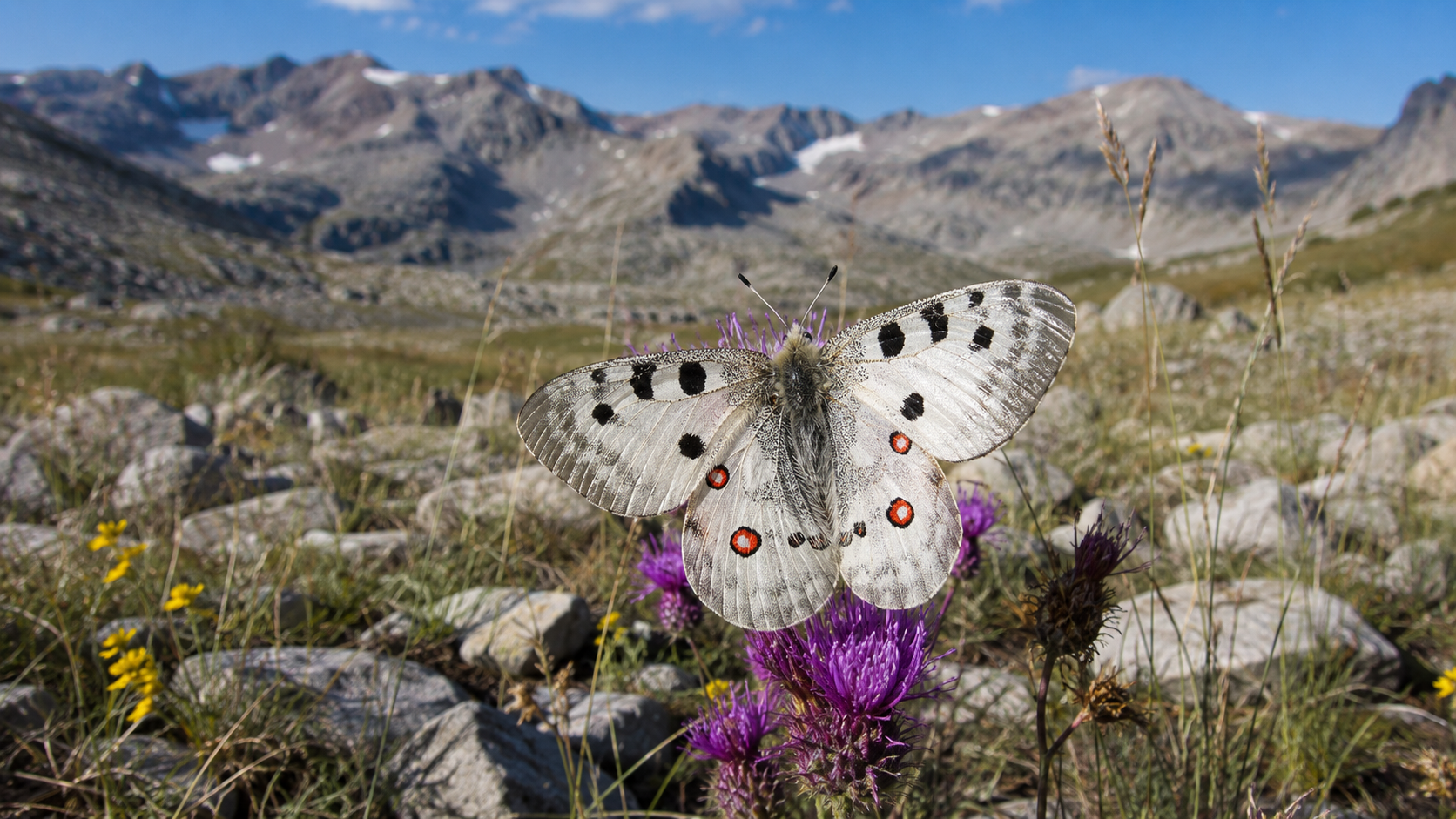
Northern mountain chains create biotopes for species separated from mainland Europe only by a mountain barrier. Apollo, clouded apollo, and numerous Erebia fritillaries occur here.
Andalusia and Mediterranean maquis
Southern Spain is an early-season zone. The first blues, whites, and cleopatra fly here in February. Southern festoon (Zerynthia rumina) and Iberian swallowtail (Iphiclides feisthamelii) — a close relative of the scarce swallowtail — inhabit garrigue (Mediterranean scrub).
Canary Islands
A separate biogeographic region with several endemics:
- Canary Islands white (Pieris cheiranthi) — threatened with extinction
- Canary Islands blue (Cyclyrius webbianus)
Observation season
- February–March — Andalusia: first Mediterranean species
- April–June — center and north: height of season
- July–August — high mountains: Sierra Nevada, Pyrenees
- September–October — second peak on the coast
Iberian endemics
Spain together with Portugal forms the Iberian Peninsula — an isolated biogeographic region. Among butterfly endemics: Cupido lorquinii, Pseudophilotes abencerragus, Agriades zullichi, and several other rare species.