Butterflies of Greece
Greece records around 230 species of day-flying butterflies — one of Europe's richest faunas, where warmth meets limestone mountains and eastern elements.
Overview
Greece sits at the meeting point of three major faunal regions: the Mediterranean, the Balkano-Continental, and the Oriental. No other country in Europe concentrates so many climatic and habitat types within a comparable area — hot, dry coastal maquis; lush river valleys; high limestone plateaus; ancient beech forests; and Aegean island scrub where the fauna of Anatolia spills across into Europe.
Around 230 species of day-flying butterflies have been recorded, with many sites yielding 60–80 species in a single morning's walk in May. The fauna includes both western species at their eastern limit and eastern species at their westernmost occurrence in Europe.
Key regions
Northern Greece — Rhodope and Thrace
The Rhodope Mountains along the Bulgarian border are among the richest butterfly areas in the Balkans. Limestone grasslands, river gorges, and ancient beech forest support:
- Freyer's purple emperor (Apatura metis) — river valleys with willows
- Poplar admiral (Limenitis populi) — forest margins
- Balkan marbled white (Melanargia larissa) — dry grasslands
- Grecian copper (Lycaena ottomanus) — damp meadows and streamsides
The Evros delta and Dadia forest reserve hold populations of forest species rare elsewhere in Europe.
Mount Olympus and Pindos range
The Pindos mountain system, running the length of mainland Greece, and Mount Olympus (2,917 m) offer the best montane butterfly watching. Key species include:
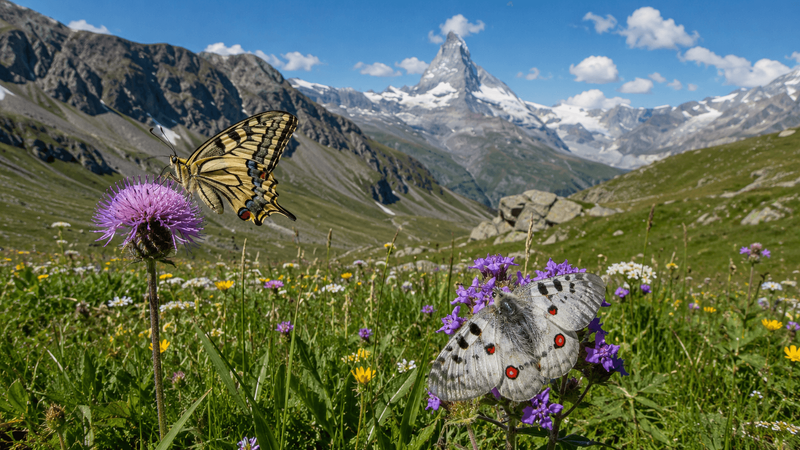
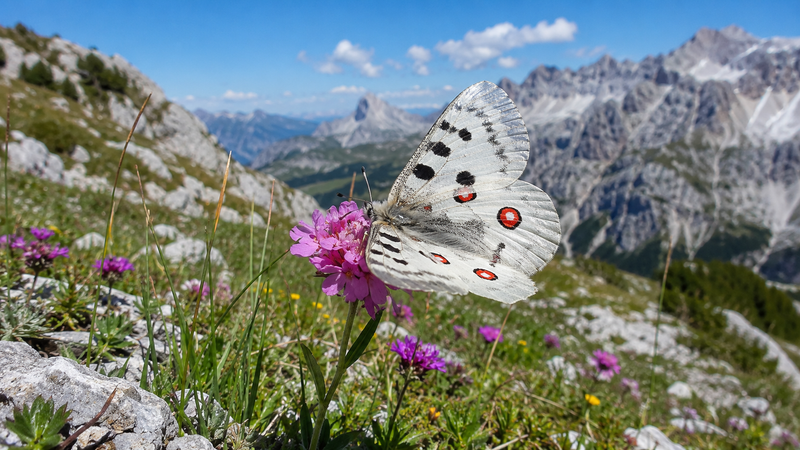
- Apollo (Parnassius apollo) — limestone cliffs with stonecrop
- Greek clouded yellow (Colias aurorina) — high rocky slopes above 1,500 m
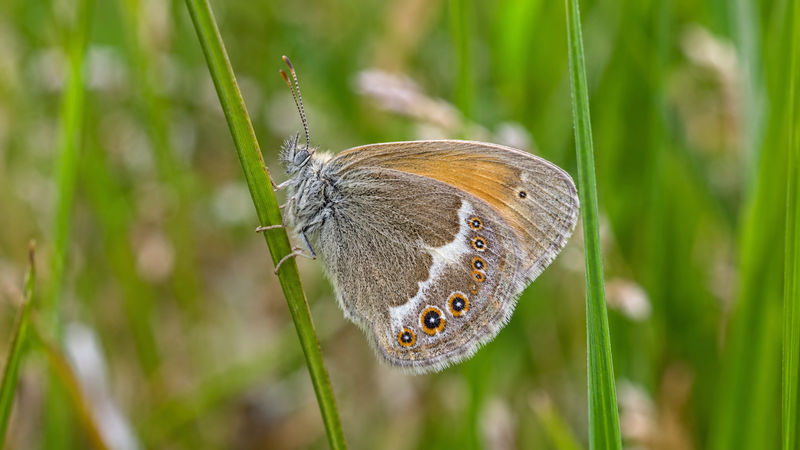
- Mountain ringlet (Erebia epiphron) and Silky ringlet (Erebia gorge) — alpine grasslands
- Shepherd's fritillary (Boloria pales) — fellfield and snowbed margins
Attica and the Peloponnese
Attica (the Athens region) surprisingly retains good butterfly sites on limestone hills with phrygana scrub. The Peloponnese adds southern species:
- Two-tailed pasha (Charaxes jasius) — maquis with strawberry tree
- Cleopatra (Gonepteryx cleopatra) — lemon-winged males visiting flowers along dry woodland rides
- Baton blue (Pseudophilotes baton) — thyme-rich garrigue
- False ilex hairstreak (Satyrium esculi) — low evergreen oak scrub
Aegean islands
The northeastern Aegean islands — Lesbos, Chios, and Samos — are closest to Anatolia and hold species absent from mainland Greece:
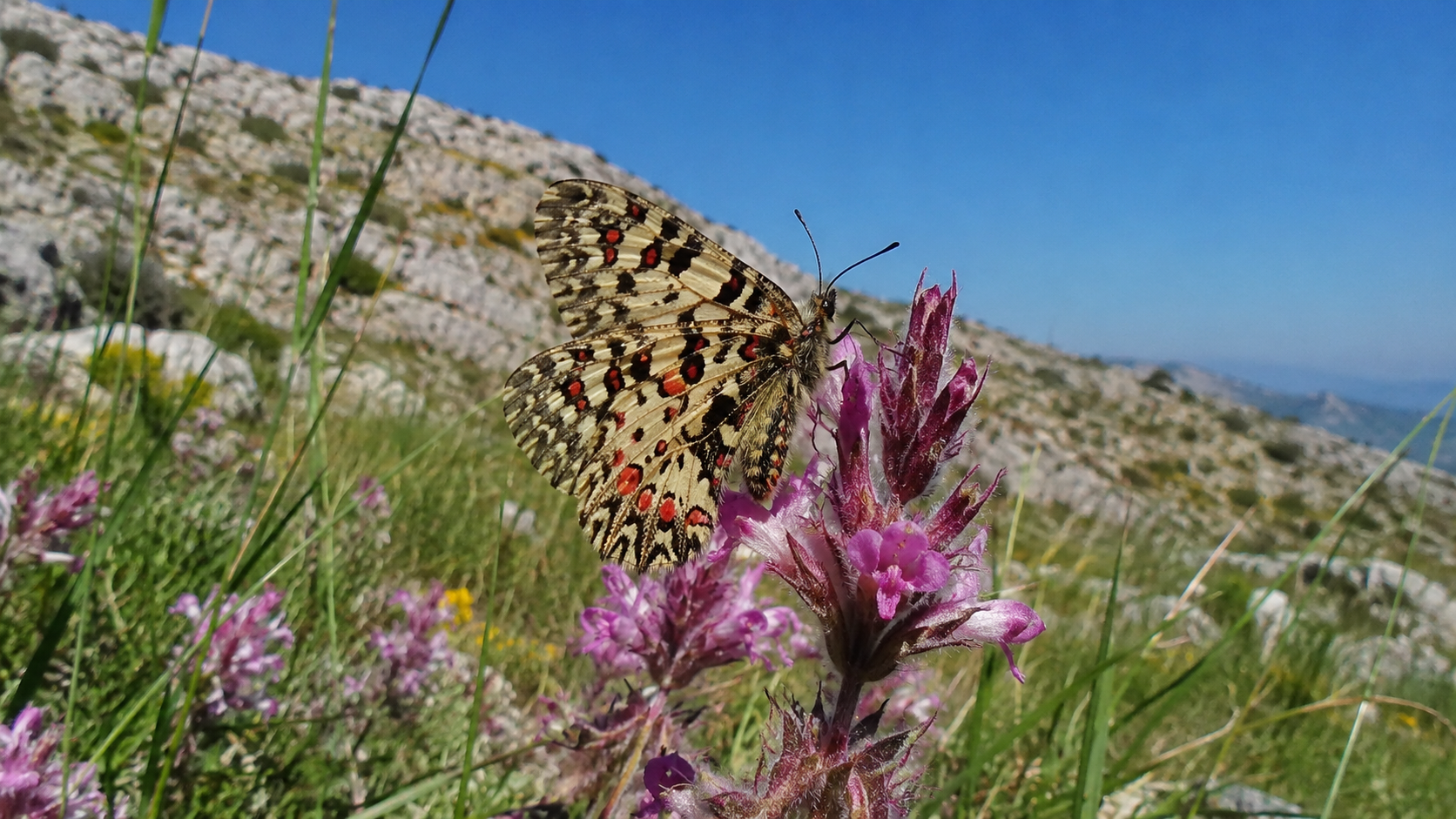
- Eastern festoon (Allancastria cerisyi) — dry hillsides with birthwort (Aristolochia), late March to late April
- Oriental meadow brown (Maniola telmessia) — replaces the common meadow brown on these islands
- Chapman's blue (Polyommatus thersites) — sainfoin grasslands
Crete has a partially differentiated fauna with several endemic subspecies, reflecting its long isolation.
Seasonality
| Period | Highlights |
|---|---|
| February–March | Brimstone, small tortoiseshell, first Cleopatra males in the south |
| April–May | Peak lowland diversity; Eastern festoon on Lesbos; first Apollo |
| June–July | Mountain species in full flight; fritillaries, Erebia, Greek clouded yellow |
| August | Midsummer lull; late-season blues, two-tailed pasha |
| September–October | Second brood clouded yellows, painted lady, red admiral migration |
Observation tips
Greek butterfly watching rewards early starts: in summer, most activity is concentrated in the first three hours after sunrise. Phrygana scrub on south-facing limestone slopes is consistently the most productive habitat; the combination of low aromatic plants (lavender, thyme, sainfoin) and exposed rock provides both nectar and warmth.
The best single site for overall diversity is the Vikos–Aoös National Park in Epirus, where limestone gorges, montane forest, and alpine grassland are accessible within a short walking range. For eastern species, Lesbos in April is unsurpassed — the island is reachable directly from several European airports.