Butterflies of Sweden
Sweden records around 120 butterfly species. Its long north–south extent spans Central European fauna in the south to true Arctic specialists in Lapland.
Overview
Sweden stretches nearly 1,600 km from latitude 55°N in Skåne to 69°N in Lapland, covering boreal taiga, deciduous forests, limestone islands, mountain fell, and Arctic tundra within a single country. This range of biomes produces a butterfly fauna that is modest in total species count — roughly 120 species — but exceptional in its ecological diversity.
The country divides naturally into three butterfly zones: the southern deciduous region, the boreal forest belt, and the montane and Arctic north.
Key regions
Skåne and the south
The southernmost province, Skåne, has the warmest climate and the most Central European butterfly fauna. Beech woods, warm calcareous grasslands, and ponds support species at or near their northern range limits:
- White-letter hairstreak (Satyrium w-album) — elm woodland edges
- Duke of Burgundy (Hamearis lucina) — cowslip-rich woodland glades
- Map butterfly (Araschnia levana) — stinging nettle in damp woodland
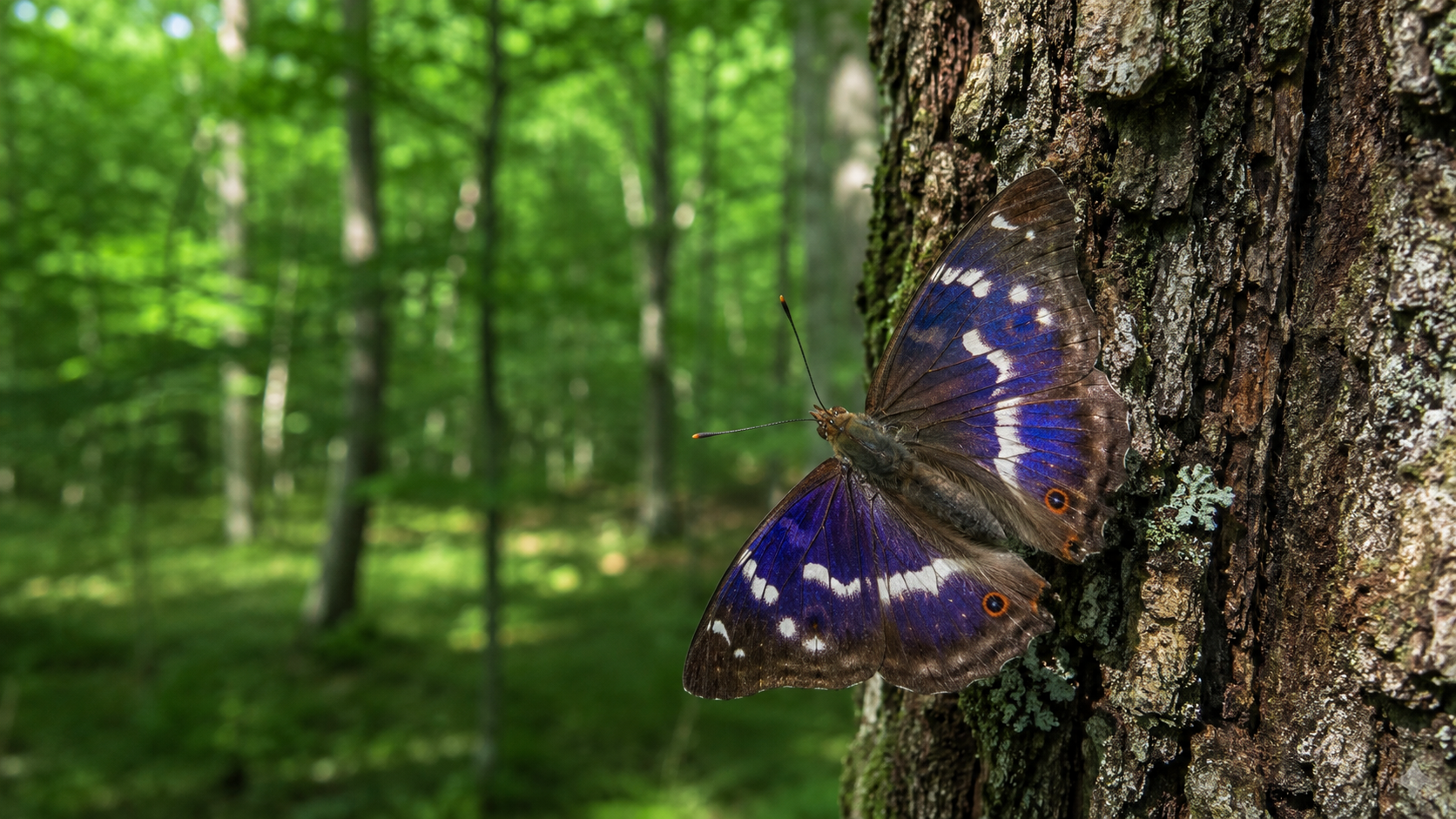
- Purple emperor (Apatura iris) — old deciduous forest with sallow
The coast around Kristianstad and the Söderåsen National Park ridgeline are among the most productive sites.
Limestone islands — Öland and Gotland
These Baltic islands, founded on flat limestone bedrock, have an almost steppe-like character in their central plains (alvar). The thin, alkaline soil supports a low, botanically diverse turf with a remarkable butterfly community:
- Cranberry fritillary (Boloria aquilonaris) — bog margins on the alvar
- Scarce copper (Lycaena virgaureae) — flower-rich limestone grassland
- Chequered skipper (Carterocephalus palaemon) — woodland rides
- Silver-spotted skipper (Hesperia comma) — short, warm grassland with sheep's fescue
Öland is perhaps the best single butterfly site in Sweden, offering 60–70 species in early July.
Central Sweden — the boreal transition
The mixed and boreal forests of Götaland and Svealand hold the core populations of Sweden's most characteristic species:
- Poplar admiral (Limenitis populi) — one of the commonest large woodland butterflies in Sweden, associated with old deciduous forest with aspen
- Silver-washed fritillary (Argynnis paphia) — oak and mixed forest rides
- Pearl-bordered fritillary (Boloria euphrosyne) — woodland clearings and rides with violets
- Large copper (Lycaena dispar) — local in fens and wet meadows along rivers
Northern Sweden and Lapland
Above the Arctic Circle the fauna thins but the remaining species are among the most coveted in Europe:
- Lapland ringlet (Erebia embla) — boggy, dwarf-birch fell tundra
- Arctic fritillary (Boloria chariclea) — mountain tundra with mountain avens
- Moorland clouded yellow (Colias hecla) — dry, south-facing fell ridges
- Thor's fritillary (Boloria thore) — subalpine bogs with cloudberry and alpine violet
- Northern blue (Plebejus idas) — heather moors and fell heath
The Abisko National Park and the Padjelanta plateau in Swedish Lapland are the premier sites for Arctic butterfly watching in Scandinavia.
Seasonality
| Period | Highlights |
|---|---|
| March–April | First overwintered adults: brimstone, small tortoiseshell, Camberwell beauty (south) |
| May–June | First broods in Skåne; pearl-bordered fritillary; white-letter hairstreak |
| Late June–July | Peak diversity across all zones; Arctic species in Lapland |
| August | Second broods in south; migrants (red admiral, painted lady) |
Observation tips
Sweden's best butterfly areas are consistently the warm, sheltered limestone and chalk grasslands of Öland and Gotland in early July, and the old deciduous forest of central Götaland for poplar admiral and purple emperor. In the south, south-facing slopes with calcareous soils and a diverse mix of flowering plants reward careful searching. In Lapland, calm, sunny days are essential — fell species do not fly in cloud, and the Arctic summer can be deceptively short. The most reliable Lapland sites, such as Abisko, are accessible by train from Stockholm.