Butterflies of France
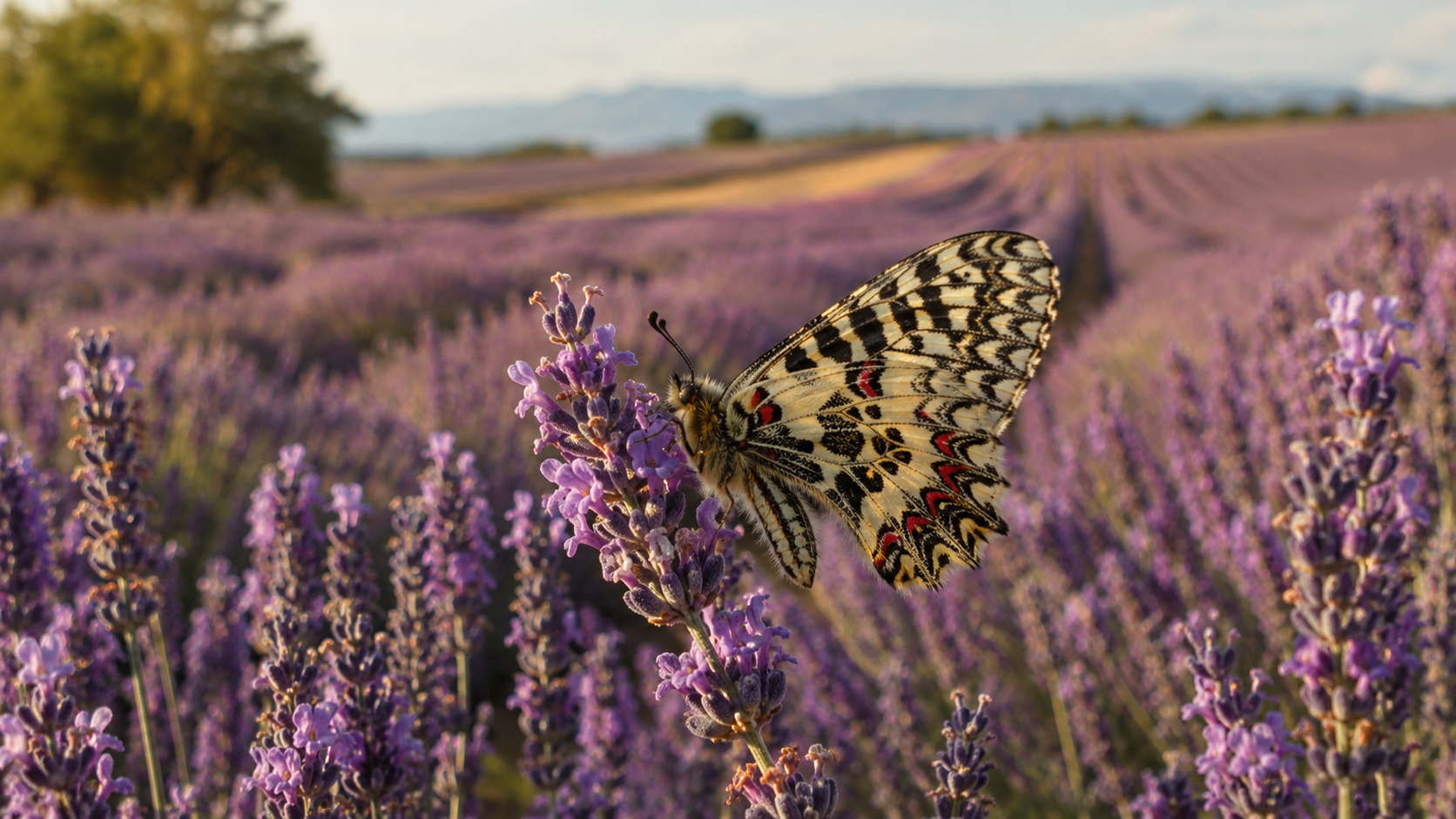
Butterflies of France: overview
France has the greatest day-flying butterfly species diversity in Western Europe. More than 250 species of day-flying butterflies and about 5,000 species of Lepidoptera overall are recorded here. Such richness is explained by geographic position at the junction of Atlantic, continental, and Mediterranean climatic zones.
Key regions
Pyrenees
The mountain massif in southern France is one of Europe's richest entomological regions. Pyrenean endemics live here — species found nowhere else:
- Lefèbvre's ringlet (Erebia lefebvrei) — fritillary of high mountain cliffs
- Portuguese dappled white (Euchloe tagis) — white of rocky slopes
- Several blue species with limited ranges
The southern festoon (Zerynthia rumina) also occurs in the Pyrenees — a striking butterfly with red spots; caterpillar host plant is birthwort.
Côte d'Azur and Provence
The Mediterranean coast is a zone of early spring. The first species fly here in February–March. Typical inhabitants include cleopatra (Gonepteryx cleopatra) with the male's bright orange upper wing surface, numerous blues, and hawk-moths.
Lavender fields of Provence in July–August attract thousands of butterflies, especially painted ladies and bumblebee hawk-moths.
Central Massif and Loire Valley
Mixed forests and meadow ecosystems with a rich set of forest species: purple emperors, admirals, forest blues. Wet meadows along the Loire are home to the rare marsh fritillary.
Observation season
- February–March — Côte d'Azur: first whites, blues
- April–May — central regions: orange tips, brimstone, swallowtails
- June–July — peak: Pyrenees in bloom, lavender fields in Provence
- August–September — red admiral, painted lady, late fritillaries
Unique species
France is the only country in Western Europe where all three European swallowtails can be found: swallowtail (Papilio machaon), scarce swallowtail (Iphiclides podalirius), and southern swallowtail (Papilio alexanor, rare, only in the south).