Butterflies of Turkey
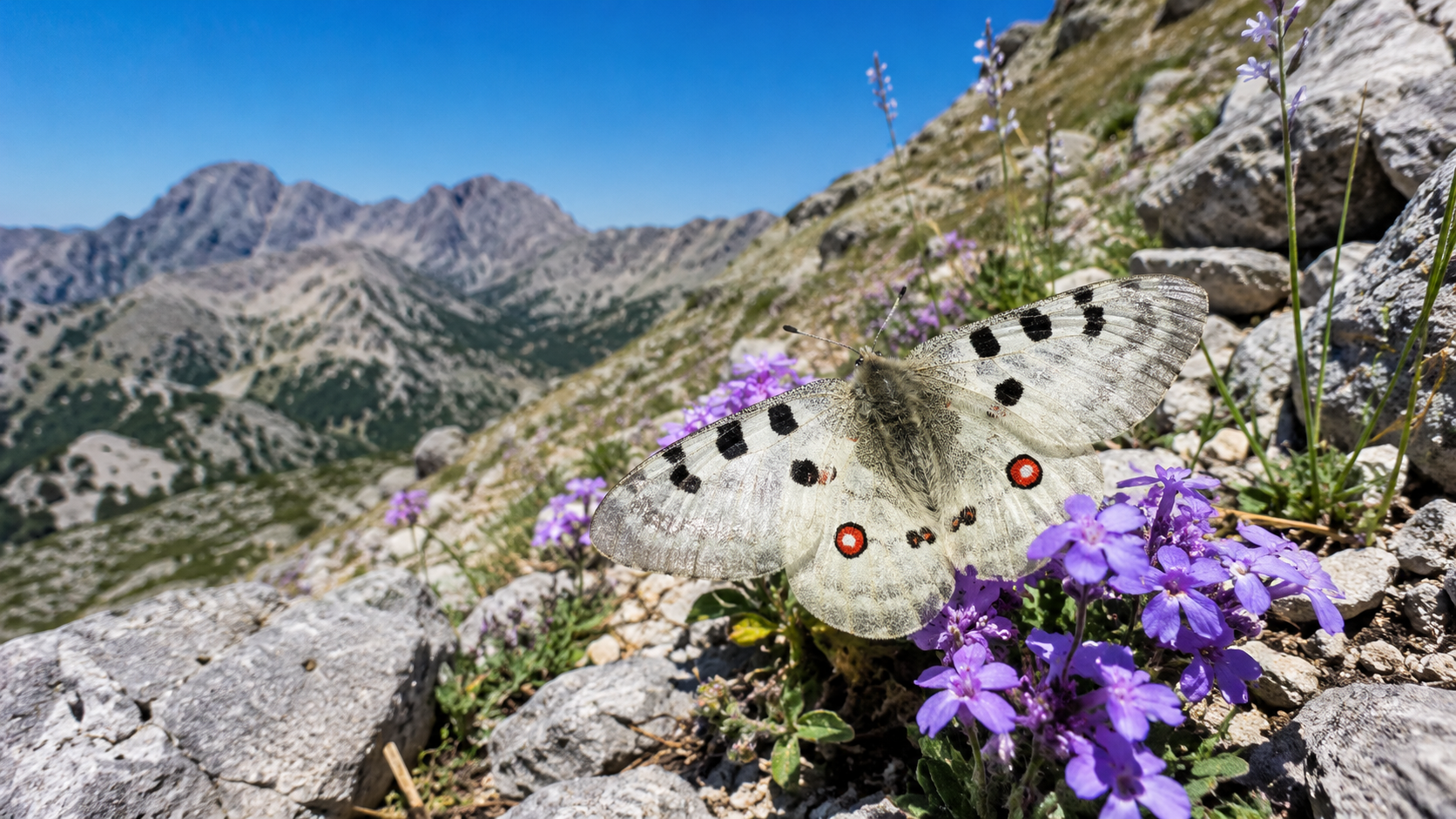
Butterflies of Turkey: overview
Turkey occupies a unique biogeographic position: the country lies at the junction of three biomes — Mediterranean, Eurasian, and Irano-Turanian. The result is exceptional species richness. More than 450 species of day-flying butterflies are recorded, a significant share being endemics or Anatolian sub-endemics.
For comparison: all of Central Europe has fewer than 200 species.
Key regions
Taurus Mountains (Toros)
The mountain chain along the Mediterranean coast is the country's richest region. Species found here include:
- Apollo (Parnassius apollo) — in several isolated populations
- Endemic fritillaries of the genera Erebia and Pseudochazara
- Graylings of several species rare in Europe
- Blues — several Anatolian endemics
Anatolian Plateau
Inland areas with semi-arid climate and steppes. Species adapted to dry conditions occur here: steppe blues, graylings. Several species are Anatolian endemics found nowhere else.
Mediterranean coast
Early spring — the first species fly here in February–March. Typical Mediterranean butterflies: cleopatra (Gonepteryx cleopatra), Zerynthia, numerous swallowtails.
Pontic Mountains (Black Sea coast)
Humid climate, forest zone with fauna close to the Caucasus. Several species linked to relict forests of Pontic rhododendrons occur here.
Observation season
- February–March — Mediterranean: first species
- April–May — coasts and low mountains at peak
- June–August — Taurus Mountains: apollo, fritillaries
- September–October — second peak on the coast
Anatolian endemism
Turkey is one of the world's centers of butterfly endemism. Of more than 450 species, several dozen occur only on the Anatolian Peninsula. Among them: Pseudochazara anthelea thelephusa, Kanetisa circe, and several species of the genus Polyommatus.