Butterflies of China
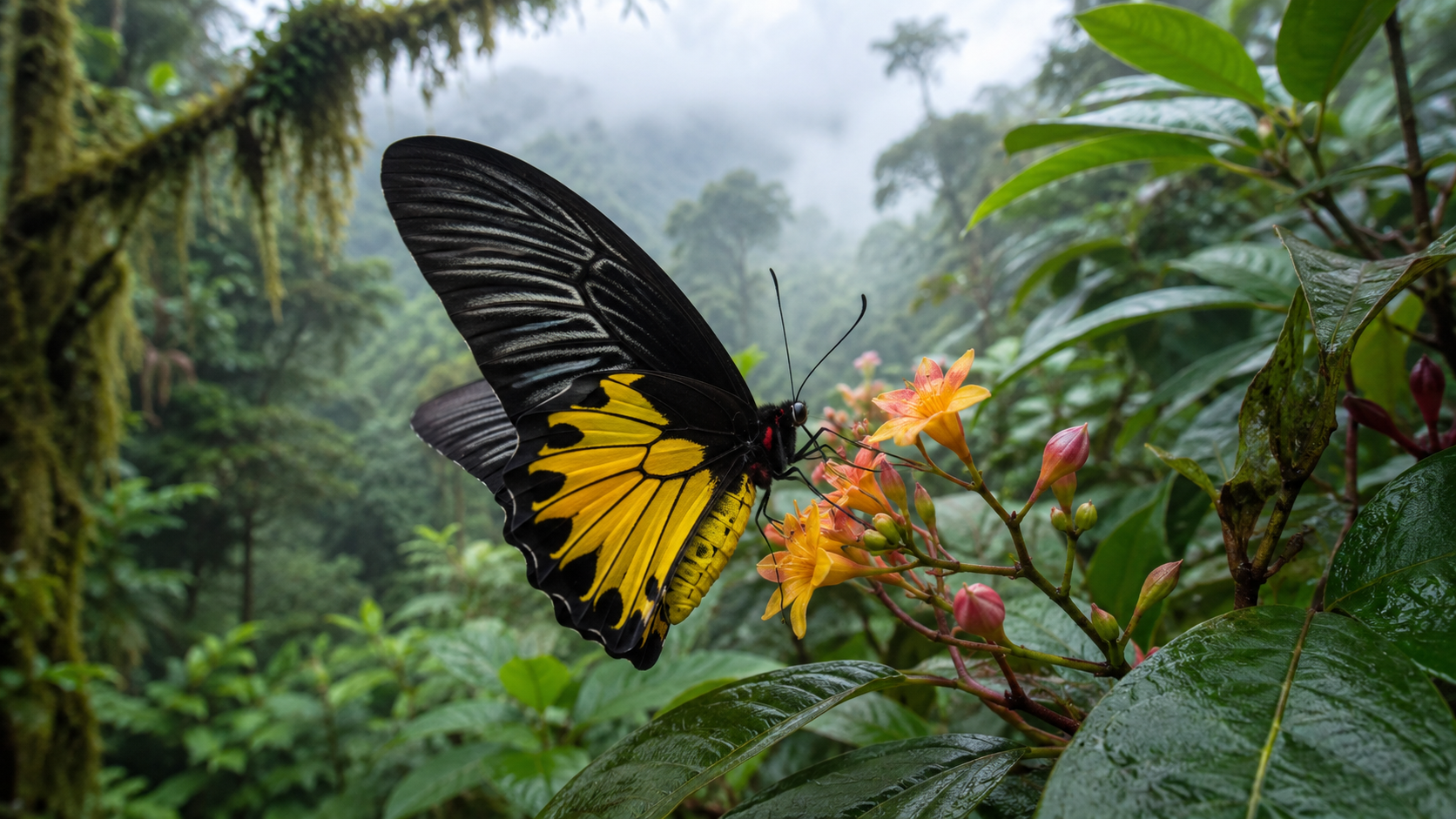
Butterflies of China: overview
China has the largest number of butterfly species of any country in the world. More than 2,000 species of day-flying butterflies are recorded here — about 10% of global diversity. Such richness is explained by the huge area (9.6 million km²), climates ranging from Arctic tundra in Tibet to humid tropics in Yunnan, and position at the junction of several biogeographic regions.
Yunnan Province — world capital of butterflies
Southwestern Yunnan Province is China's richest entomological region and one of the richest in the world. More than 600 species of day-flying butterflies are recorded within a single province. Reasons include:
- Tropical gorges of the Yangtze and Mekong rivers
- Hengduan Mountains — a global biodiversity center
- Overlap of Palearctic and Oriental faunal regions
Huge birdwings of the genera Troides and Trogonoptera live here — the largest butterflies of Eurasia, with wingspans up to 20 cm.
Other important regions
Sichuan and Tibet
High mountains with unique species: several apollo species (Parnassius), high-mountain sulphurs, many fritillaries. Tibetan meadows are home to species adapted to life above 4,000 m.
Southern China (Guangdong, Guangxi)
Humid subtropics with tropical vagrant species from Vietnam and Thailand. Rich in nymphalids, swallowtails, and blues.
Northeast China (Manchuria)
Temperate climate close to Russia's Primorye. Species shared with Primorye occur here: purple emperor, red admiral, small tortoiseshell.
Symbols and conservation
In Chinese culture, the butterfly (蝴蝶, húdié) symbolizes love and happiness. Large trade in dried butterflies for decoration puts pressure on rare species. China protects birdwings, several swallowtail species, and apollos.
Observation season
Because of the country's vast size, seasons differ by region:
- Yunnan: year-round, peak April–August
- Central China: April–October
- Northern China: May–September
- Tibet: June–August