Black-veined White
The black-veined white is a large white butterfly with dark wing veins, whose caterpillars overwinter in colonies and strip fruit-tree leaves in spring.
Key facts
- Latin name
- Aporia crataegi
- Family
- Pieridae
- Wingspan
- 50-65 mm
- Flight season
- May — July
- Host plants
- Hawthorn, Bird cherry, Apple, Plum, Rowan
- Conservation status
- LCLeast Concern
Appearance
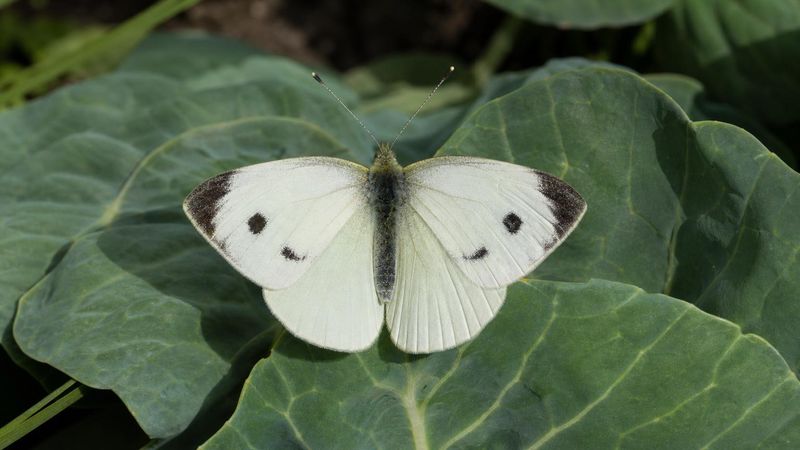
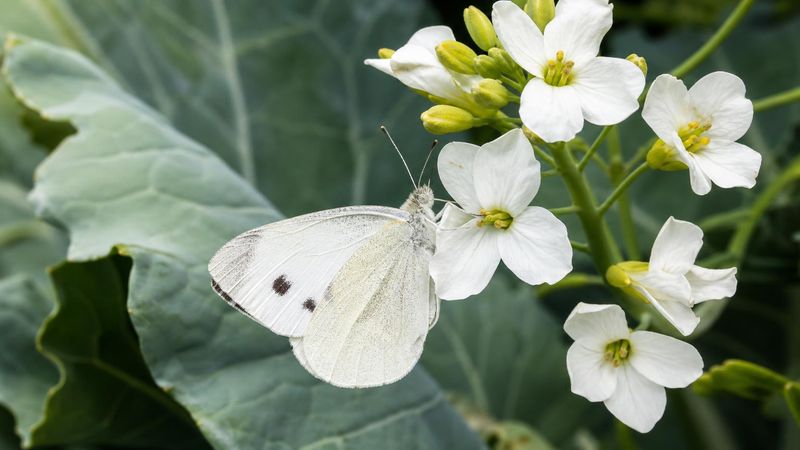
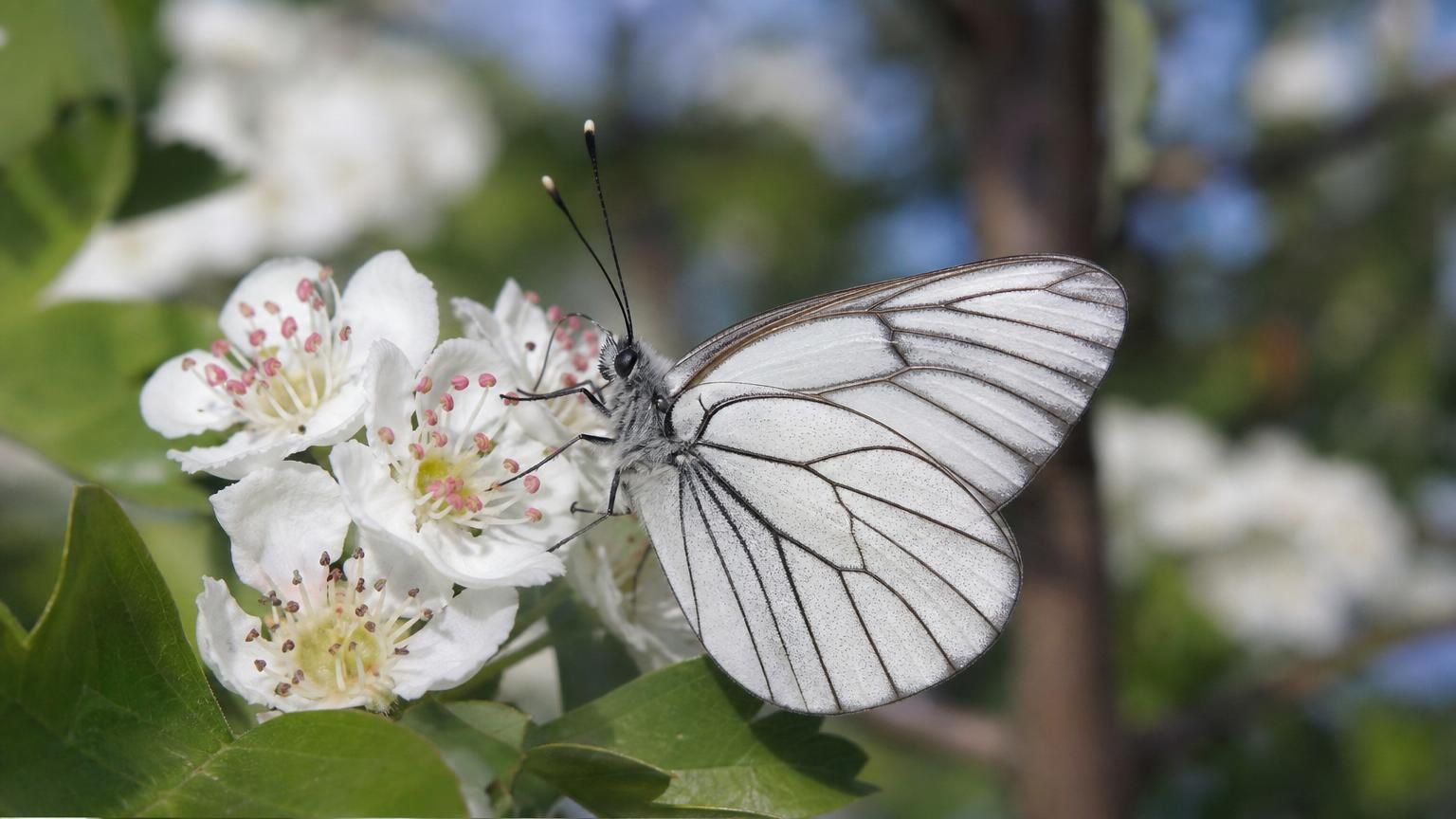
The black-veined white (Aporia crataegi) is a large white with a wingspan of 50–65 mm. Wings are white, almost translucent, with prominent dark veins. This "stained-glass" pattern is unique among European whites.
Sexes are similar; females are slightly larger with darker veins. Scales wear off with age and old individuals look even more transparent.
Range and habitat
Widespread across Europe and Asia to Japan. Common in Russia's forest and forest-steppe zones.
It lives on edges, in gardens, along rivers with shrubs. Closely tied to hawthorn, bird cherry, and fruit trees. In high years it is everywhere; in low years almost unnoticed.
Life cycle
One generation per year. Flight May–July.
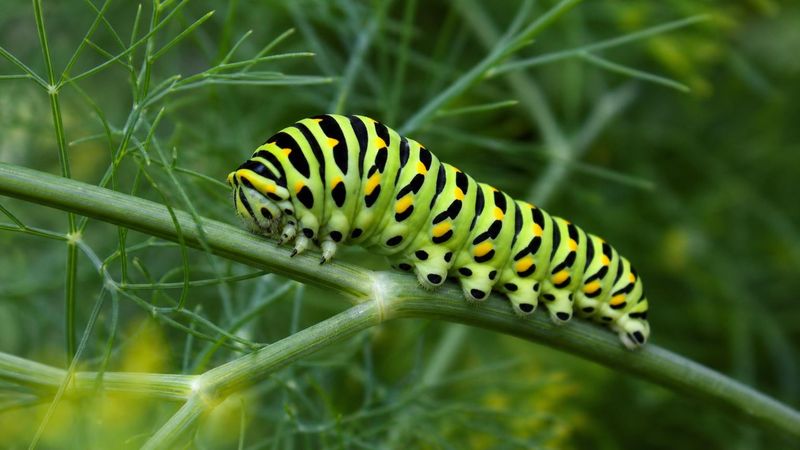
Eggs in batches on host leaves. Caterpillars live in colonies. In autumn they build a hibernaculum of dry leaves and silk on a branch. Twenty to seventy caterpillars overwinter in diapause. In spring they feed actively, then disperse to pupate alone.
Pupa angular, yellow-white with black spots, attached horizontally to a branch.
Behavior
Active on clear sunny days; in cloudy weather it sits motionless on flowers. Flight is light, soaring, slower than the large white. Butterflies gather on forest edges near fruit trees, sometimes in groups of dozens. Males patrol tree crowns for females.
Nectar from hawthorn, bird cherry, buttercup, clover. In dry weather they visit damp soil for puddling.
Reproduction
The female lays eggs in clusters on hawthorn, bird cherry, and apple leaves. Caterpillars live in colonies and strip leaves together, moving branch to branch in sync. In autumn, before finishing development, they build the hibernaculum. In spring they resume feeding and pupate separately. Pupa yellow-white with black dots, horizontal on a branch. One generation per year.
Overwintering
The black-veined white overwinters as a caterpillar inside the hibernaculum. Twenty to seventy caterpillars in diapause per nest. Nests are visible on bare branches after leaf fall. Caterpillars survive frosts to about −20 °C. Removing nests in November–February is the most effective orchard protection.
Interesting facts
- "Stained-glass" wings with translucent veins are unique among European whites — hence the English name.
- In outbreak years caterpillars can completely defoliate apple and bird cherry over several kilometers.
- The parasitic wasp Apanteles glomeratus lays eggs in caterpillars and is an important natural control.
- Old butterflies look semi-transparent as scales wear off, exposing the wing membrane.
Population outbreaks
Numbers cycle. In "good" years the species multiplies massively and can seriously damage orchards. Main controls: manual removal of hibernacula in autumn and early spring, and biological sprays with Bacillus thuringiensis.