Small White
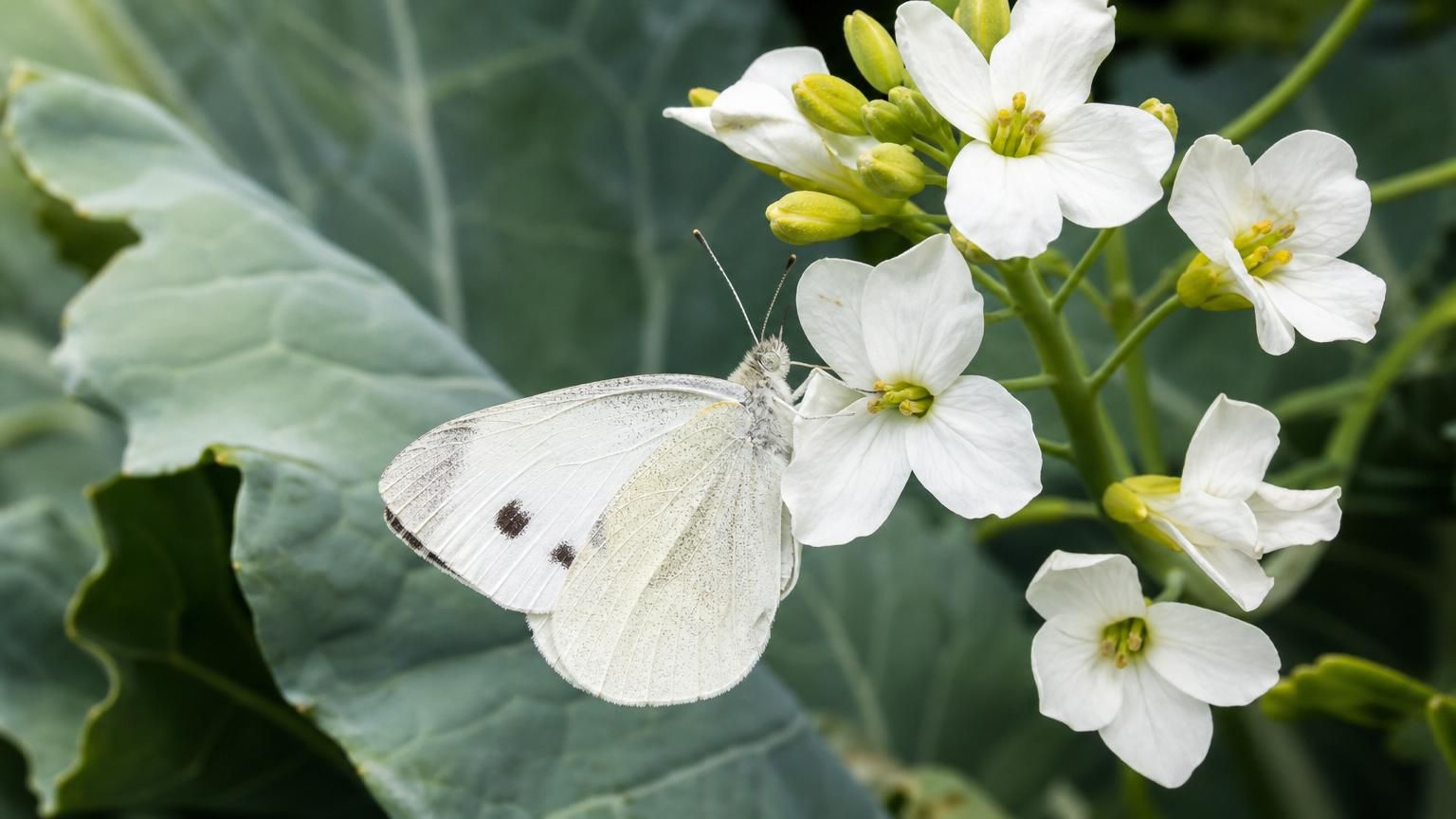
The small white is a small white butterfly similar to the large white, whose caterpillars feed on cabbage — the most common garden pest among the whites.
Key facts
- Latin name
- Pieris rapae
- Family
- Pieridae
- Wingspan
- 38-52 mm
- Flight season
- March — October
- Host plants
- Cabbage, Radish, Mustard, Oilseed rape, Nasturtium
- Conservation status
- LCLeast Concern
Appearance
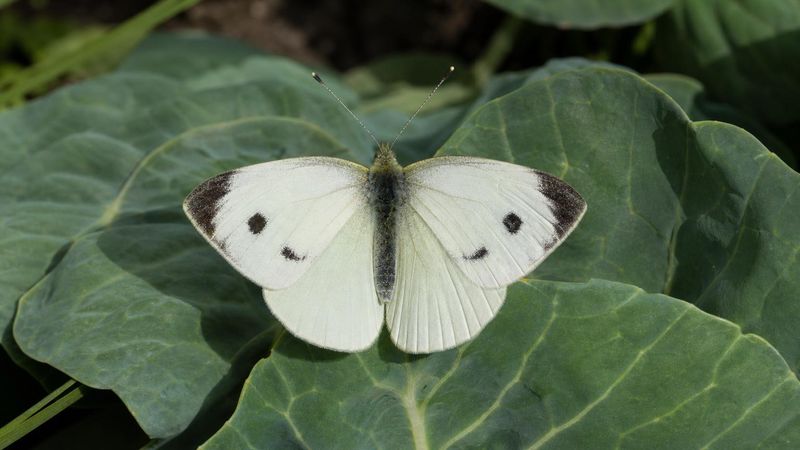
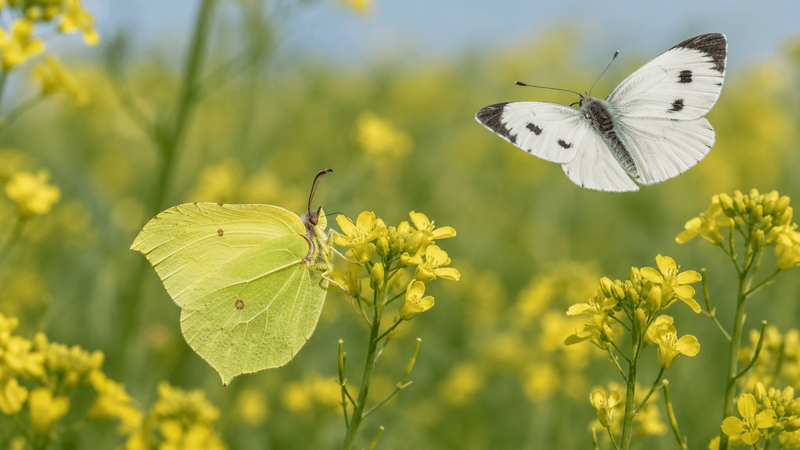
The small white (Pieris rapae) is a small white butterfly with a wingspan of 38–52 mm. The upper side of the wings is white with a small dark spot at the tip of the forewings. The female has one to two small grey spots in the centre of the forewing. The male has one spot or none.
The underside of the hindwings is yellowish green. In the first generation the colour is paler; in later broods it is more contrasting.
Range and Habitat
The small white is distributed in Eurasia and North Africa and has been introduced to North America and Australia. It occurs in almost all habitats with crucifers.
It has successfully colonised agroecosystems: cabbage fields, gardens, and rape crops. It is one of the few species that benefits from industrial agriculture — areas of host plants are vast.
Life Cycle
Three to four generations per year. It overwinters as a pupa. The first adults appear in March in warm weather.
Eggs are laid singly on the underside of crucifer leaves. The caterpillar is green with yellow side stripes and is well camouflaged. The pupa is angular, green or brownish.
Global Pest
The small white is one of the most important cabbage pests worldwide. Damage on rape fields is estimated at hundreds of millions of roubles annually. Biological pesticides based on Bacillus thuringiensis are used against it.