Green-veined White
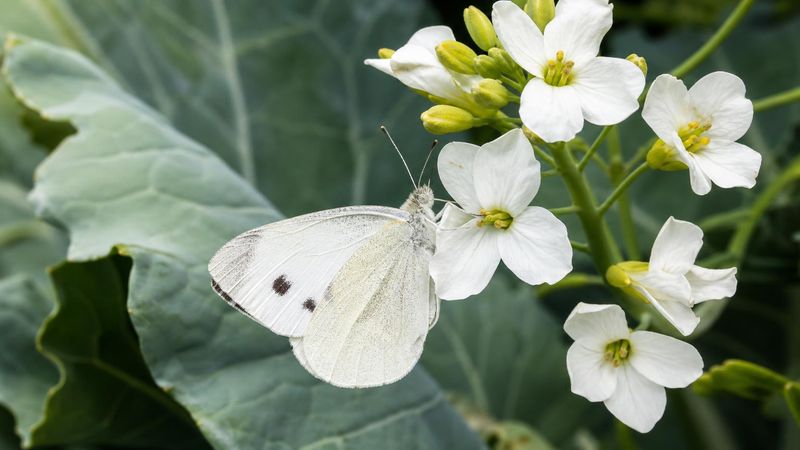
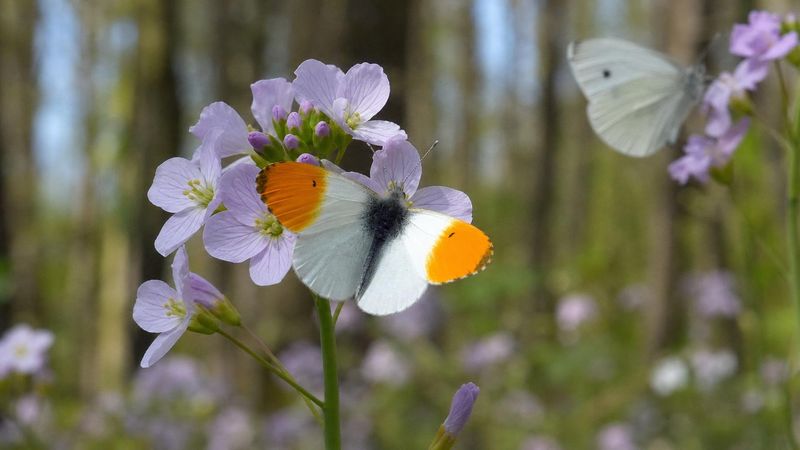
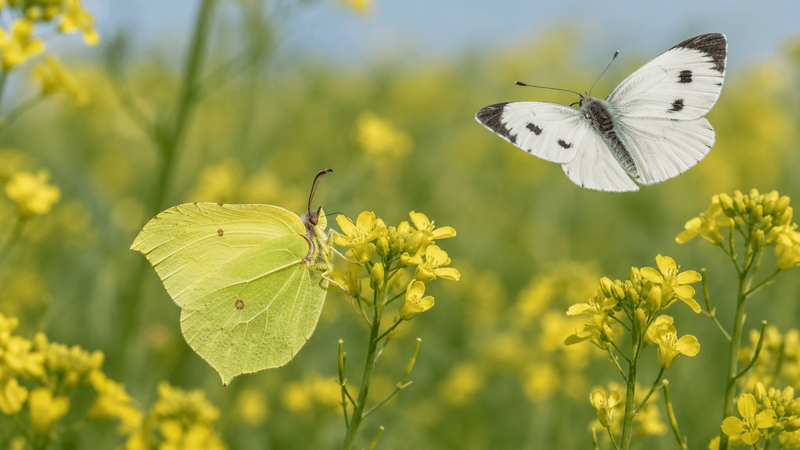
The green-veined white is a small white with characteristic green veins on the underside of the hindwings. The most common of the three "garden whites."
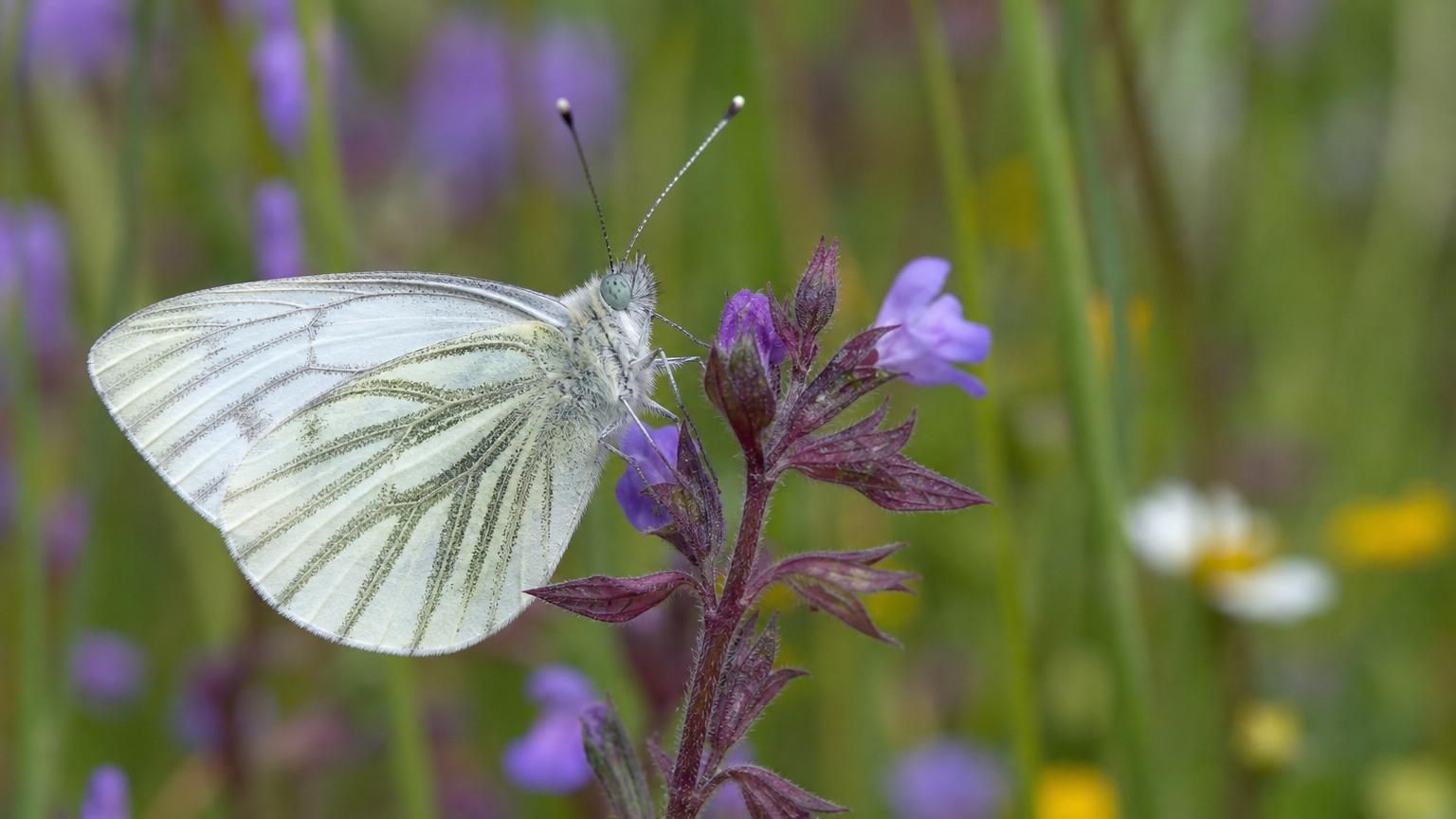
Key facts
- Latin name
- Pieris napi
- Family
- Pieridae
- Wingspan
- 38-50 mm
- Flight season
- April — September
- Host plants
- Garlic mustard, Charlock, Cabbage, Radish
- Conservation status
- LCLeast Concern
Appearance
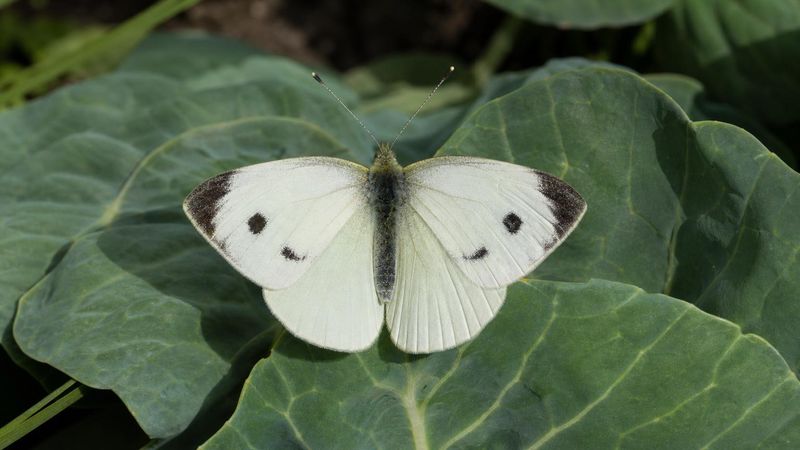
The green-veined white (Pieris napi) is a small white with a wingspan of 38–50 mm. The upper side is white with a small dark spot on the forewing tip. It resembles the small white but differs on close inspection.
The key mark is the underside of the hindwings: not plain yellow-white like the small white, but with dark green or gray veining along the wing veins.
Range and habitat
One of the most widespread species in Eurasia. In Russia it occurs everywhere.
More eurytopic than large white and small white: it prefers damper, shadier places — stream banks, damp edges, river floodplains. It visits meadows with wild crucifers.
Life cycle
2–3 generations per year. Pupa overwinters. First generation flies April–May, second in July.
Eggs singly on leaves or stems of crucifers. Caterpillar green, well camouflaged. Pupa green or grayish.
Variability
The green-veined white shows strong seasonal variation. Spring forms (forma napaeae) are smaller with weaker pattern; summer forms are larger and more contrasted. Mountain populations have darker veining.