Brimstone
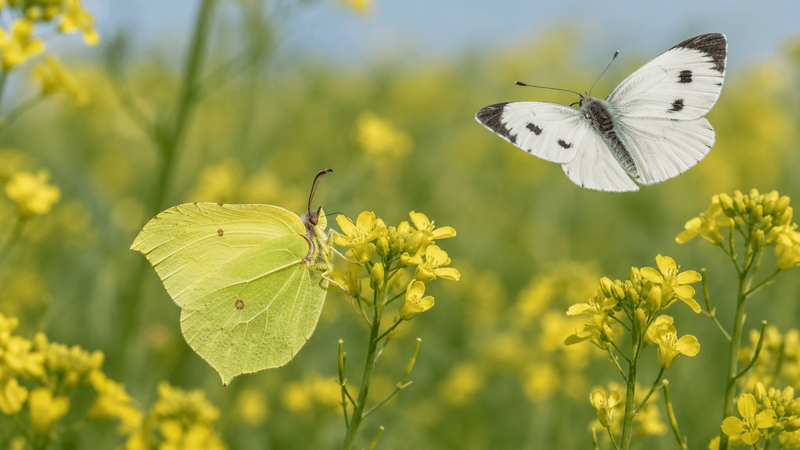
The brimstone is the first butterfly of spring: males bright yellow, females greenish white. It lives longer than most butterflies — up to 13 months.
Key facts
- Latin name
- Gonepteryx rhamni
- Family
- Pieridae
- Wingspan
- 52-62 mm
- Flight season
- March — October
- Host plants
- Alder buckthorn, Purging buckthorn
- Conservation status
- LCLeast Concern
Appearance
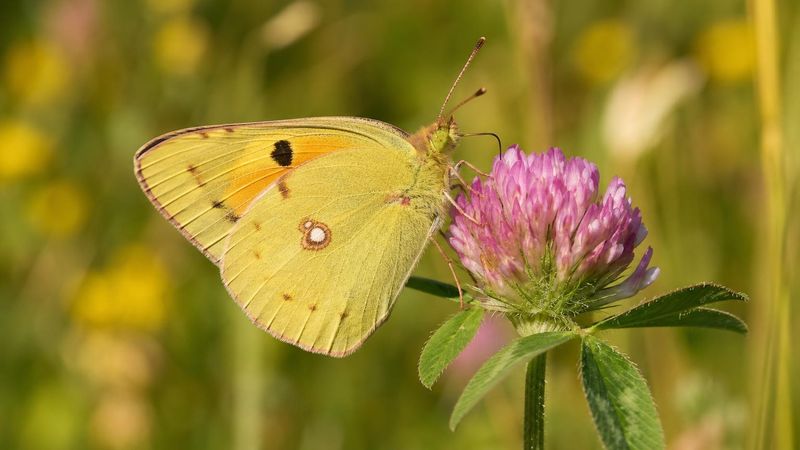
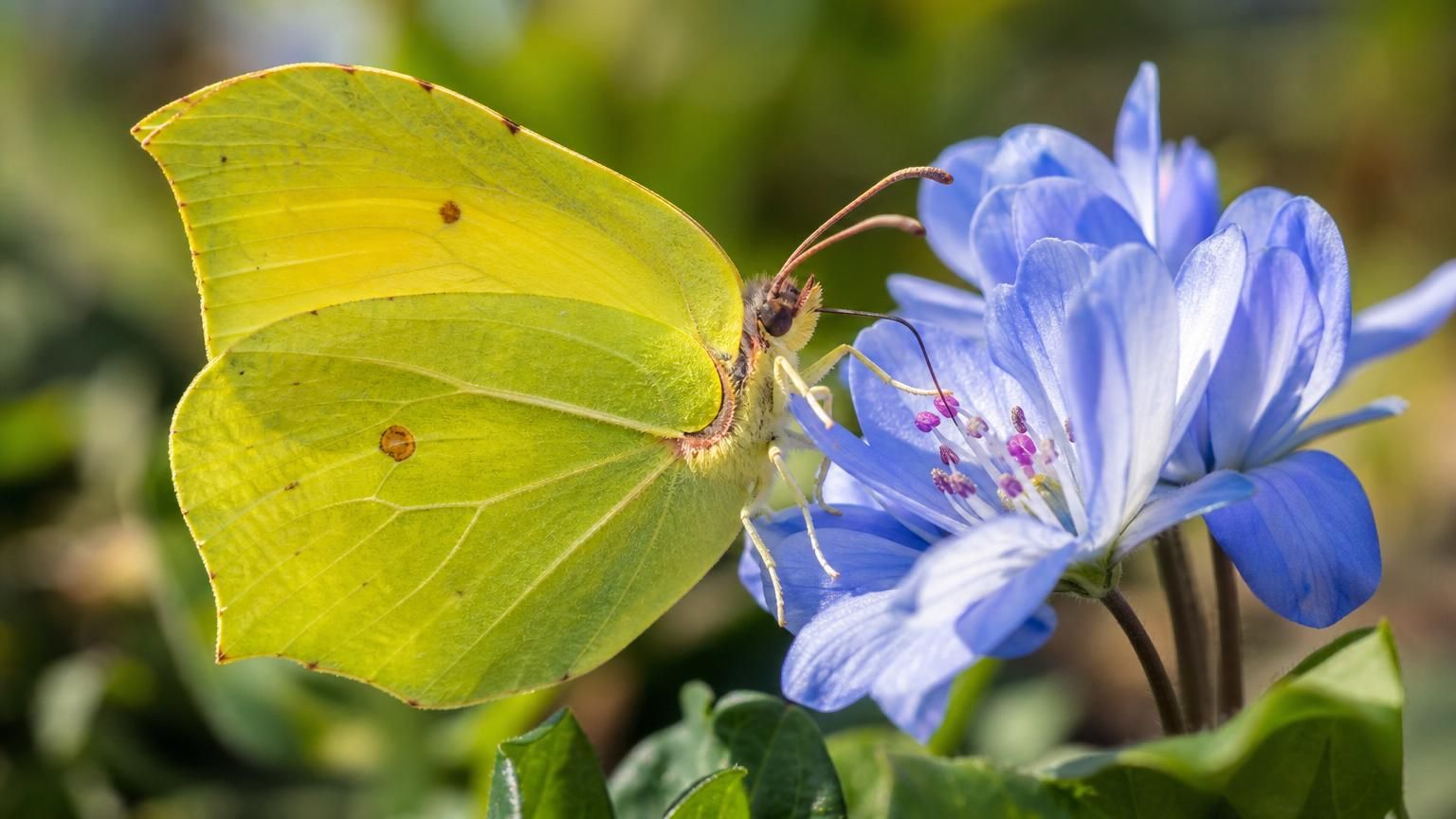
The brimstone (Gonepteryx rhamni) is a medium butterfly with a wingspan of 52–62 mm. Wings have a characteristic angular shape with small pointed extensions. In the male the upper side is bright yellow (lemon) with a small orange spot in the center of each wing. The female is much paler — greenish white and almost invisible in green foliage.
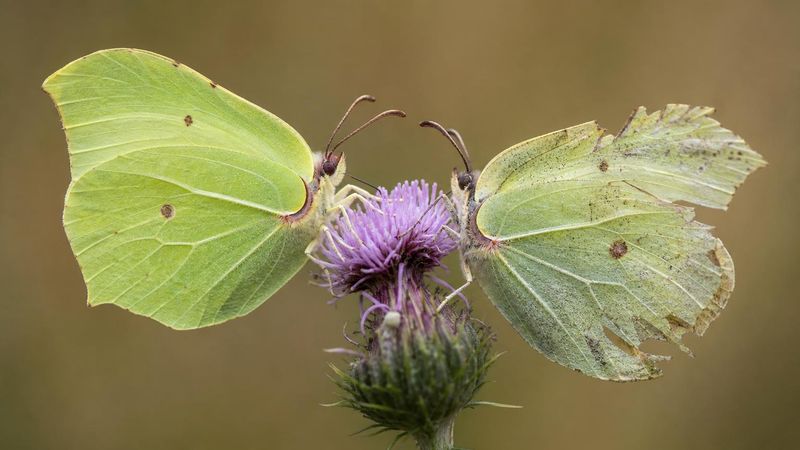
The underside in both sexes is greenish with veining — excellent camouflage as a leaf. With wings folded the butterfly is virtually indistinguishable from a leaf.
Range and habitat
The brimstone is found across Europe and temperate Asia. In Russia it is common in forest and forest-steppe zones.
It lives on forest edges, in gardens and parks, and along river banks with buckthorn shrubs. It is largely tied to habitats of its hosts — alder buckthorn and purging buckthorn.
Record lifespan
The brimstone lives 10–13 months — one of the records among European day-flying butterflies. It emerges from the pupa in July, feeds on nectar, and in August enters overwintering. It winters in understory, hidden among evergreen plants (ivy, mistletoe). In spring it awakens in February–March.
After overwintering, females mate and lay eggs on buckthorn. Spring-generation adults live another month or two, then die.
Behavior
The brimstone is active on warm sunny days. In cloudy or cold weather it hides in bushes with wings folded: the underside mimics a leaf so well that a sitting butterfly is almost impossible to find. Males patrol edges and intercept females; flight is leisurely and fluttering but capable of quick bursts.
They feed on nectar of dandelion, willow, clover, burdock. In spring, after overwintering, they are among the first to visit willow and coltsfoot flowers.
Reproduction
Mating occurs in spring soon after emergence from overwintering. The female lays eggs singly on the underside of young buckthorn leaves. The caterpillar is green with a white lateral stripe — perfect camouflage on a leaf. It passes through five instars in three to four weeks. The pupa is green, attached horizontally to a branch with a silk girdle. One generation per year: adults emerge from pupae in July and live until the following summer.
Life cycle
Eggs are laid singly on young buckthorn leaves. The caterpillar is green with a white lateral stripe, superbly camouflaged on the leaf. The pupa is green, attached horizontally to a branch. One generation per year.
Overwintering
The brimstone overwinters as an adult. Individuals hide among leaves of evergreen plants — ivy, mistletoe, dense bramble. The dark green underside is ideal camouflage in winter vegetation. Overwintering occurs below 0 °C: glycerol accumulates in the body as antifreeze. In spring, at the first thaw (+5…+8 °C), the brimstone is among the first to wake.
Interesting facts
- The brimstone can live up to 13 months — an absolute record among European day-flying butterflies.
- The English word "butterfly" may come from "butter-coloured fly" — the yellow male brimstone as the prototype.
- With wings folded the butterfly is almost indistinguishable from a leaf: in experiments predatory birds did not notice it.
- The brimstone is a major spring pollinator: it appears before most insects and visits the first willow and coltsfoot flowers.