Butterflies of Panama
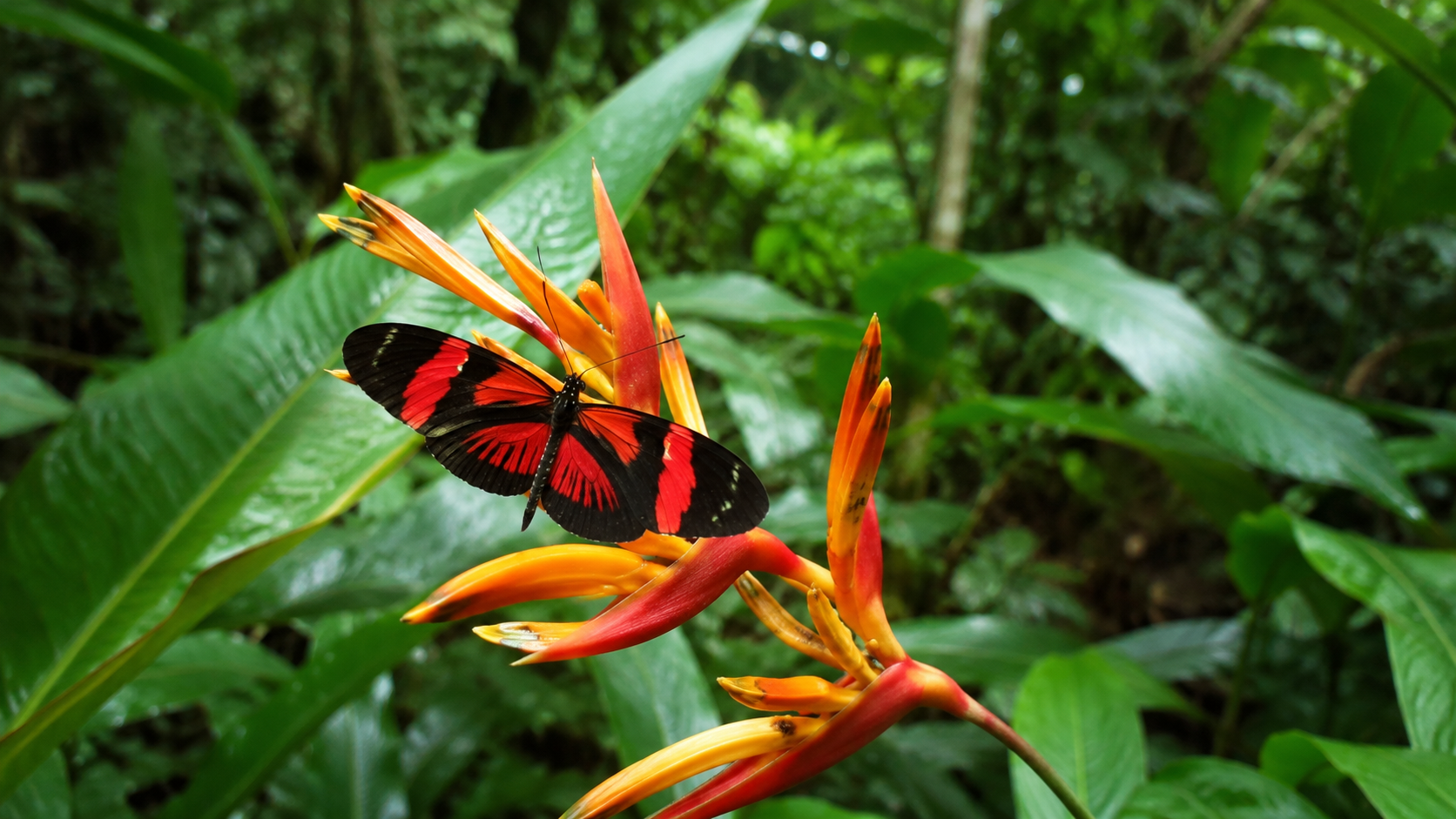
Butterflies of Panama: overview
Panama is a narrow isthmus 80 to 200 km wide connecting North and South America. This unique geography makes the country one of the world's most important biodiversity centers. More than 1,200 species of day-flying butterflies are recorded — comparable to individual Amazon regions.
Biological corridor
The Panamanian isthmus formed about 3 million years ago when tectonic movements joined North and South America. This event — the Great American Interchange — allowed species to migrate in both directions. Panamanian butterflies reflect both faunas: northern nymphalids neighbor South American morphos and heliconians.
Key sites
Barro Colorado Island
This artificial island in Gatun Lake (formed when the Panama Canal was built) is one of the world's most studied tropical forests. The Smithsonian Tropical Research Institute (STRI) biological station has monitored butterflies since the 1920s.
Chiriquí Mountains
A mountain region in western Panama with cloud forests and high-mountain meadows. Central American mountain species occur here: mountain heliconians, parnassians, and endemic blues.