Butterflies of Costa Rica
Butterflies of Costa Rica: overview
Costa Rica is a small Central American country of about 51,000 km², but by biodiversity density it ranks among the world's top three. More than 1,500 species of day-flying butterflies and several thousand nocturnal species are recorded. This is supported by two ocean coasts, mountain ranges up to 3,800 m, and diverse tropical forest biomes.
Stars of Costa Rican fauna
Blue morpho
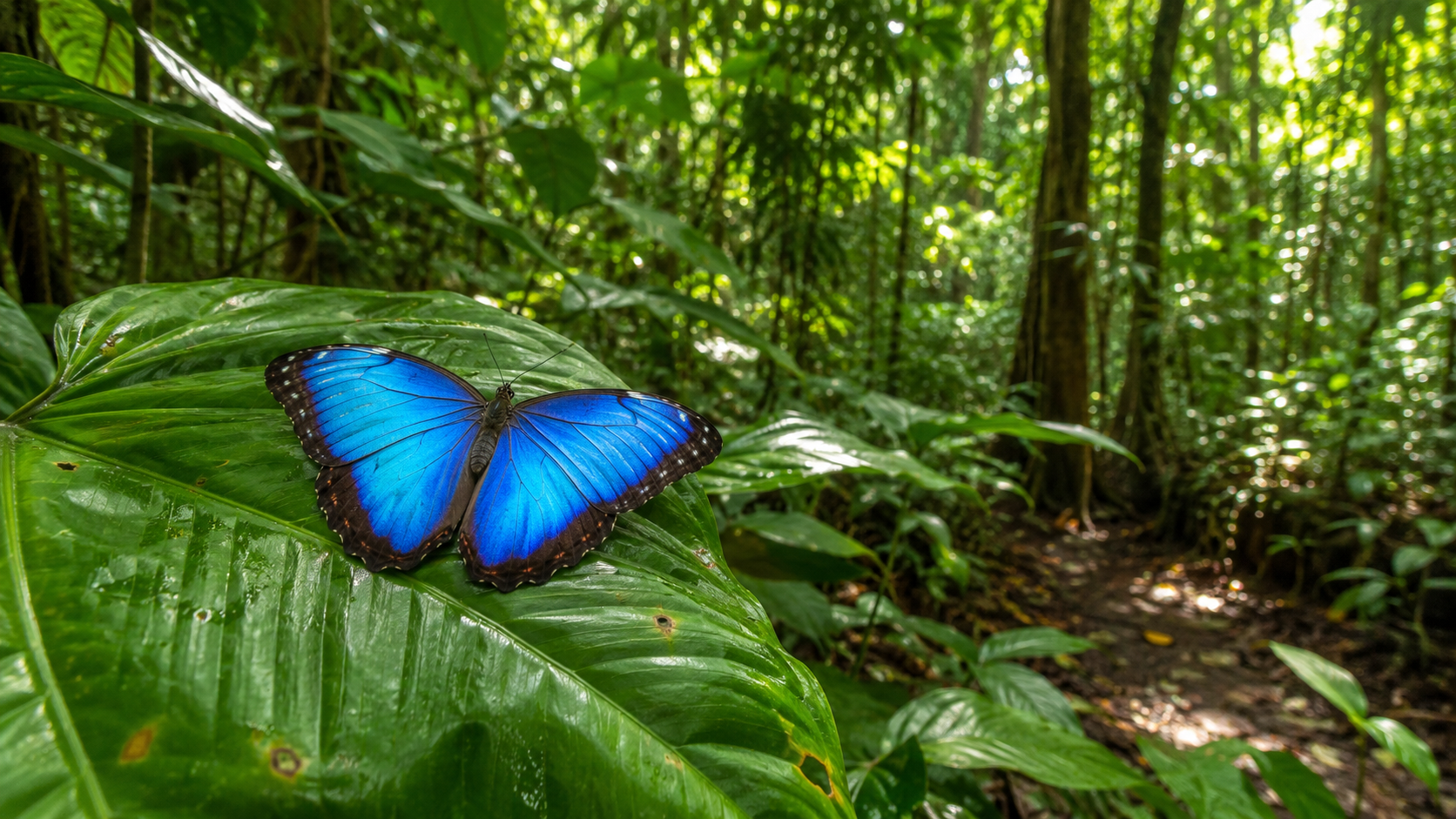
Blue morpho (Morpho peleides) is a symbol of Central American tropical forests. Wingspan up to 15 cm. The iridescent blue is not pigment but structural: nanostructures on scales scatter blue light, creating a "shimmering sky" effect. Costa Rica is a key region in its range.
Heliconians
Several dozen Heliconius species inhabit Costa Rican tropical forests. These butterflies use Müllerian mimicry: toxic species share similar warning coloration so predators learn to avoid them faster.
Altitudinal zones
Costa Rica is divided into several altitudinal belts, each with unique fauna:
- Lowlands (0–500 m): greatest diversity of neotropical species
- Foothills (500–1,500 m): cloud forests with endemic species
- Mountains (1,500–3,800 m): temperate and high-mountain species, including parnassians
For entomology tourists
Costa Rica has well-developed infrastructure: specialized butterfly gardens operate; Monteverde and La Paz reserves offer tours. The best time to visit is the dry season (December–April).