Butterflies of Poland
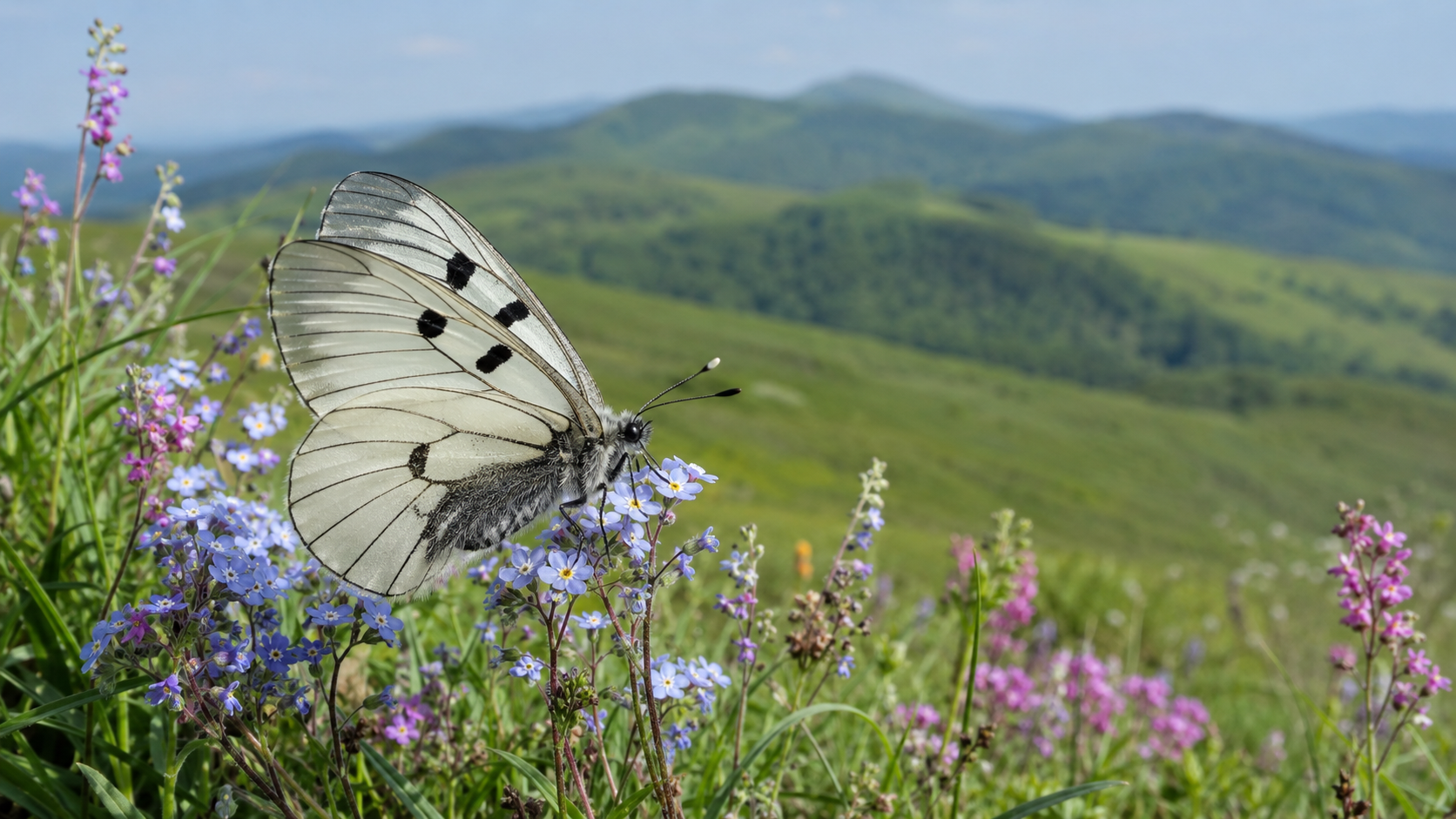
Butterflies of Poland: overview
Poland lies at the intersection of Western and Eastern European biogeographic regions, ensuring rich species diversity. About 160 species of day-flying butterflies are recorded. Some species already rare or extinct in Western Europe persist in adequate numbers in Poland.
Key regions
Carpathians (Bieszczady, Tatras)
The mountain system in southern Poland is the main refuge of rare species:
- Apollo (Parnassius apollo) — in the Tatras, strictly protected
- Clouded Apollo (Parnassius mnemosyne) — in the Bieszczady, beech forests
- Several Erebia fritillaries characteristic of the Carpathians
- Scarce swallowtail (Iphiclides podalirius) — at warm forest edges and in gardens
Białowieża Forest
Europe's largest primeval forest, shared between Poland and Belarus. Forest species requiring old-growth forest live here: purple emperors, admirals, several rare fritillaries. Low human impact creates unique conditions for preserving forest entomofauna.
Masurian bogs
The lake district in the northeast is home to bog species: marsh fritillary (Euphydryas aurinia), pearl-bordered fritillary (Boloria aquilonaris), heath's sulphur.
Eastern European species
Several species rare or absent in Western Europe occur in Poland:
- Alcon blue (Phengaris alcon) — bog meadows, dependent on gentian and Myrmica ants
- False clouded apollo — not to be confused with the swallowtail
- Fritillaries of several species on forest edges
Threats and conservation
Poland retains significant areas of semi-natural meadows, a critically important biotope for many species. Agri-environmental subsidy programs support traditional meadow management important for butterfly conservation.