Butterflies of Italy
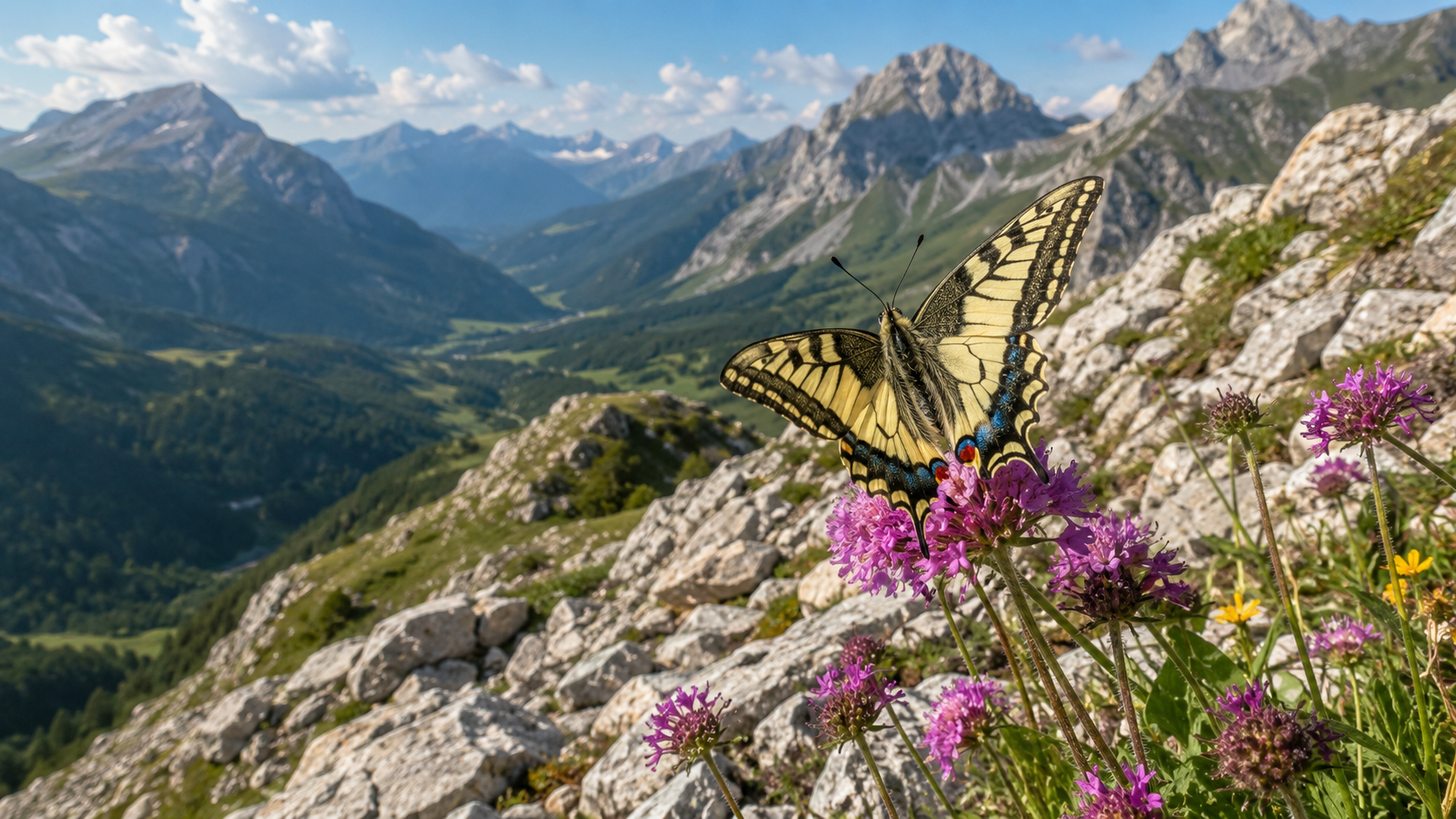
Butterflies of Italy: overview
Italy is one of Europe's richest countries in butterfly diversity. More than 280 species of day-flying butterflies are recorded — more than in any other country of central Europe. The reason is the country's 1,200 km north–south extent across several climatic zones, plus isolated mountain systems and islands with endemic species.
Key regions
Alps and Dolomites
Northern Italy is part of the alpine biome with the richest high-mountain fauna:
- Apollo (Parnassius apollo) — on limestone slopes above 1,500 m
- Small Apollo (Parnassius phoebus) — more high-mountain
- Fritillaries of the genus Erebia — more than 20 species in the Italian Alps
- Orion blue (Scolitantides orion) — rare species of rocky slopes
Apennines
A mountain range running through the entire peninsula. Biotopes are diverse: oak woods, meadows, karst plateaus. Central Apennines support mid-mountain species; in the south — already Mediterranean.
Sicily
Sicily has a mixed fauna: some species are pan-European, others Mediterranean and not found farther north. Southern swallowtail (Papilio alexanor) occurs — a rare swallowtail whose caterpillars feed on mountain aristolochia.
Sardinia
A large island with several endemics. Sardinian blue (Polyommatus fulgens) and several subspecies of European species, isolated long enough to form distinct taxa, occur here.
Observation season
- February–March — Sicily, Calabria: first Mediterranean species
- April–May — central peninsula: orange tips, blues, swallowtails
- June–August — Alps in bloom, apollo on high-mountain meadows
- September — second peak in the south, late fritillaries in the mountains
Protected species
Several Italian species are threatened: apollo (decline due to meadow encroachment), several blues due to loss of specific biotopes. Italian national parks (Gran Paradiso, Stelvio, Abruzzo) preserve key habitats.