Frugivory
Frugivory is feeding on fermenting fruit rather than flower nectar — the main energy source for many tropical forest butterflies, including some of the most spectacular species.
Definition
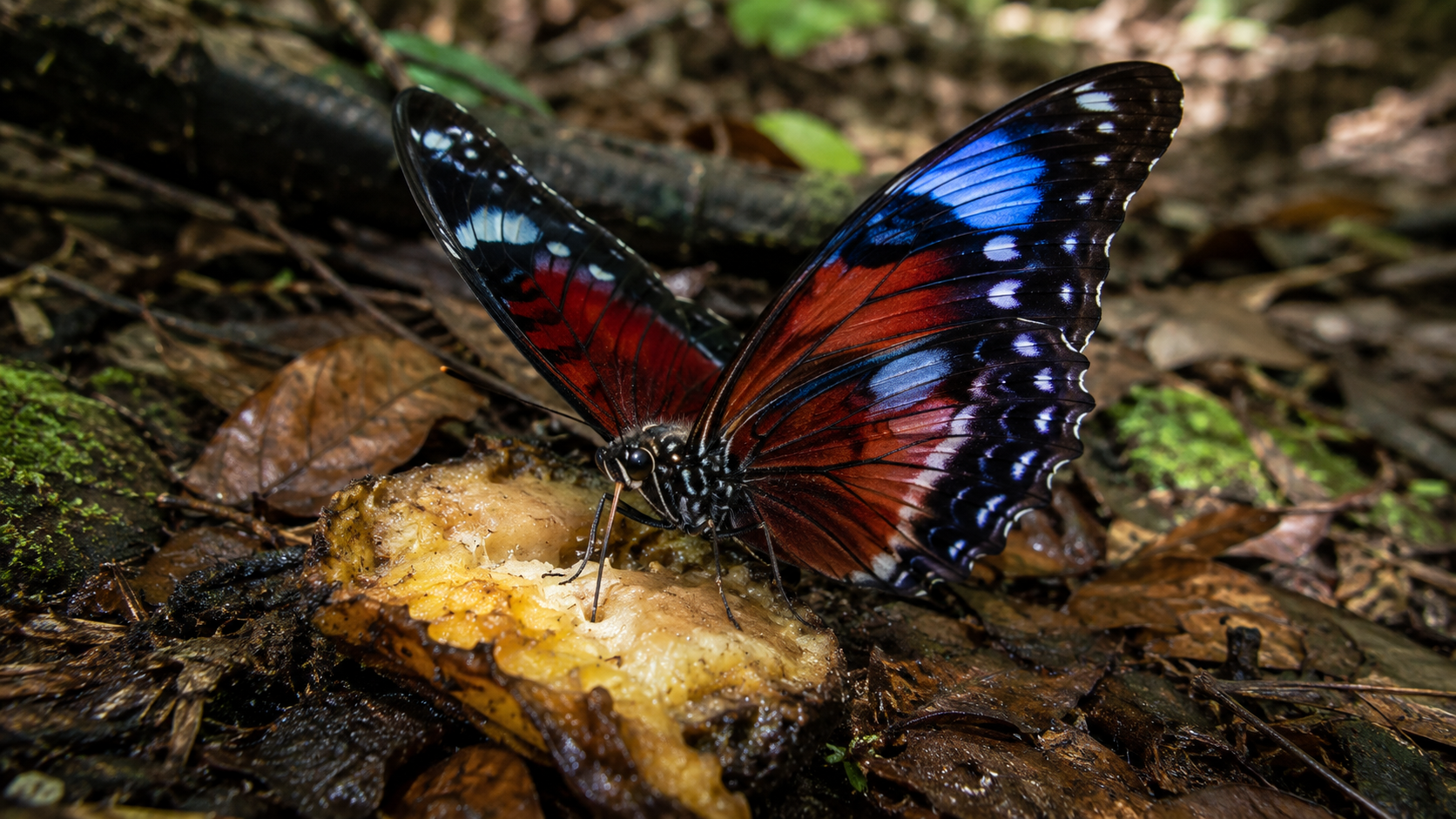
Frugivory, in the context of adult butterflies, refers to feeding primarily or exclusively on fermenting and rotting fruit rather than flower nectar. Fruit-feeding butterflies use their proboscis to probe soft, damaged, or decomposing fruit tissue, drawing up a sugar- and often alcohol-rich liquid produced by fermentation, rather than the narrow floral nectaries most butterflies are adapted to reach.
This is a genuinely distinct feeding niche rather than a minor variation on nectaring: fruit-feeding species have evolved proboscis structure, sensory preferences, and foraging behavior specialized for locating and exploiting fruit falls, and rarely visit flowers even when nectar is available nearby.
Why fruit instead of flowers
Fermenting fruit offers a nutritionally dense resource: high sugar concentration from the fruit's own content, further concentrated by evaporation and fermentation, plus amino acids and other compounds released as fruit tissue breaks down that are largely absent from floral nectar. Some fruit-feeding species also appear drawn specifically to the alcohol produced during fermentation. For butterflies able to exploit it, a single fruit fall can represent a far richer energy source than visiting many individual flowers in succession, especially in dense tropical forest where flowering trees may be scattered and seasonal while fallen fruit is comparatively predictable.
Spectacular fruit-feeders of the American tropics
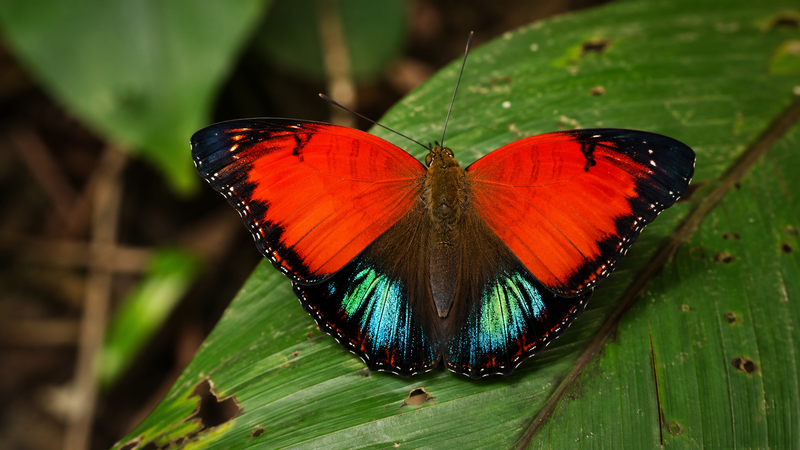
Several of the most visually striking tropical American butterflies are committed fruit-feeders. The Claudina Agrias (Agrias claudina) — scarlet and blue above, cryptically patterned below — spends most of its adult life around fruit falls in the Amazon canopy and understory rather than at flowers. Its close relative, the one-spotted prepona (Archaeoprepona demophon), shares the same fruit-feeding strategy and is additionally known for aggressive, territorial behavior around favored fruit-fall sites, actively driving off rival butterflies competing for the same resource.
Frugivory and field study
Because fruit-feeding species rarely come to flowers, lepidopterists studying tropical forest butterfly diversity commonly use fruit-baited traps — simple mesh traps hung with fermenting banana or other fruit — specifically to sample this fraction of the butterfly community, which standard flower-watching surveys would otherwise almost entirely miss. This distinction between fruit-feeding and nectar-feeding guilds is now a standard part of how tropical butterfly communities are surveyed and compared across sites.
See also: nectar, host plant.