Eyespots
Eyespots are circular wing markings that mimic a vertebrate eye, used by butterflies either to startle predators or to redirect attacks away from vital body parts.
Definition
Eyespots are roughly circular wing markings, usually composed of concentric rings of contrasting colour, that visually resemble a vertebrate eye. They occur widely across butterflies and moths and are one of the best-studied examples of how a simple visual pattern can serve a specific, testable anti-predator function rather than existing merely for display.
Despite their superficial similarity across species, eyespots are not a single strategy — biologists distinguish at least two distinct defensive mechanisms depending on the eyespot's size, position, and visibility.
Deflection: small eyespots at the wing margin
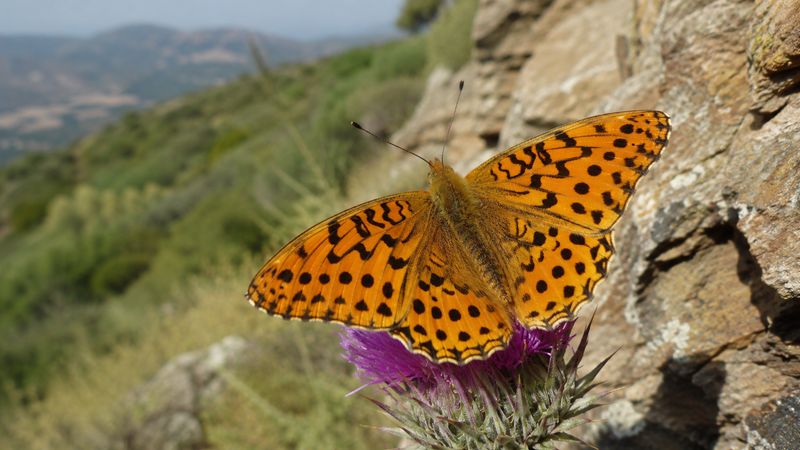
Small eyespots positioned near the outer edge of the wing work through deflection: a predator, especially a bird, tends to aim its strike at the most conspicuous part of a fleeing target, and a bright marginal eyespot draws that strike toward an expendable piece of wing rather than the butterfly's body. A butterfly that loses a wing-edge fragment to a deflected strike survives and can often still fly reasonably well, while a strike aimed at the body would be fatal. Many fritillaries and heaths, including species like the Cardinal (Argynnis pandora), carry exactly this kind of small, marginal eyespot pattern.
Intimidation: large, suddenly-revealed eyespots
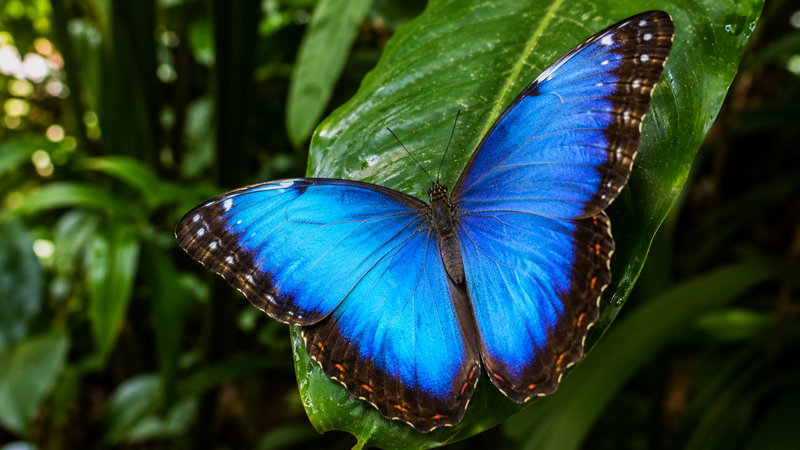
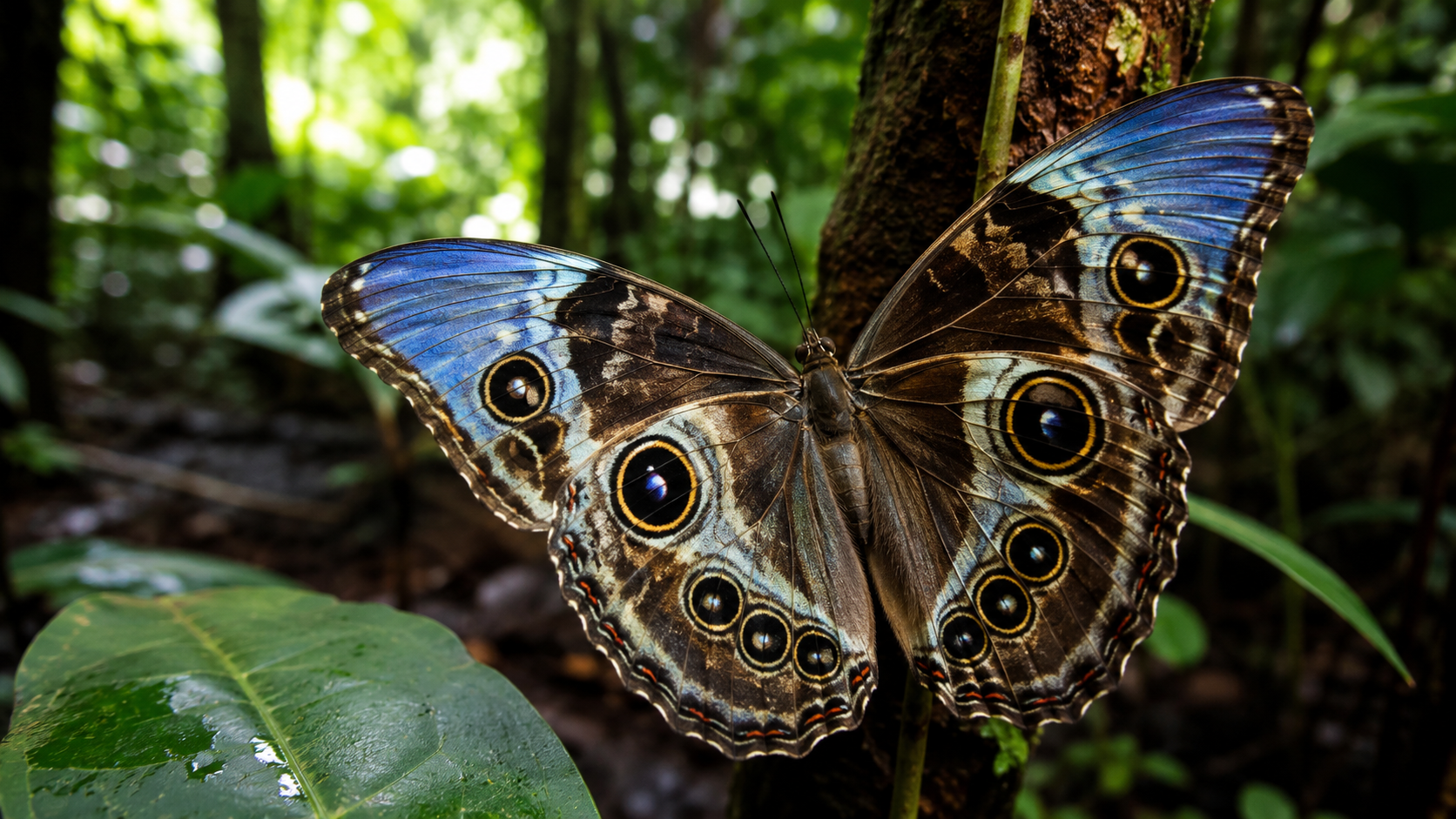
Large eyespots, often concealed on a wing surface that stays hidden while the butterfly rests, work through a different mechanism: startle or intimidation. When disturbed, the butterfly abruptly reveals the hidden eyespots — by flicking open folded wings — presenting a predator, especially a small bird, with a sudden pattern resembling the eyes of a larger animal. The brief hesitation this triggers is often enough for the butterfly to escape. Some Peleides Blue Morpho (Morpho peleides) relatives and owl butterflies use exaggerated versions of this strategy, with eyespots large enough to dominate the entire wing surface.
Why eyespot function is testable
Eyespot function is one of the rare cases in evolutionary biology where the adaptive hypothesis has been directly tested experimentally: researchers have manipulated eyespot size, number, and visibility on live and model butterflies and measured how wild predators respond, consistently finding that larger, more eye-like spots deter attack more effectively than smaller or asymmetric ones, and that marginal spots specifically increase the rate of survivable wing-edge damage relative to fatal body strikes.
See also: Mimicry and Camouflage in Butterflies, aposematism.