Molecular Clock
The molecular clock is a method that estimates when two species diverged from a common ancestor by measuring the accumulated genetic differences between their DNA.
Definition
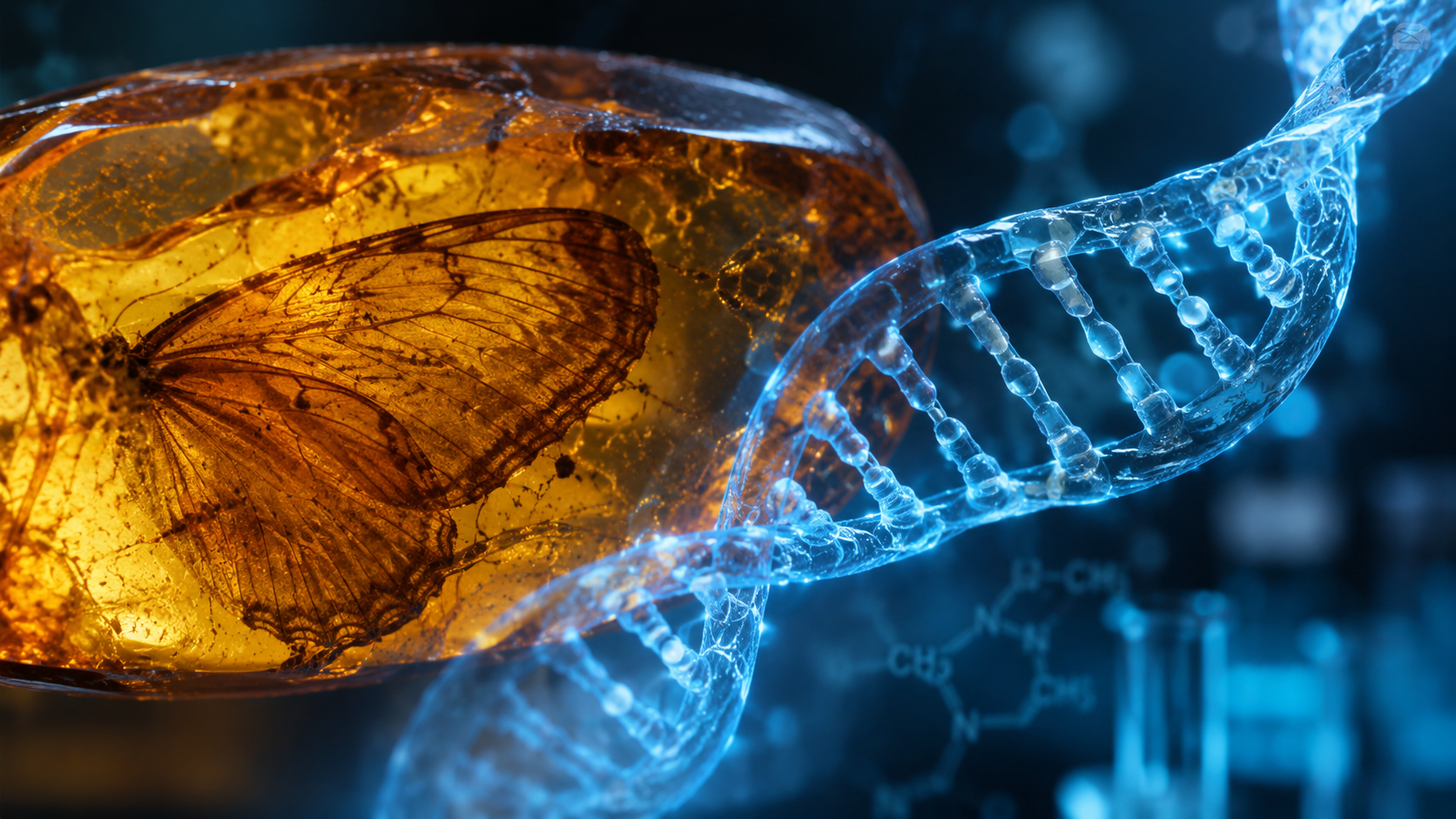
The molecular clock is a method for estimating how long ago two lineages diverged from a common ancestor, based on the number of genetic differences that have accumulated between their DNA sequences since that split. The underlying assumption is that certain kinds of mutations accumulate at a roughly steady average rate over time, so the genetic distance between two species' DNA can be converted into an estimated number of years since they shared a common ancestor — provided the clock is calibrated against at least one point of known age, usually a securely dated fossil.
Why butterflies need this method especially
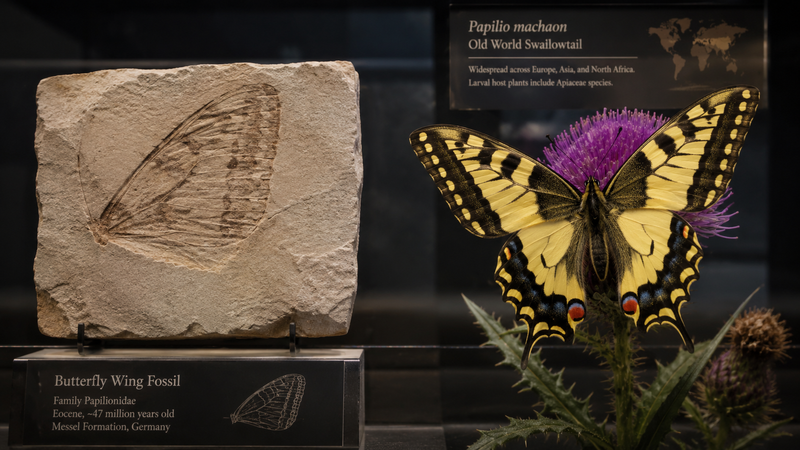
Butterfly fossils are exceptionally rare. Wings are thin, delicate structures that decay quickly and only preserve under unusual conditions — fine-grained sediment, volcanic ash, or amber — leaving the direct fossil record with large gaps across huge stretches of Lepidoptera evolutionary history. Where dinosaurs or many marine invertebrates have dense fossil sequences allowing direct dating of key evolutionary events, equivalent moments in butterfly evolution frequently have no fossil record at all. Molecular clock analysis, calibrated against the handful of reliable Lepidoptera fossils that do exist, fills much of this gap, letting researchers estimate divergence times for relationships fossils alone cannot address.
What molecular clocks have found
Molecular clock studies place the origin of true butterflies (the superfamily Papilionoidea) at approximately 100 million years ago, diverging from within the much older and more diverse moth lineages. Major modern butterfly families are estimated to have diversified somewhat later, with a number of studies finding an acceleration in diversification rate that broadly coincides with the Cretaceous-era spread of flowering plants — consistent with, though not conclusive proof of, a coevolutionary relationship between butterflies and the flowers many species depend on as adults and, via host plants, as caterpillars.
Limitations of the method
Molecular clock estimates carry real uncertainty: mutation rates are not perfectly constant across all lineages or all parts of the genome, and calibration fossils themselves carry dating uncertainty that propagates into the final estimate. Modern approaches account for this by using multiple calibration points, modeling rate variation explicitly (so-called "relaxed" molecular clocks), and reporting a range of plausible divergence dates rather than a single figure — a marked improvement over early molecular clock studies that assumed a single fixed mutation rate throughout.
See also: taxonomy, Evolution of Butterflies: 150 Million Years.