Tiger Moths
Tiger moths (Erebidae, subfamily Arctiinae) — brightly coloured night-flying moths with chemical defences and furry caterpillars. One of the largest moth families.
What are tiger moths
Tiger moths is the common name for the subfamily Arctiinae, part of the family Erebidae, one of the largest moth and butterfly families in the world with around 24,000 described species. Erebidae itself is remarkably diverse, encompassing litter moths, tussock moths, lichen moths, and tiger moths — groups once treated as separate families but merged following molecular phylogenetic studies in the 2010s. In everyday and popular-science usage, the name "tiger moths" has stuck specifically to Arctiinae — the most recognisable and colourful part of this vast family.
Characteristic features
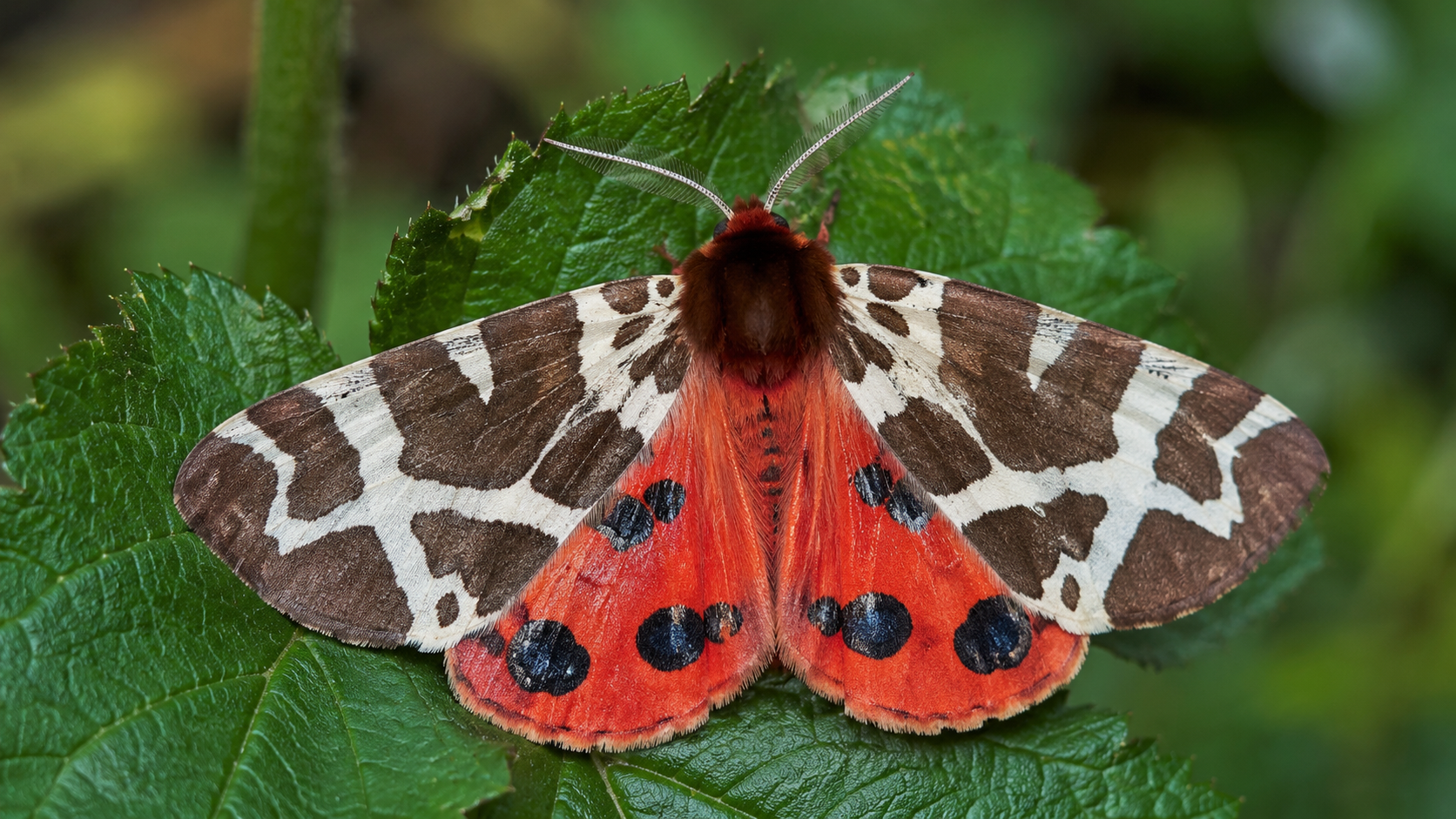
Stark colour contrast. In most tiger moths the forewings are drab — cream, grey, or brown with a mottled pattern — while the hindwings, when exposed, flash bright red, yellow, or orange with dark spots. This combination of camouflage at rest and a sudden burst of colour when threatened is the group's most distinctive trait.
Chemical defence. The caterpillars of many tiger moths sequester toxic plant compounds — pyrrolizidine alkaloids from ragwort and related plants — which are retained into adulthood. Some species also exude a foamy secretion from thoracic glands when attacked by a predator.
Ultrasonic defence. Adult tiger moths can produce ultrasonic clicks using specialised structures on the thorax (tymbals) that jam bat echolocation — one of the few insect groups with an active acoustic defence against bat predators.
"Woolly bear" caterpillars. The larvae are densely covered in long bristles, often black, rust, and orange in colour, making them among the most recognisable caterpillars of the Northern Hemisphere.
Main representatives
Garden tiger moth (Arctia caja) — the group's archetype: cream-and-brown forewings with a unique individual pattern, scarlet hindwings with blue-black spots. See the species page.
Other well-known genera include Tyria and Diacrisia, along with a large number of tropical genera with equally bold colouration.
Range and habitat
Erebidae as a whole is a globally distributed family, found on every continent except Antarctica. Tiger moths (Arctiinae) are especially diverse in the tropics, but many species, including the garden tiger moth, are widespread across the temperate zones of Eurasia and North America, where they inhabit meadows, forest edges, gardens, and other open habitats with varied herbage.
How not to confuse them with other families
- From satyrs and other day-flying butterflies: tiger moths fly mainly at night and rest with their wings held roof-like, concealing the bright hindwings.
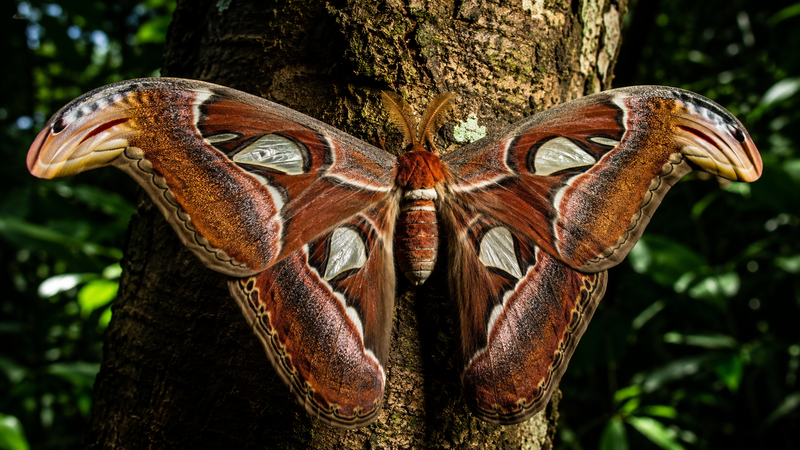
- From giant silk moths: tiger moths are noticeably smaller and lack the characteristic eyespots of Saturniidae.
- From other moth families: the diagnostic combination for tiger moths is a drab forewing contrasting with a bright hindwing, together with a densely haired caterpillar.
See also