Lesser Purple Emperor
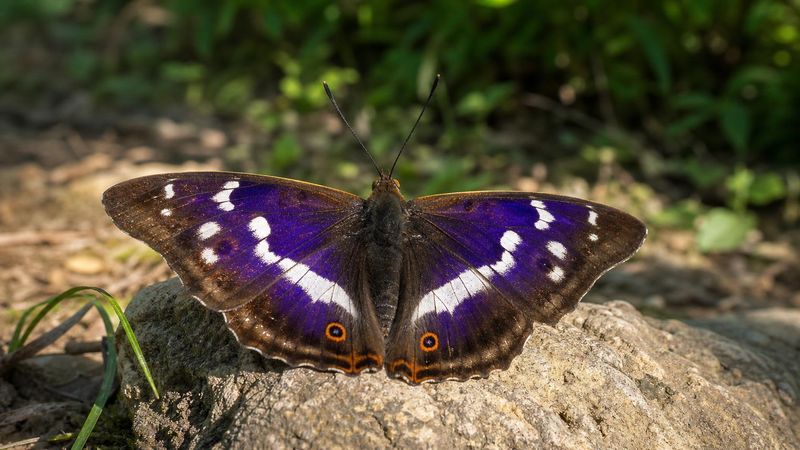
The lesser purple emperor is a close relative of the purple emperor. It is smaller, with a warmer reddish tint and a larger orange 'eyespot' on the hindwings.
Key facts
- Latin name
- Apatura ilia
- Family
- Nymphalidae
- Wingspan
- 56-78 mm
- Flight season
- June — August
- Host plants
- Trembling aspen, White willow, White poplar
- Conservation status
- LCLeast Concern
Appearance
The lesser purple emperor (Apatura ilia) is a large butterfly with a wingspan of 56–78 mm. The upper side of the wings is dark brown with a reddish tint and white spots. Males have a violet-blue metallic sheen in oblique light — as in the purple emperor, but slightly less intense.
The main external mark — a large orange 'eyespot' on the hindwings, clearly visible from above. In the purple emperor this 'eyespot' is smaller.
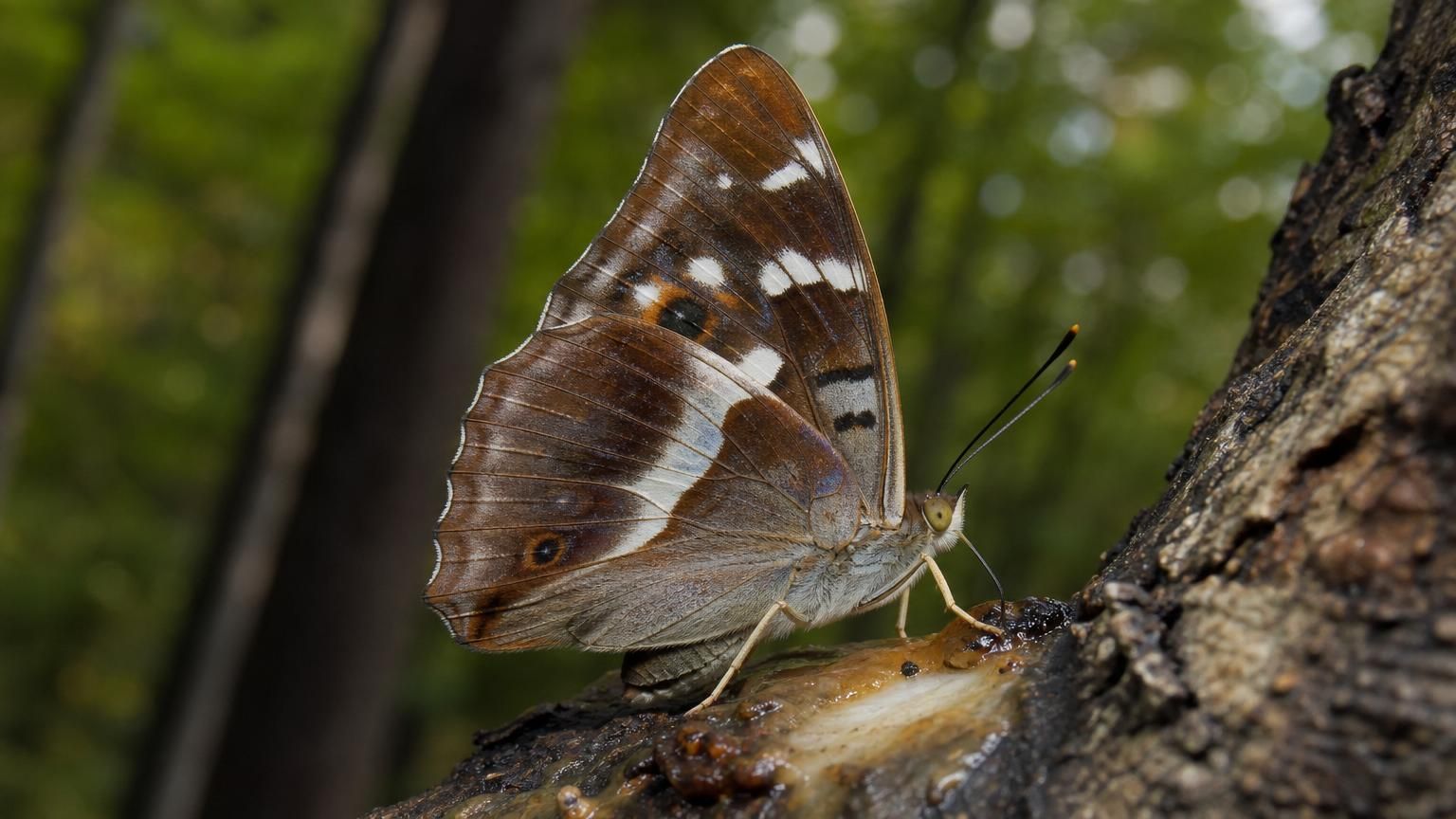
The underside of the wings is reddish orange with white spots.
Range and Habitat
It is distributed in Europe and Asia. In Russia it occurs in the European part and in the south of Western Siberia.
It lives in floodplain forests with poplars and willows, along rivers and streams. It often occurs together with the purple emperor but prefers more humid and shaded sites.
Life Cycle
One to two generations per year (in the south). Flight from June through August.
Eggs are laid on poplar or aspen leaves. The caterpillar is green with horns on the head, similar to that of the purple emperor. The caterpillar overwinters. The pupa is green and suspended.
Puddling
The lesser purple emperor, like the purple emperor, readily lands on damp ground, animal dung, and carrion to absorb mineral salts. This behaviour (puddling) is typical of males. More — in the article puddling.