Green Hairstreak
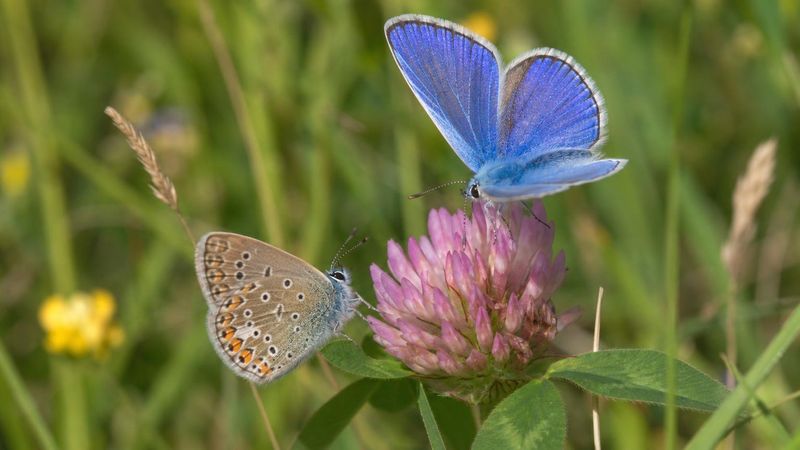
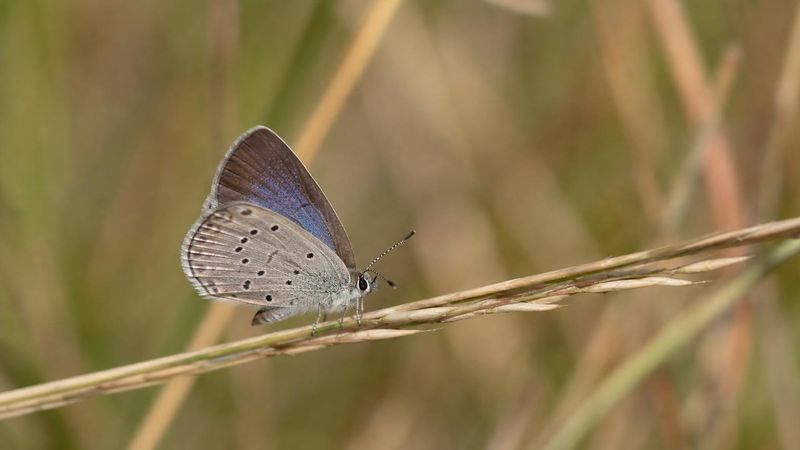
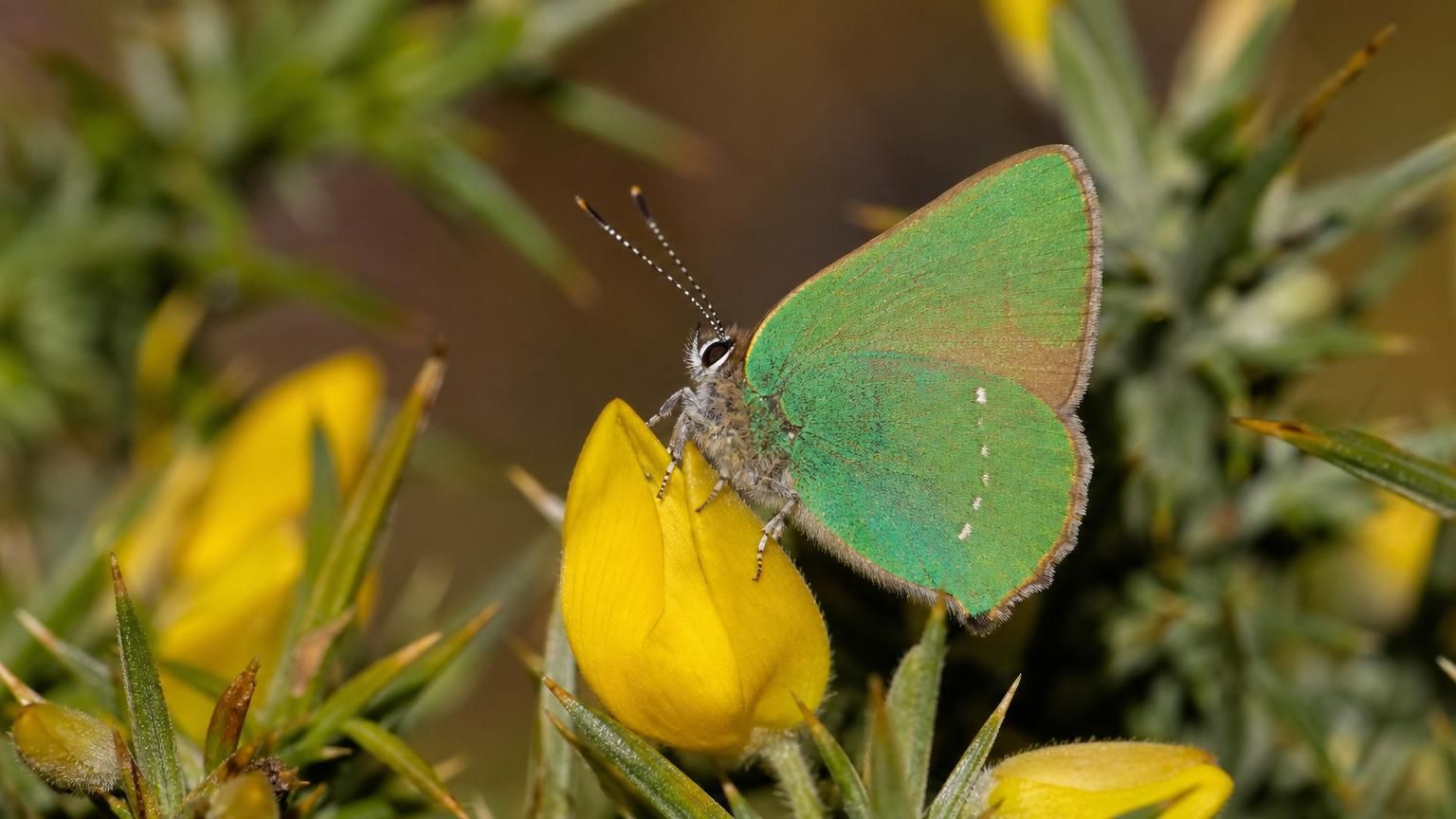
The green hairstreak is a small blue with bright emerald-green undersides. Widespread in Europe and Asia, it lives on edges and rough ground.
Key facts
- Latin name
- Callophrys rubi
- Family
- Lycaenidae
- Wingspan
- 22-30 mm
- Flight season
- March — June
- Host plants
- Dyer's greenweed, Bilberry, Raspberry, Vetch, Broom
- Conservation status
- LCLeast Concern
Appearance
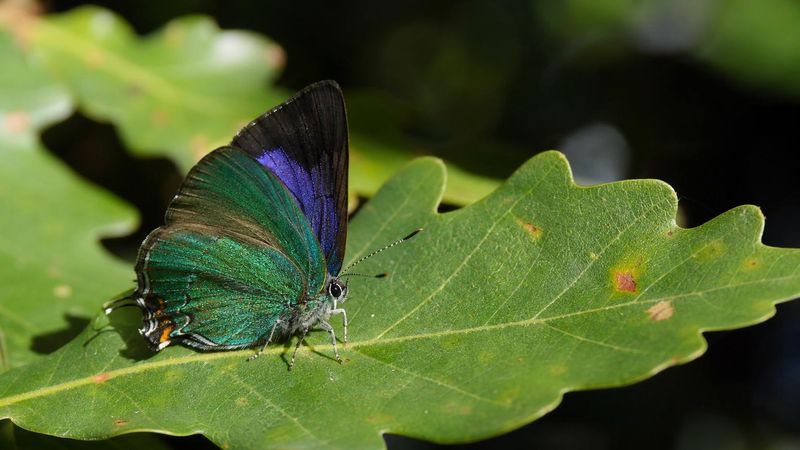
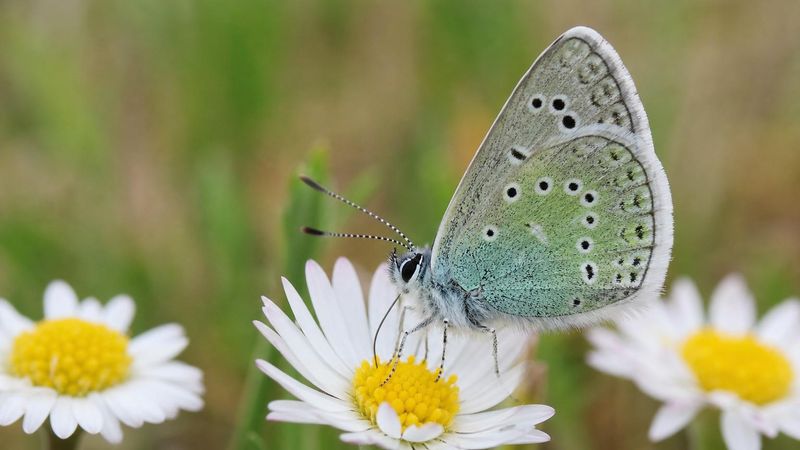
The green hairstreak (Callophrys rubi) is one of the smallest blues with a wingspan of 22–30 mm. The upper side is dark brown and inconspicuous. The underside is rich green, sometimes with an incomplete row of white dots.
With wings closed it vanishes into greenery — among the best camouflage of Russia's day-flying butterflies.
Range and habitat
One of the most widespread hairstreaks. From Western Europe to the Far East. Common throughout Russia.
It lives on shrubby rough ground, edges, clearcuts, and slopes with gorse and broom. Not demanding on vegetation type — anywhere with varied caterpillar hosts.
Life cycle
One generation per year. Early flight late March–June.
Eggs on flower buds and young leaves. Caterpillar green, flat, well camouflaged. Pupa overwinters in litter.
Caterpillar host range is unusually wide: bilberry, raspberry, gorse, broom, vetch, and many others — giving high ecological flexibility.
Early spring
The green hairstreak is among the first blues of the season, appearing with brimstone and small tortoiseshell. Early flight reflects overwintering pupae and emergence with the first warmth. On sunny April days males fly actively seeking mates.