Wing Venation
Wing venation is the pattern of hollow, rigid veins that forms a butterfly wing's supporting framework — its precise layout is a key character for identification and classification.
Definition
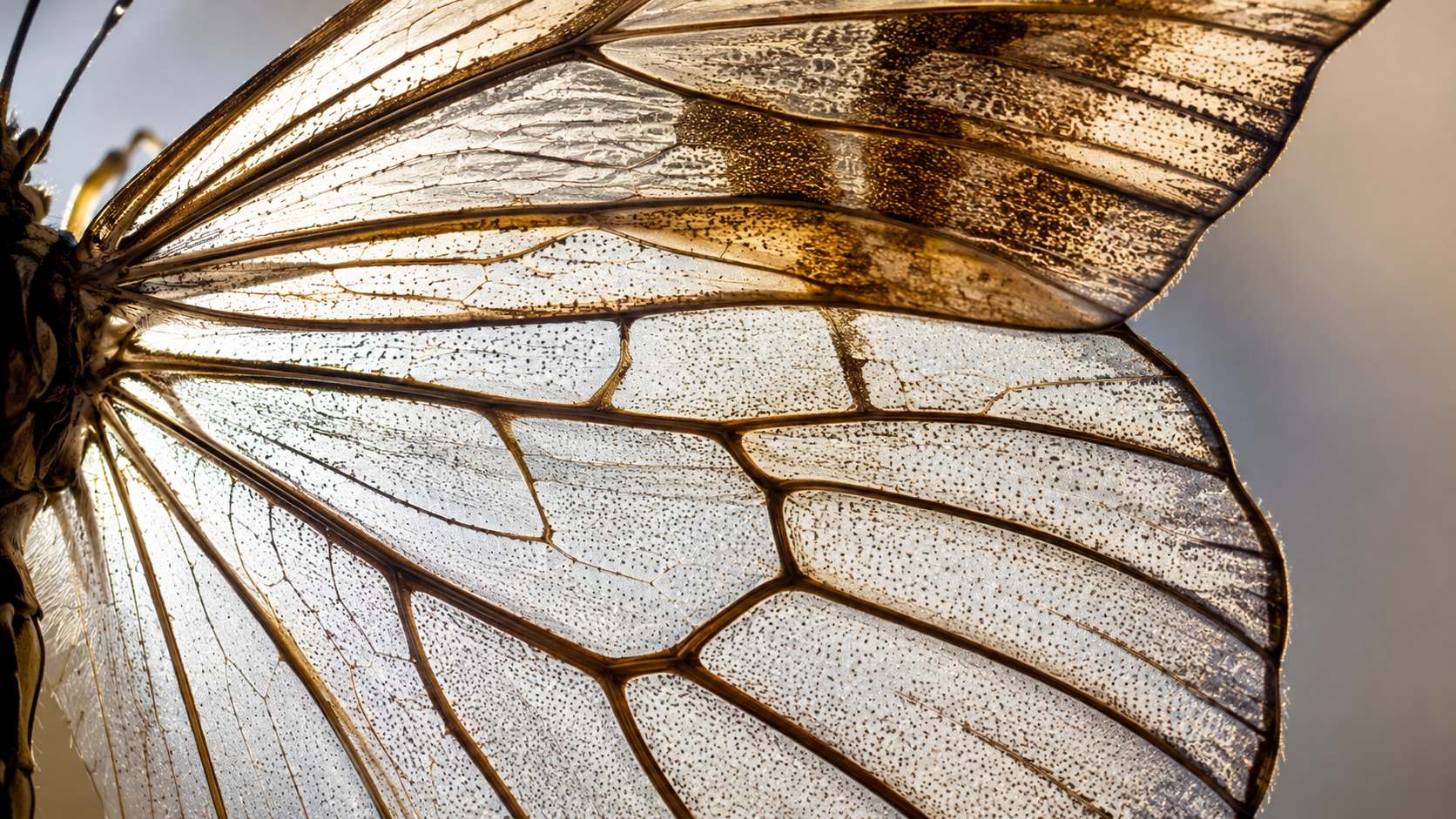
Wing venation is the pattern formed by the hollow, rigid veins running through a butterfly or moth wing. Unlike a bird's or bat's wing, an insect wing has no internal bones — instead, the membrane is stiffened and supported entirely by this branching network of veins, which divides the wing surface into a set of named cells and gives the whole structure both strength and controlled flexibility.
How wings form and harden
A butterfly wing begins inside the pupa as a small, crumpled sac. Just after the adult emerges, hemolymph is pumped through the hollow veins, forcing the wing to expand rapidly to its full adult size over a period of minutes. Once expansion is complete, the veins and surrounding membrane harden through a process involving chitin cross-linking, and the wing becomes rigid enough for flight — though it never again grows or repairs itself for the rest of the butterfly's life.
Even after hardening, the veins remain hollow, still containing trachea for gas exchange and nerve fibers, and hemolymph continues to circulate slowly through them throughout the adult's lifespan, feeding the tissue at the wing's base.
Venation as a classification tool
Because vein layout is governed by relatively conservative developmental genetics, closely related groups of butterflies and moths tend to share very similar venation patterns even when their color and pattern diverge dramatically under predator or mate-choice pressure. Lepidopterists use standardized naming systems for individual veins (numbered from the wing's leading edge backward) and for the cells between them, allowing precise, testable comparisons between species and families that a purely visual comparison of color pattern could never support.
This is particularly valuable for distinguishing superficially similar species, for placing newly discovered species into the right family, and for interpreting fossil wing impressions, where color pattern is rarely preserved but the vein skeleton often is.
Venation and elaborate wing shapes
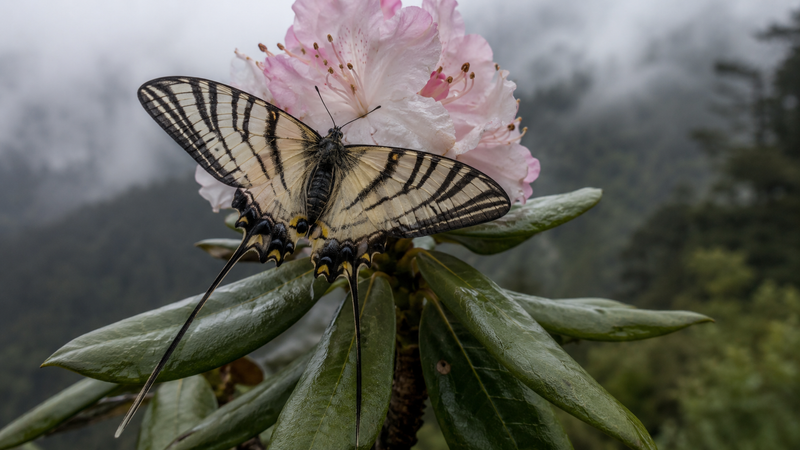
Species with elaborate wing outlines — long tails, deep scallops, or extended projections — typically have venation extended specifically to support those features. The Bhutan Glory (Bhutanitis lidderdalii) of the Himalayas carries several long, ribbon-like tails on its hindwings, each one reinforced by an extension of the underlying vein structure; without that rigid vein support running into the tail, the delicate, iridescent tail membrane would simply flutter apart in flight.
See also: chitin, Wing Scales and Structural Colour.